Not a typical request? No problem.
Get in touch

UX reviewed, UI redesigned, interfaces refreshed — all to make things easier for users and better for business.
Need to test an idea fast, without going all in?
Expect a streamlined, functional UX/UI in no time.
Visitors getting lost and dropping off?
Time to adjust user navigation logic.
Afraid a redesign could do more harm than good?
The update will be careful — what works stays untouched.
No one to take care of UX/UI design?
From UX research to clean UI mockups — we’ve got it covered.
We focus on what matters: user behavior, thoughtful structure, and data-driven improvements. Design that is measured, then proven to work.
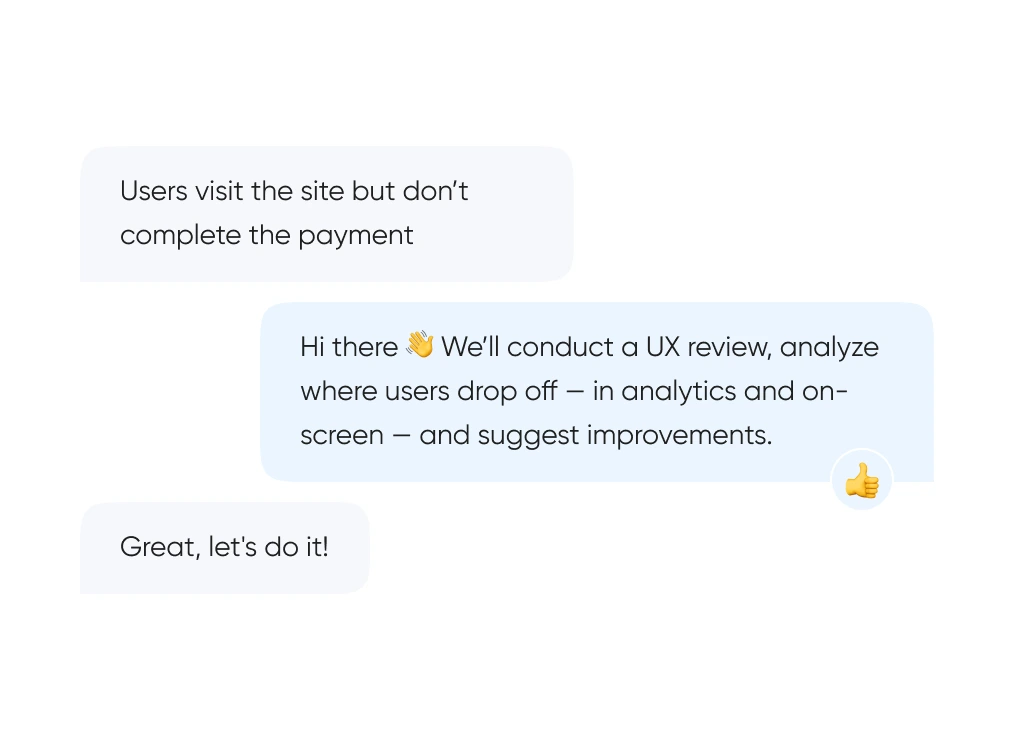
We start with real behavior: run UX reviews, analyze the full funnel, and identify exactly where and when users drop off.
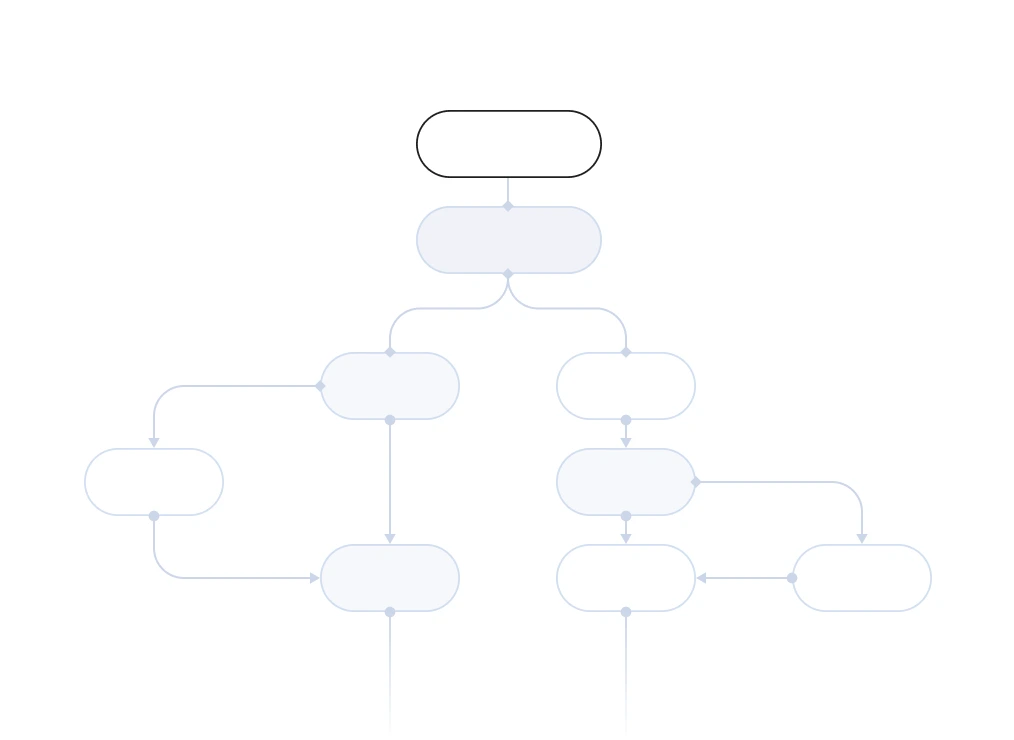
We build out logic and structure — from user flows and prototypes to final layouts. Everything gets tested before it ever reaches code.
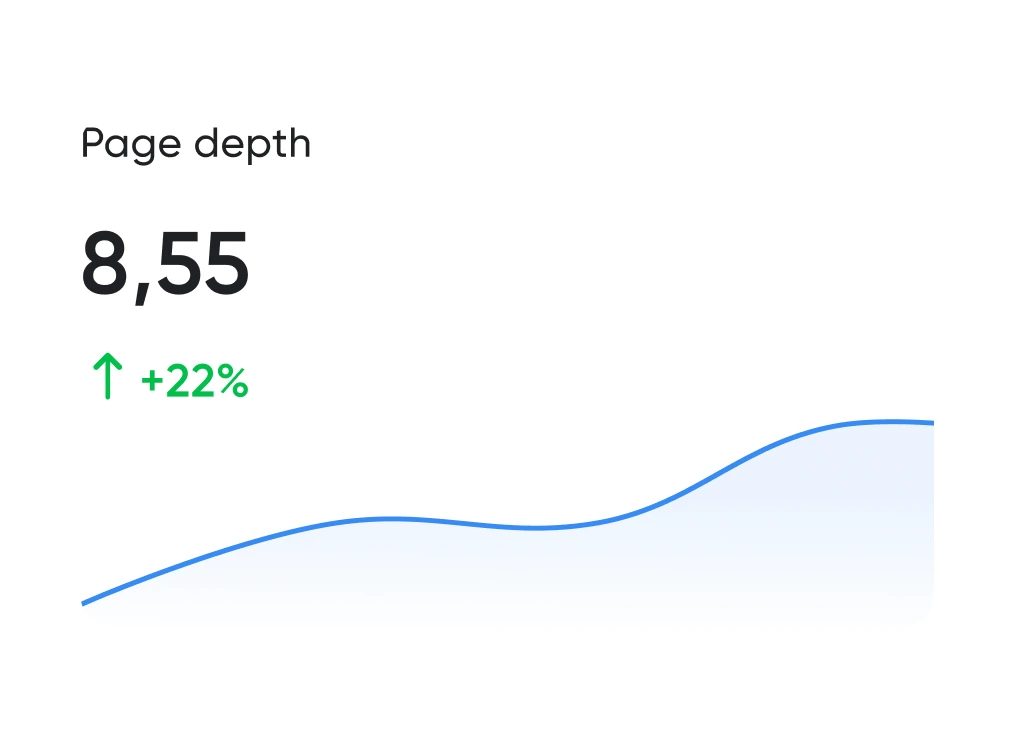
Looking good is the easy half. The work is working well. We track the numbers: time to complete key actions, scroll depth, conversion rate. All measurable.
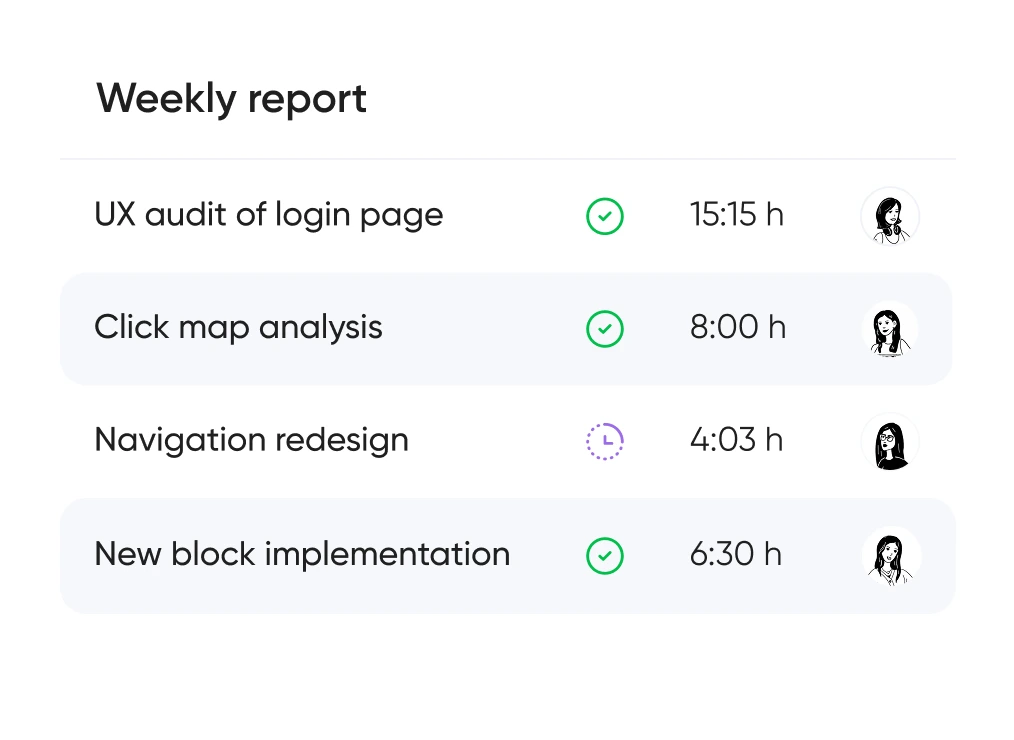
You always know which hypotheses we’re testing, what we’re improving — and why. No design for design’s sake — only what brings real business value.


Support for launching, refreshing, or rethinking an interface — at the right pace
and tailored to your product and business goals.
Pricing is tailored to each project — based on its stage, scope, and business objectives.
We use only the tools that help us create intuitive, responsive, and scalable interfaces.
UX/UI design for ecommerce, fintech, edtech, and more.
Didn’t find what you were looking for? Drop us a line at info@toimi.pro.
Stanford invented design thinking — the d.school's human-centered design methodology is now the foundation of product design worldwide. This means Stanford-area companies and their users hold design to a higher standard than anywhere else on Earth. Your product competes for attention with apps designed by Apple, Google, and IDEO alumni. Toimi creates UX/UI solutions that meet this extraordinary standard, combining Stanford's rigorous user research methodology with the visual polish and interaction design sophistication that Valley audiences demand from every digital product they use.
For Stanford startups, we offer rapid UX sprints that validate product concepts and create investor-ready prototypes in 2-4 weeks. Growth-stage Stanford companies benefit from comprehensive product design — user research, information architecture, interaction design, visual design, and design system creation. Enterprise Stanford clients receive design transformation services — UX audits, design process implementation, team augmentation, and complex multi-product design systems. We scale our services to match your Stanford company's stage, budget, and design maturity level.
We conduct contextual user research with Stanford's specialized audiences — observing researchers using data analysis tools in their labs, watching developers interact with API documentation, or studying how hospital staff navigate clinical software at Stanford Health Care. Our research methods include contextual inquiry, usability testing, diary studies, and quantitative analytics analysis. For Stanford products serving experts, we resist the urge to oversimplify — instead designing interfaces that provide power and efficiency while remaining learnable, respecting that Stanford users value capability over simplicity.
Complex Stanford products — enterprise dashboards, research tools, data platforms — require interaction design that manages information density without overwhelming users. We use progressive disclosure to layer complexity, build contextual help systems that educate inline, implement keyboard shortcut systems for power users, and create filter/sort/search patterns that make large datasets navigable. Our interaction designs for Stanford products are informed by the best enterprise UX in the Valley — Figma, Linear, Notion — tools that demonstrate how to make complex software feel effortless.
We build comprehensive design systems in Figma with atomic design principles — from foundational tokens (colors, spacing, typography) through components (buttons, inputs, cards) to patterns (forms, navigation, data tables) and templates (page layouts). Our Stanford design systems include interaction specifications, accessibility standards, responsive breakpoints, and documentation that enables any designer or developer to extend the system consistently. We also implement design system governance processes so Stanford teams maintain quality as new team members contribute.
We design for Stanford's multi-device reality — users who start tasks on laptops at their desks, continue on phones during their Caltrain commute, and finish on tablets at home. Our responsive design approach prioritizes task continuity across devices, adaptive layouts that optimize for each screen size, and context-appropriate interactions (touch-optimized for mobile, precision-optimized for desktop). For Stanford products, we test responsive designs on the actual devices and contexts users encounter, including Stanford campus Wi-Fi, mobile data on Highway 101, and international roaming for the university's global community.
We offer three Stanford engagement models — project-based (defined scope, 6-16 weeks), sprint-based (focused design explorations, 2-4 week cycles), and embedded (designers working alongside your Stanford team on an ongoing basis). Project timelines depend on complexity: a mobile app redesign takes 8-12 weeks, a design system creation takes 10-16 weeks, and a UX audit with recommendations takes 3-4 weeks. We begin every engagement with a scoping workshop that aligns expectations and establishes the design process your Stanford team will follow.
We offer design retainer partnerships that provide continuous UX/UI support — new feature design, design system maintenance, usability testing, analytics-driven optimization, and design team mentorship. For Stanford companies scaling their internal design teams, we serve as senior design partners who ensure quality while helping junior designers grow. Our ongoing support includes quarterly UX reviews that analyze product analytics, identify usability issues, and prioritize design improvements — ensuring your Stanford product's experience evolves as fast as user expectations in the Valley.


