Not finding the exact service you need?
Get in touch

Rankings plateau. Traffic flatlines. SEO reports say “everything looks fine” while leads stay flat. We find what’s actually blocking growth.
You’re publishing 4 articles a month. None of them rank.
Content without keyword strategy, internal links, and technical SEO is just noise. We fix the system, not individual pages.
Your DA hasn't moved in a year. Your links aren't working.
Random guest posts don't build authority. We target sources Google actually trusts — and prove the impact.
Page 1 for the wrong keywords. Page nowhere for the right ones.
You rank for terms that attract students and competitors, not buyers. We realign your SEO around commercial intent and qualified traffic.
Your competitors are showing up in AI answers. You’re not.
AI search (Google SGE, ChatGPT, Perplexity) uses structured content and E-E-A-T signals. We optimize for both traditional and AI search.
SEO does not behave like advertising. Advertising switches on and traffic appears. Switch it off and traffic stops. Search runs on a delay you do not control.
A change has to be crawled before it counts, and crawling is a queue. A new page has to be indexed, and indexing is a decision the search engine makes rather than a setting you tick. Ranking then settles over weeks as signals accumulate. Three quiet months, then a step up. That is the normal shape, not evidence of failure.
That has a practical consequence for planning. January's work is read in March. So the fixes that unblock everything else go first — indexability, site structure, the templates that generate hundreds of pages at once — and the writing that depends on them follows. The other order means writing well on pages nothing can reach.
Some problems look like ranking problems and are not.
If the price sits above the market with nothing to explain the difference, traffic makes the gap more visible. If the enquiry form takes four minutes and asks for a company registration number, more visitors means more abandoned forms. If nobody answers the phone within a day, a first-page position feeds a competitor.
There are limits on the search side too, and they are worth saying out loud. For some queries the first screen belongs to aggregators and marketplaces, and a single supplier will not displace them; the sensible move is to appear inside those platforms as well. Other searches are answered on the results page itself, so the ranking exists and the click does not.
We would rather name this at the start than report it in month five. It usually reshapes the plan. Less effort on the query that cannot be won, more on the ones where a visit turns into a conversation.
Every few months rankings move for reasons nobody outside the search engine can confirm. A report resting on a single number then turns into an argument. Average position. Twenty tracked keywords. Neither answers the question that follows.
What holds up has the same shape every month. Clicks and impressions taken from the search console rather than a rank tracker, split by page group and by query intent. Positions shown as a distribution instead of an average. And a dated list of what was actually shipped. That last part carries the most weight. When a change in traffic lines up with a release two weeks earlier, you have a cause. Without the dates you have a coincidence and a debate.
We record what was measured and how, so next month uses the same yardstick. A metric chosen after the result is not a measurement.
A drop usually arrives as a question with no context attached: traffic is down, what happened. The first job is not to explain it but to establish what actually fell — sessions from search, on which pages, for which queries, starting on which day. A fall that begins on one date points at something done to the site or something done by the search engine. One that slopes away over six weeks points at competitors, at seasonality, or at positions nobody was watching.
Then the cheap explanations get eliminated in order, because they are common and take minutes to check. A tag removed during a deploy. A filter left on the report. A robots rule that travelled with a staging build. A certificate that expired on a Saturday. It happens more than it should. A redirect chain introduced by a plugin update. More recoveries come out of that list than out of anything clever, and it deserves an hour before any theory is entertained.
What remains is a genuine loss of rankings, and it has a shape. Positions falling across the whole site at once means a site-wide cause: templates, speed, internal linking, or an update whose date is public. Losses concentrated in one section point at that section — thin pages, repeated text, a page type that was never linked from anywhere.
Only then does anything get changed. One change at a time, with the date written down, because two releases on the same day make the next drop unreadable. And some of it never comes back. A query absorbed into an answer panel, a competitor who published something genuinely better, a product line that no longer exists: the honest report says which part of the traffic is gone for good and where the replacement is meant to come from.
Two habits make the next fall cheaper to read: a dated log of what was changed on the site, and a monthly copy of positions and pages. Both take minutes. Without them, every diagnosis starts from nothing.
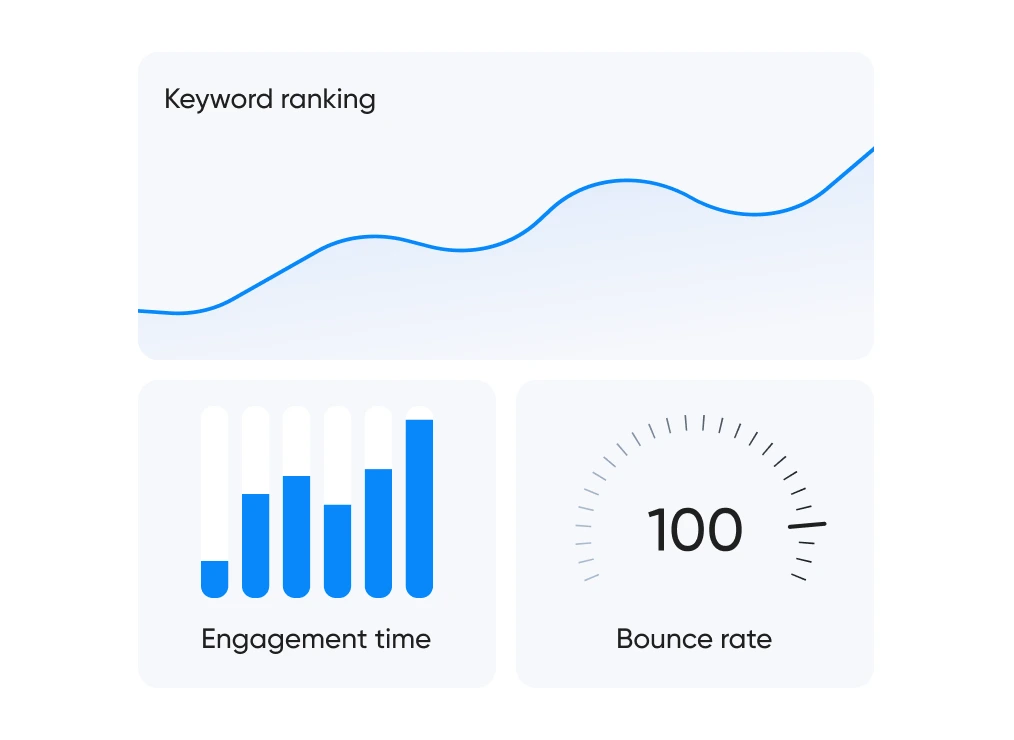
We crawl every page, benchmark every competitor, and map every keyword gap — before writing a single recommendation. You get a prioritized action plan, not a 50-page PDF.
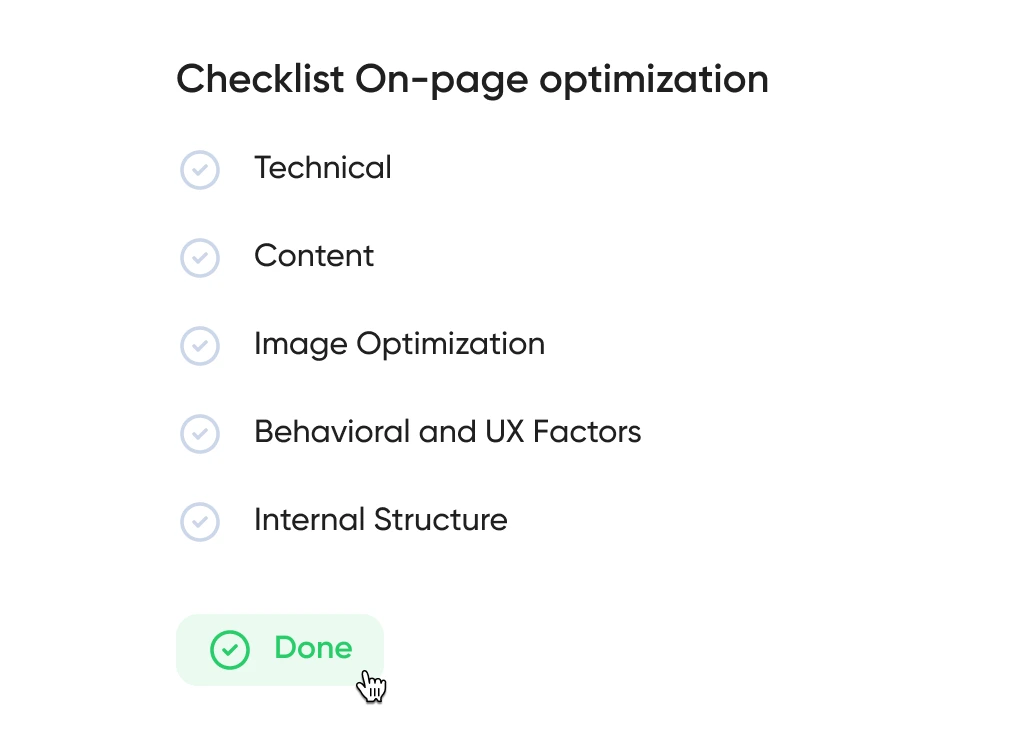
Technical fixes first, content second. We repair indexing, speed, and structure — then optimize pages around keywords that actually drive revenue. Every change is tracked.

We don’t buy links. We earn them — through content that gets cited, outreach that gets responses, and digital PR that builds real authority. Every link is reported with source and metrics.
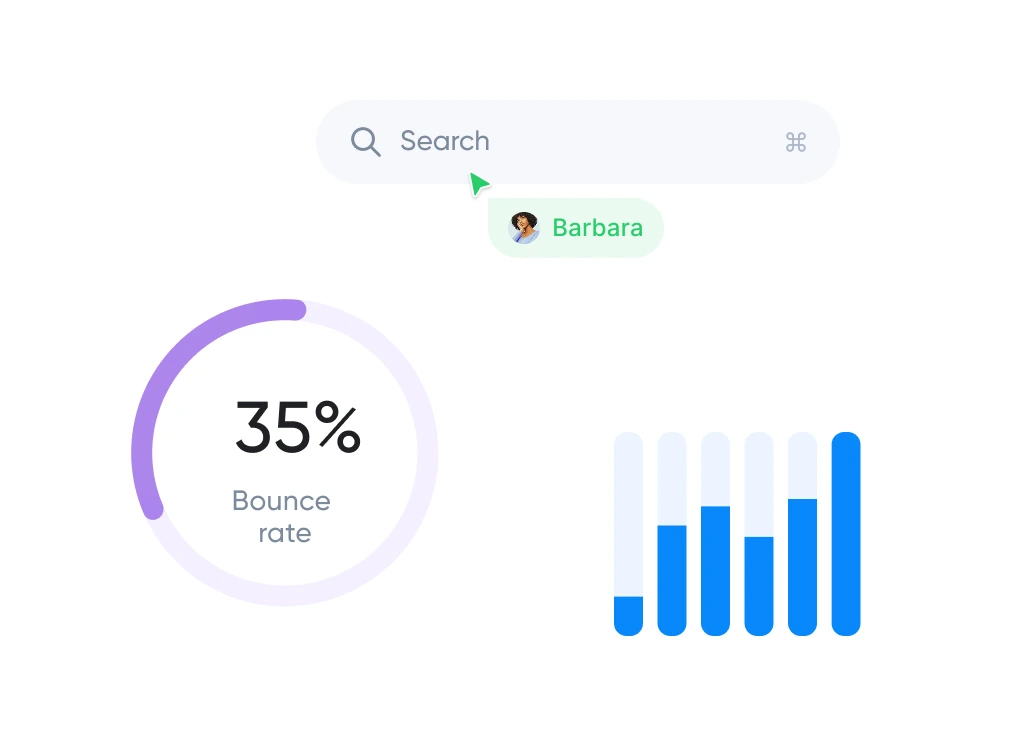
Monthly reporting with business context: rankings, and then leads, revenue attribution and next actions. SEO doesn’t end. It compounds.


Pick your starting point. A one-time audit to fix what's broken, or ongoing SEO to keep growing.
Each project is scoped individually — based on site size, market competition,
and the depth of optimization required.
SEO strategies tailored to different sectors — from local services to global enterprises.



Didn’t find what you were looking for? Drop us a line at info@toimi.pro.
Technical fixes from Toimi typically show impact within 2–4 weeks — faster indexing, resolved crawl errors, cleaner Core Web Vitals scores. Rankings and organic traffic take longer to move, usually 3–6 months, and Toimi sets milestone expectations for both timelines before the engagement starts, so the client isn't guessing which number applies to which metric.
Every fix from Toimi's technical audit — typically a ~$2,000 engagement — gets tested on staging and coordinated with the client's development team before it touches production, so nothing breaks live. A site redesign or a platform migration — off Bitrix, off a legacy CMS — carries more risk than routine SEO changes, and Toimi plans those as separate, higher-risk jobs with their own rollback plan.
Google gets primary weight in Toimi's SEO work because it holds roughly 92% of search market share, but the scope doesn't stop there. Bing, AI search surfaces like ChatGPT, Perplexity, and Google SGE, and local platforms all get optimized where they matter to a client's traffic mix, not treated as an afterthought once Google rankings are settled.
Rankings, organic traffic, and conversions get reported monthly with business context attached, which is what Toimi's retainer — priced from $3,000/month — is built to track. Revenue attribution matters more than position changes alone: a keyword climbing five spots means little if it isn't the keyword driving bookings or sign-ups.
New content usually enters the plan only after existing pages get optimized first, since fixing what's already live is often faster and cheaper than commissioning new material outright. Toimi's SEO work folds new content in specifically to close gaps the current pages can't cover — a missing comparison page, an unanswered buyer question — rather than defaulting to it as the first move.
Site speed, mobile experience, indexing, structured data, and Core Web Vitals all sit inside Toimi's technical SEO scope. Some fixes show results within the same 2–4 week window covered by Toimi's technical audit — a slow page suddenly indexing, a broken sitemap suddenly crawling — while ranking movement still follows the longer 3–6 month curve. Learn how structured data really works.
Quality still outweighs quantity in the link building Toimi does — no purchased links, ever. Links get earned through content, outreach, and digital PR, and every source that ends up pointing at a client's site gets reported by name, not folded into a monthly summary that just states a total count.
Local SEO targets "near me" searches and map-pack placement, which general SEO doesn't touch at all. Toimi handles Google Business Profile optimization, local citations, and location-specific content for the local side, while running both local and national campaigns for clients who need to show up in both kinds of results.
First-page rankings aren't something any honest SEO agency can guarantee, and Toimi doesn't pretend otherwise. What Toimi guarantees on every engagement — audits around $2,000, full-cycle engagements from $10,000 — is a data-driven process, transparent monthly reporting, and a willingness to adjust the approach the moment something stops working instead of hiding it.
Search algorithms shift, competitors adapt, and content ages, so SEO at Toimi runs as ongoing work rather than a one-time project. Most clients stay engaged for 6–12+ months, and the full-cycle version of that engagement starts from $10,000, priced for a sustained campaign rather than a single fix-and-leave pass.
WordPress is Toimi's primary CMS, and the SEO work goes deep on it — Yoast configuration, custom schema markup, and server-level performance tuning included. That depth matters because a WordPress site's SEO ceiling is usually set by plugin conflicts and hosting choices, not by the content sitting on top of it.
Technical SEO fixes how search engines crawl and index a site — speed, structure, schema, sitemaps — and that's the layer Toimi's technical audit covers first. Content SEO deals with what users and search engines actually read once they arrive, and Toimi treats internal linking as the bridge that connects the two layers together. See how internal linking connects the two.
AI search engines pull answers from structured content, E-E-A-T signals, and entity data rather than ranking pages the way classic search does. Toimi optimizes client sites for both tracks at once — traditional rankings and AI-driven citations — since a page built to satisfy one increasingly needs to satisfy the other too.

