Not finding the exact service you need?
Get in touch

We dig into your site’s structure, content, and backlinks to uncover hidden blockers and turn them into ranking power.
Publishing content but not getting visits?
We align pages with real user intent.
Building links that don’t help?
We focus on authority sources that pass real value.
Traffic is coming but not converting?
We optimize landing pages for leads and sales.
Need results in Google and Yandex?
We tailor strategies for both search engines.
A report designed to look good in a good month becomes useless in a bad one, which is when reporting matters most. So the format has to be decided before the results are known.
Average position is the number we treat most carefully. It moves when a page starts appearing for new queries at low positions, which is progress and reads as decline. It moves when a page stops appearing for bad queries, which is neutral and reads as improvement. Reported alone, it tells a story unrelated to the site.
What we report instead, in this order. How many target pages are indexed, because nothing else matters until that is settled. How many queries sit in the band where work pays, roughly positions four to fifteen. Sessions to the target pages specifically, rather than to the site. And conversions where they can be attributed honestly.
Then a log of what was shipped, with dates. Without it, a change in the numbers cannot be connected to a cause, and next quarter repeats guesses instead of decisions. The log also records what we shipped that produced nothing, which is the part most reports omit.
Seasonality gets stated rather than smoothed. A category with a seasonal pattern compares against the same period last year, and a month-on-month figure across a seasonal edge is a coincidence presented as a result.
The lag deserves its own line. Content changes are crawled, then evaluated, then reflected in positions, and the whole sequence takes weeks. A report issued two weeks after a release is describing the previous state of the site. Saying so protects both sides from acting on noise.
And the failures belong in the document. Pages that were not picked up. Ideas that did not move anything. Work that turned out to be aimed at demand that was not there. A report without that section is a sales document, and after a few months everyone reading it knows.
SEO services in Burbank from us cover audits, fixes, content and authority work, with analytics wired in so results can be measured. Analytics setup and conversion tracking costs about $300, deep analytics with sales-funnel work around $1,000, SEO plus business analytics with CRM goals near $1,500. A quick-boost round of targeted fixes takes two to four weeks.
Plenty of SEO recommendations die in a backlog. The audit says fix the canonical tags. The ticket waits behind a checkout bug for a quarter. By the time someone picks it up, nobody remembers why it mattered.
So each change is written as a ticket a developer can close without calling us. One problem per ticket. The affected templates or URLs. What happens now, what should happen, and a check that proves it. A ticket titled improve site speed gets deferred forever.
Acceptance criteria carry the weight. An example: every product URL returns 200, holds exactly one canonical tag, and that tag points to itself. A developer can test that on staging in minutes and mark it done with confidence.
Priorities get argued in the team's terms. A developer weighs an SEO ticket against features customers asked for. The ticket wins more often when it names the pages affected and their share of organic sessions. A number beats an adjective.
Templates matter more than single pages. One fix to a product template repairs thousands of URLs at once. We group findings by template before writing tickets, so the team removes a cause once and stops patching symptoms.
Screenshots help more than prose. A ticket with the current source code highlighted and the expected line written under it gets fixed faster than two paragraphs of explanation. Developers read code first. We write for that habit.
Staging needs its own rules. It should be closed to crawlers with a password. A noindex tag or a robots.txt block used there must never travel to production with the release. That single slip has removed entire sites from search, and a line on the release checklist prevents it.
We speak the team's language where we can. If they estimate in story points and work in two-week sprints, SEO tickets enter the same process. A separate list sent by email competes with the sprint and loses.
After release we check the live pages ourselves. Response codes. Rendered HTML. The tags in place. Then URL inspection in Search Console on a sample of pages. The ticket gets a closing note with the date, so the effect can be read against it later.
Regression is the quiet risk. A later release can undo an earlier fix, and nobody notices for months. We keep a short list of checks and re-run it after every major release: indexability of the main templates, canonical tags, status codes of the top pages, the robots.txt file.
Content management systems add traps of their own. A plugin update can rewrite titles or switch off a sitemap. After updates, the same list runs again.
Some fixes never ship. The platform blocks them, or the cost outweighs the gain. That is a valid outcome. We record it and plan around it, instead of re-raising the same ticket every month.
An audit of a mid-sized site returns hundreds of findings. Tools rank them by count. A thousand missing alt attributes look urgent next to one broken tag on the template that carries most of the revenue.
We rank by the pages at stake. Which templates bring enquiries or sales? A defect on those comes first, whatever its count. A defect on archive pages nobody visits can wait a quarter.
Effort comes next. Some fixes are one line in a template. Others need a platform upgrade and a month of testing. A cheap fix on an important template goes straight to the top.
Certainty is the third filter. Some changes have a predictable effect. A page blocked from indexing will not rank until it is unblocked. Others are bets. Shipping bets and certainties in one release makes neither readable, so they go out separately.
The business calendar shapes the order as well. A retailer does not change templates a month before its busiest season. Risky work goes into the quiet months. The busy stretch gets only safe fixes.
Unknowns get a budget too. When the cause of a problem is unclear, the first item is a short investigation with a fixed number of hours.
Dependencies decide part of the sequence. Internal linking changes are wasted on pages still blocked from indexing. Copy revisions on a template about to be replaced are wasted too. We map what depends on what before setting dates.
Each item carries an expected outcome. Pages that should enter the index. Queries that should move. Errors that should leave the report. At review time the outcome is compared with what happened.
Some findings are no problem at all. Tools flag a contact page as thin, or duplicate titles on paginated archives nobody searches for. We drop those openly, with a line of reasoning, so nobody chases them later.
The output is short. Ten items, each with an owner and a date. The long list stays in an appendix for later rounds, and it gets re-ranked after each one, because fixing one problem often changes the weight of the next.
Everyone who funds or builds the work sees the ranked list before it starts. Marketing, development and the budget owner agree on the top ten, and the arguments happen once, early.
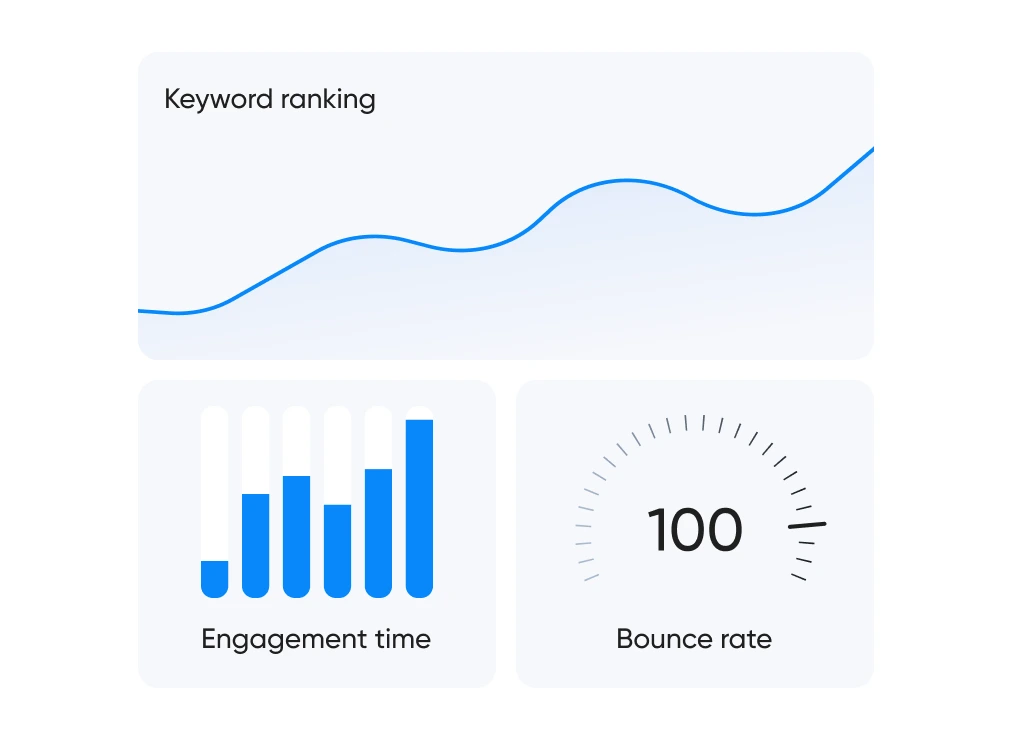
Comprehensive review of your site, competitors, and demand to uncover hidden gaps and growth opportunities.
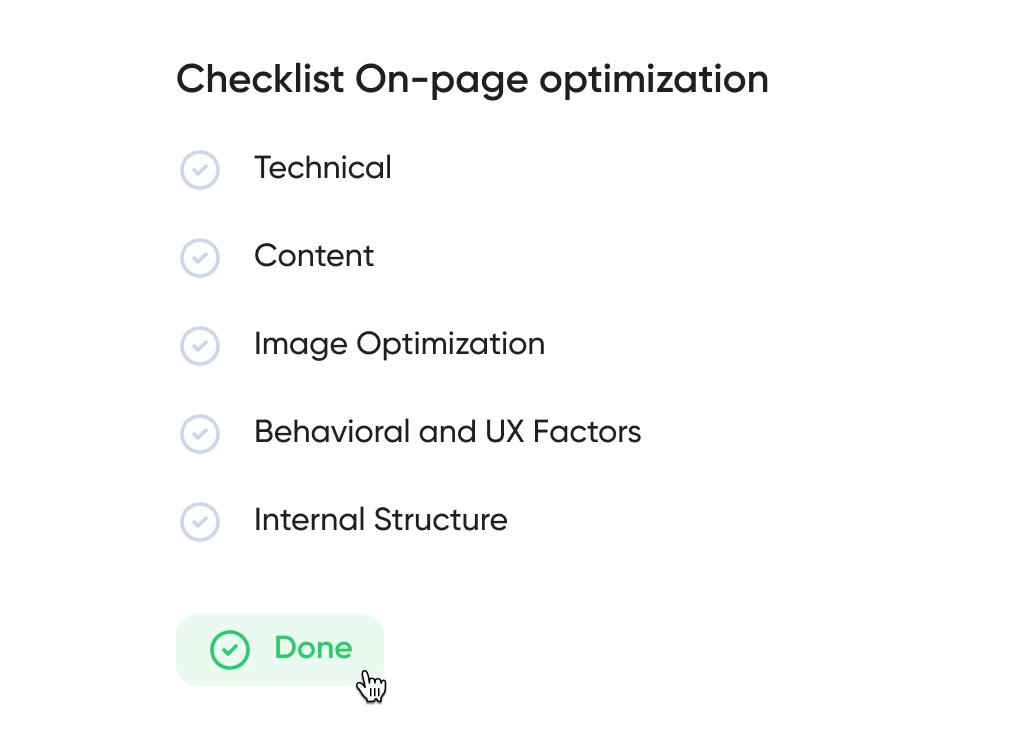
A roadmap built on analytics: technical corrections, optimized site structure, and finely tuned content for maximum results.

Link building, content expansion, and domain authority mapping — all measured by real data, not assumptions.
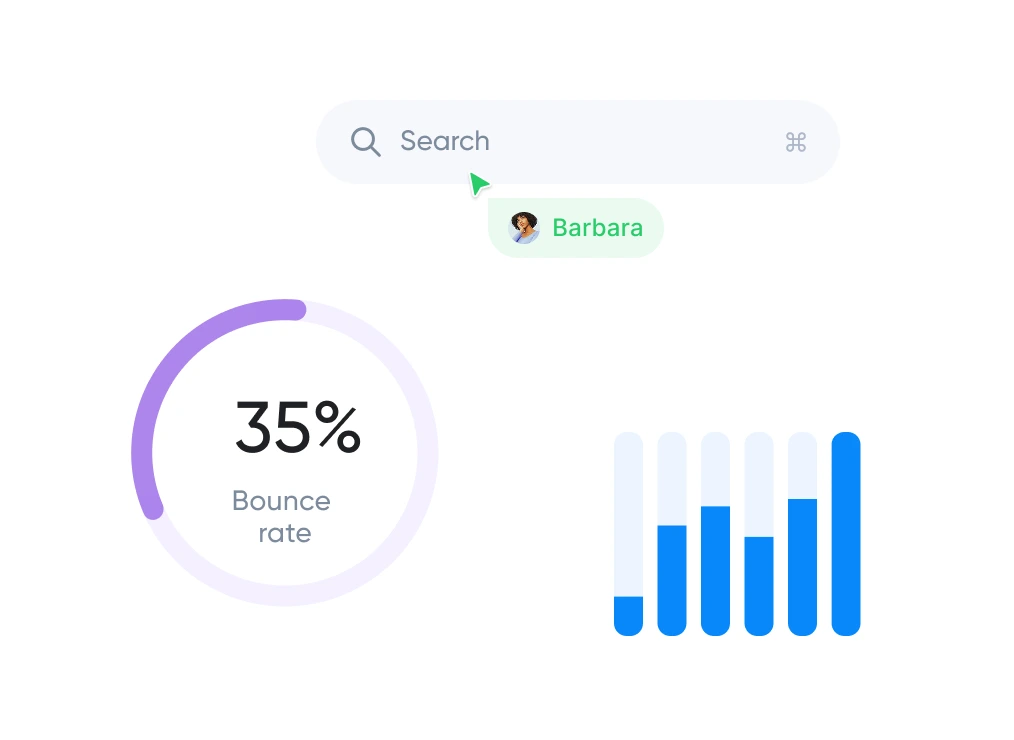
Advanced reporting, performance tracking, and continuous improvements of all SEO aspects to keep rankings growing.


Helping you gain visibility at the right pace — tailored to your business needs.
Each project is scoped individually — based on site size, market competition,
and the depth of optimization required.
SEO strategies tailored to different sectors — from local services to global enterprises.
Didn’t find what you were looking for? Drop us a line at info@toimi.pro.
Burbank sits next to some of the biggest media budgets in the country — entertainment companies with in-house SEO teams and studio-scale content output — while also hosting plenty of ordinary B2B businesses competing regionally and nationally on completely different terms. Winning here usually means picking a defensible niche rather than trying to outrank a studio's marketing department on broad entertainment-industry terms.
The work spans technical audits, keyword research, on-page optimization, content strategy and production, link building, local SEO, and — for businesses serving clients outside Southern California — international SEO. Which of these gets prioritized first depends on where the biggest gap actually is; a technically sound site with thin content needs a different starting point than a content-rich site nobody can crawl properly.
B2B search behavior looks nothing like consumer search — the keywords that matter are usually comparison and alternative queries, plus educational content for someone earlier in a longer buying cycle. A production-services vendor selling to studios needs content that speaks to a technical buyer doing due diligence, not a consumer scanning search results for the fastest option.
Local SEO carries real weight here specifically because Burbank sits inside the broader LA search market without being the same market — a Google Business Profile, consistent local citations, and genuine local reviews are what separate a Burbank business from getting lost under Los Angeles proper in the results.
Core Web Vitals, crawlability, site structure, structured data, mobile usability, and security all get audited as a baseline, since a technical gap in any one of them tends to cap everything else a content or link-building campaign might achieve. Duplicate content is a common finding on sites that have gone through a few redesigns without cleaning up the older URLs each time.
Content strategy starts from the specific queries that should actually drive the priority list, not a generic content calendar. Structure and quality both matter — a page needs the depth and credibility signals search engines look for in a competitive niche, especially when the competing content comes from companies with a much bigger content budget.
Meaningful movement typically shows up somewhere between six months and a year and a half, depending on how competitive the specific niche is and how much technical debt the site started with. A Burbank B2B company chasing a narrow, less-contested term usually sees results faster than one competing on broad entertainment-industry terms against studio marketing budgets.
Most engagements open with a strategy and audit phase running two to four months, which sets the priorities and the roadmap, followed by an ongoing monthly program that executes against it. The audit phase is where the biggest early decisions get made — skipping it in favor of jumping straight to execution tends to cost more time later correcting course.


