Not finding the exact service you need?
Get in touch

We dig into your site’s structure, content, and backlinks to uncover hidden blockers and turn them into ranking power.
Publishing content but not getting visits?
We align pages with real user intent.
Building links that don’t help?
We focus on authority sources that pass real value.
Traffic is coming but not converting?
We optimize landing pages for leads and sales.
Need results in Google and Yandex?
We tailor strategies for both search engines.
Houston has never adopted formal zoning, which is a well-documented quirk of the city's planning history and also a practical fact that shapes how people search here: commercial activity is scattered across the metro rather than concentrated in one obvious downtown core, so "near me" and district-qualified searches — Energy Corridor, Galleria, Texas Medical Center, Clear Lake — carry more real search volume than they would in a more centralized city. A business ranking only for "Houston" city-wide terms is competing in the broadest, least specific field available, while a meaningful share of actual buyer intent is searching by district instead, often without including the word "Houston" in the query at all.
That lack of a single center of gravity also means competitor sets differ sharply by district and industry: a health-tech company competing for search visibility near the Texas Medical Center — the largest medical complex in the world by campus size — faces an entirely different competitive field than an energy-services company optimizing for the Energy Corridor, even though both technically compete in "Houston" as a market. We scope keyword and competitor research to the specific district and industry rather than treating Houston as one undifferentiated map of demand. The Port of Houston adds a further layer for logistics and industrial-services businesses specifically, generating B2B search demand tied to shipping, freight, and supply-chain terms that has almost nothing in common with consumer local search in the same metro.
Houston is one of the most ethnically diverse large cities in the country, with an established Vietnamese-American community centered on the city's Asiatown district alongside a large Spanish-speaking population citywide. For consumer-facing and healthcare search specifically, that means a meaningful share of real search volume happens in Vietnamese and Spanish as well as English — and a single-language SEO strategy is, by construction, invisible to that share of the market, regardless of how well it ranks for the English-language terms it does target. That invisibility compounds over time, since search engines have little historical signal to build on for a language a site has never published in.
Before content work starts, we run a technical audit focused on the two issues most common in a sprawling, multi-district metro: consistent local business schema across every district-specific location a business operates, and page-speed performance for a search population doing a disproportionate share of its local searching on mobile while commuting between Houston's spread-out business districts. For logistics and industrial clients tied to the Port, we also check that B2B-focused pages aren't accidentally competing against a company's own consumer-facing content for the same crawl budget and internal link equity.
Houston hosts one of the largest concentrations of foreign consulates in the country, a direct reflection of how tied the city's energy and trade economy is to international partners. That international layer generates real B2B search demand in languages beyond English and Spanish, tied to specific trade relationships — a business serving Houston's energy-trade sector may see meaningful search volume in languages matched to its major trading partners, a pattern that a keyword strategy built only around the city's two largest domestic-language communities would miss entirely.
Discovery starts by mapping which of Houston's business districts and language communities a business actually serves, since both materially change the keyword and competitor set. Technical foundation work follows — schema, page speed, and indexation — then content development sequenced against the district- and language-specific keyword map rather than a single city-wide list. For multilingual work, content is written natively in each target language rather than machine-translated from an English original, since search engines and readers both treat the difference as a quality signal. Reporting tracks ranking movement by district and by language separately, since aggregate city-wide numbers can mask real gains or losses within either.
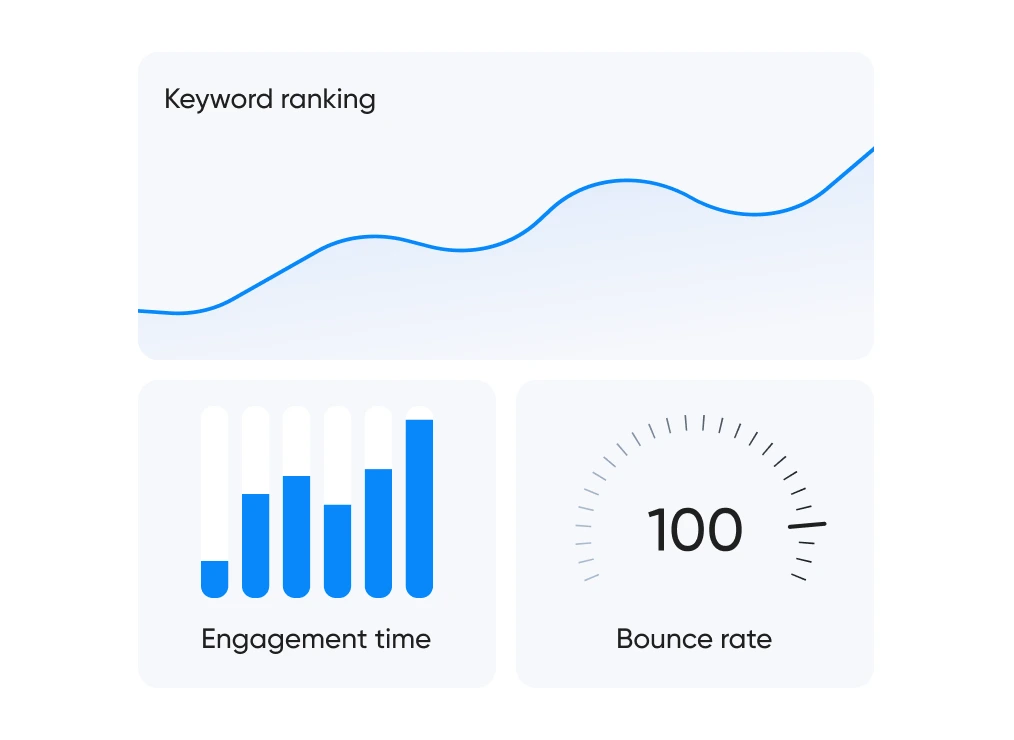
Comprehensive review of your site, competitors,and demand to uncover hidden gaps and growth opportunities.
A roadmap built on analytics: technical corrections, optimized site structure, and finely tuned content for maximum results.

Link building, content expansion, and domain authority mapping — all measured by real data, not assumptions.
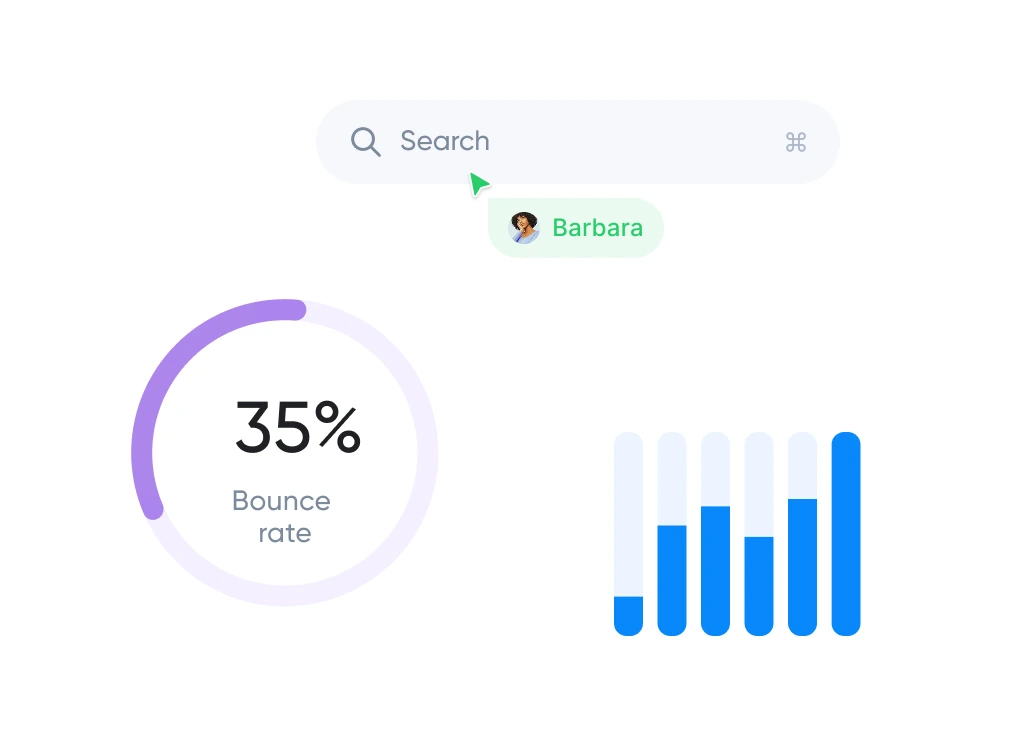
Advanced reporting, performance tracking, and continuous improvements of all SEO aspects to keep rankings growing.


Helping you gain visibility at the right pace — tailored to your business needs.
Each project is scoped individually — based on site size, market competition,
and the depth of optimization required.
SEO strategies tailored to different sectors — from local services to global enterprises.
Didn’t find what you were looking for? Drop us a line at info@toimi.pro.
Pricing depends on your industry and competition level. We provide transparent proposals with measurable goals — no contracts lock you into services that don't deliver results.
Most Houston clients notice improved rankings within 90-120 days, though timelines vary by industry. A restaurant in EaDo competing locally might see traction faster than an engineering firm targeting nationwide energy keywords. We track weekly progress — keyword positions, organic traffic, and conversion metrics — so you understand exactly how your investment performs. Industries with established Houston competition, like oil and gas services or medical specialization, require longer runway but produce sustainable results. Quick wins come from technical fixes and local listings; long-term growth stems from content and authority building.
We work extensively with energy companies in the Westchase district, medical practices near Hermann Park, logistics firms close to the Port of Houston, and professional services downtown. Houston's economy demands specialized knowledge — we understand how to position pipeline inspection services differently than cosmetic surgery clinics. Manufacturing businesses in the East End, legal firms in the Galleria area, and tech startups in Midtown all require distinct strategies. Our team researches your specific market, competitor landscape, and customer search behavior to build campaigns that reflect Houston's diverse business environment.
Every engagement starts with a comprehensive technical audit of your current site. We examine page speed, mobile responsiveness, indexing issues, structured data, and security protocols — then prioritize fixes based on impact. For Houston businesses with legacy websites built years ago, this often reveals critical problems blocking search visibility. We document everything in plain language, explain why each issue matters for your rankings, and provide a roadmap for implementation. The audit includes competitor analysis so you see exactly where your site stands in Houston search results and what gaps need closing.
Houston's sprawling geography means local SEO requires neighborhood-level precision. We optimize Google Business Profiles for each location, build citations across Houston-specific directories, and create content targeting district searches — "HVAC repair Pearland" performs differently than "HVAC repair Katy." For multi-location businesses, we implement location pages that highlight genuine differences between your Memorial City and Sugar Land operations. Customer reviews receive strategic responses, and we ensure your NAP data stays consistent across hundreds of listings. This hyper-local approach drives foot traffic and service calls from searchers near your actual business locations.
Technical optimization and off-site signals can improve rankings, but content updates usually deliver the strongest results. If your Houston law firm's practice area pages haven't been refreshed since 2019, they likely miss current search intent and lack depth competitors now provide. We recommend content improvements based on what actually ranks — not arbitrary word counts or keyword density formulas. Some clients prefer we handle all writing; others want to review and approve everything. Either way, content changes align with your brand voice and expertise, never generic filler that reads like it could describe any business in any city.
You receive a dedicated project contact who understands your business and Houston market position. We schedule bi-weekly calls to review progress, discuss strategy adjustments, and answer questions — or meet monthly if you prefer less frequent check-ins. Between meetings, you have direct Slack or email access for quick questions. Reporting happens through a client dashboard showing real-time ranking changes, traffic sources, and conversion data. No jargon-filled reports that obscure actual performance — we explain what the numbers mean for your revenue and what we're doing to improve them. Transparency keeps everyone aligned on goals and tactics.
SEO requires ongoing maintenance — search algorithms evolve, competitors adjust their strategies, and your business changes over time. We continue monitoring rankings, updating content as needed, building authority through links and citations, and adapting to algorithm updates that affect Houston search results. Most clients transition to a lower monthly retainer once initial goals are met, focusing on preservation and incremental growth rather than aggressive expansion. We provide quarterly strategy reviews to identify new opportunities — maybe you've added services, opened a new location near the Galleria, or want to target adjacent markets. The work never truly ends, but the intensity and investment can flex with your needs.
Native-language content development, not translation of an English original — this matters both for how search engines assess quality and for how the actual reader receives it.
Each district-specific location gets its own optimized page and local schema, scoped to that district's actual competitor set rather than one shared city-wide page.
Yes — it's a structural reason "near me" and district-qualified search volume outweighs city-wide search volume here more than in a metro with a single obvious downtown.
The competitive field there is dense and specialized, so keyword and content strategy is scoped to that specific district and industry rather than general Houston healthcare terms.
Yes — freight, shipping, and supply-chain-related B2B search demand tied to the Port is a distinct category from consumer local search, with its own keyword set and competitor field.
With deliberate information architecture and internal linking, yes — that's part of the technical audit for any Houston business operating in both categories at once.
For businesses tied to specific trade partners, yes — we check for search demand in the languages that match a company's actual trading relationships rather than assuming the two largest local-language communities cover the full opportunity.
By working from the actual trade and partner data a business already has — which countries generate real inbound inquiries — rather than guessing at language priority from citywide demographics alone.
Yes — industrial suppliers, equipment vendors, and specialized service providers serving refining and processing operations along the Ship Channel compete in a keyword space closer to heavy-industry B2B procurement than to general Houston business search.
The buyer is typically a procurement or operations role researching specialized industrial equipment or services, which favors detailed technical content and case-based specifications over the broader market-positioning content that works for office-based energy software vendors.
Where relevant, yes — visitor-facing and membership content for cultural institutions competes in a different, less commercially aggressive keyword space than the energy, medical, and aerospace categories that otherwise dominate this market.
A district-by-district and language-by-language technical and competitive audit, corrected schema, and an initial content wave targeting the clearest gaps identified in that audit, with measurable movement typically following in the second quarter.
Only the districts where it actually has a real service area or location — targeting a district with no genuine local presence tends to produce content that neither ranks well nor converts, since the underlying business reality doesn't back it up.
Not necessarily separate strategies, but citation and local-relevance signals are checked per district, since a listing or mention accurate for a Galleria location doesn't automatically carry the same weight for an Energy Corridor one.
Often longer than a single-location business in a more centralized city, simply because there are more district-specific pages and local schema records to build and stabilize before the full picture shows up in rankings.
Reviews on the platforms a given language community actually trusts and uses carry more real weight than a uniform assumption that one review platform serves the whole city equally.
Yes — each district gets tracked as its own line in the report, since aggregate citywide movement can mask a district that's underperforming while another compensates for it.


