Not finding the exact service you need?
Get in touch

We dig into your site’s structure, content, and backlinks to uncover hidden blockers and turn them into ranking power.
Publishing content but not getting visits?
We align pages with real user intent.
Building links that don’t help?
We focus on authority sources that pass real value.
Traffic is coming but not converting?
We optimize landing pages for leads and sales.
Need results in Google and Yandex?
We tailor strategies for both search engines.
A growing share of searches end without anybody visiting a site. The answer is shown directly. The page that supplied it records an impression and no visit. Treating this as a ranking failure leads to the wrong work.
The first step is separating the query types. Some questions were always answered in place. A definition. A conversion. An opening time. Competing for that click is not winnable, and it was never valuable. Others involve a decision, a comparison or a purchase, and those still produce visits.
Reporting should reflect that split. A single site-wide click-through figure mixes the two. It then moves for reasons nobody can act on. Separated, the informational set can be measured on presence and the commercial set on clicks, which are different objectives with different tactics.
For the informational set, being the cited source still has value. It carries the brand name into the answer, it builds the association a person brings to their later commercial search, and the citation often names the publisher. Structuring content so a specific passage answers a specific question makes that citation more likely.
For the commercial set, the work is the opposite. Give the page something an answer box cannot replicate: current pricing, a configurator, availability, an interactive comparison, the specific detail that requires seeing the source.
There is a defensive angle too. Content written to be extracted easily can be extracted entirely, and then the visit disappears. Comprehensiveness on the page and a summary that invites rather than completes is the balance to aim for.
None of this is reversible by anything we do. The honest framing is that some of the old traffic was always going to leave, and the measurable goal moves to the queries where a person still needs to arrive.
Our SEO services in Fairfax join site repairs, new pages and link earning to the tracking that proves what they return. Published tiers: about $300 to set up analytics and conversions, near $1,000 for deep funnel analysis, around $1,500 for SEO combined with CRM-level business analytics. Full-cycle timing is set in the estimate.
Most disputes between a company and its SEO provider start with something nobody wrote down. The agreement is where that gets settled, before any work begins.
Ownership comes first. Search Console, analytics, the Business Profile, the domain registrar, the tag manager. All of them belong to the company, and the agency receives user access. If an agency owns the accounts, leaving it means losing years of data.
Deliverables should be named as things. An audit document with its list of findings. A number of pages written or revised per month. A set of tickets for the developers. Phrases such as ongoing optimisation cannot be checked at the end of a month.
Client inputs belong in the document too. Work stalls on access more than on anything else. The agreement lists what is needed in the first week: logins, a developer contact, a person who can approve copy.
Approval needs a clock. Who signs off a page, how long they have, what happens when the window closes. A two-week review on every article sets the real pace of the project, whatever the plan says.
Out-of-scope items get named. Paid ads, a redesign, hosting changes. Listing them avoids a surprise invoice and a disappointed client.
Reporting belongs in writing as well: which numbers, how often, in what format, delivered by whom. A format changed halfway makes the months impossible to compare.
Third-party costs are listed separately. Tools, paid placements, translation, stock photography. The agreement says who pays and who holds each licence.
Paid links need a clause of their own. Google's spam policies treat paid links that pass ranking credit as link spam. The agreement should state that any paid placement carries a sponsored or nofollow attribute, and name who approves each one.
Notice and review points keep both sides honest. A review at three or six months, with the right to leave on short notice, gives the client leverage. A long lock-in with no review protects only the provider.
Confidentiality runs both ways. The agency sees sales data and plans. The client sees methods and tools. One paragraph covers both.
The exit clause matters most and gets read least. On leaving, the client should receive every document, the content in editable form, the keyword research and the change log. Content written under the agreement should pass to the client once paid.
One promise should never appear. Google's own guidance on hiring an SEO says nobody can guarantee a first-place ranking. A contract that offers one is a warning sign.
Site-wide changes are hard to read. Traffic moves for many reasons in the same month. Season, an algorithm update, a competitor's launch. Attribution turns into guesswork.
Sites with many similar pages can do better. Split the pages of one template into two groups that performed alike over recent months. Apply the change to one group. Leave the other alone. Compare Search Console clicks for both over the following weeks.
Build the groups with care. Assign pages at random, check that traffic totals are close, and make sure no single page dominates either side. A group of fifty pages where one page brings half the clicks is a test of that page alone.
Test one change at a time. Two changes on the same group cannot be separated afterwards.
Title rewrites and copy changes suit this method best. They apply per template, show up in clicks quickly, and can be reversed.
Keep the control group untouched for the whole period. A developer who fixes a typo on one control page during the test is harmless. A new template rolled out to half of them is not.
Wait long enough. Google has to recrawl the changed pages before anything can move. Check crawl dates through URL inspection on a sample before counting days.
Read the result as a difference between groups. If both rose by the same amount, the change did nothing and the season did the rest. If the test group fell, roll the change back and write down why it was tried.
Watch impressions alongside clicks. A change that lifts impressions and lowers click-through rate may have pulled pages into broader queries. That can be good or bad. The queries themselves tell which.
Keep both groups inside one product line or one topic. Groups that serve different seasons drift apart for reasons unrelated to the test.
Write the test down before it starts: the hypothesis, the groups, the start date, the metric, and the size of change that would count as a result. A threshold chosen afterwards turns any wobble into a finding.
A winning change then rolls out to the control group and the rest of the template. The whole set is watched for one more cycle.
Small sites cannot run this. With a handful of pages we compare before and after against the dated log, and say plainly how uncertain the reading is.
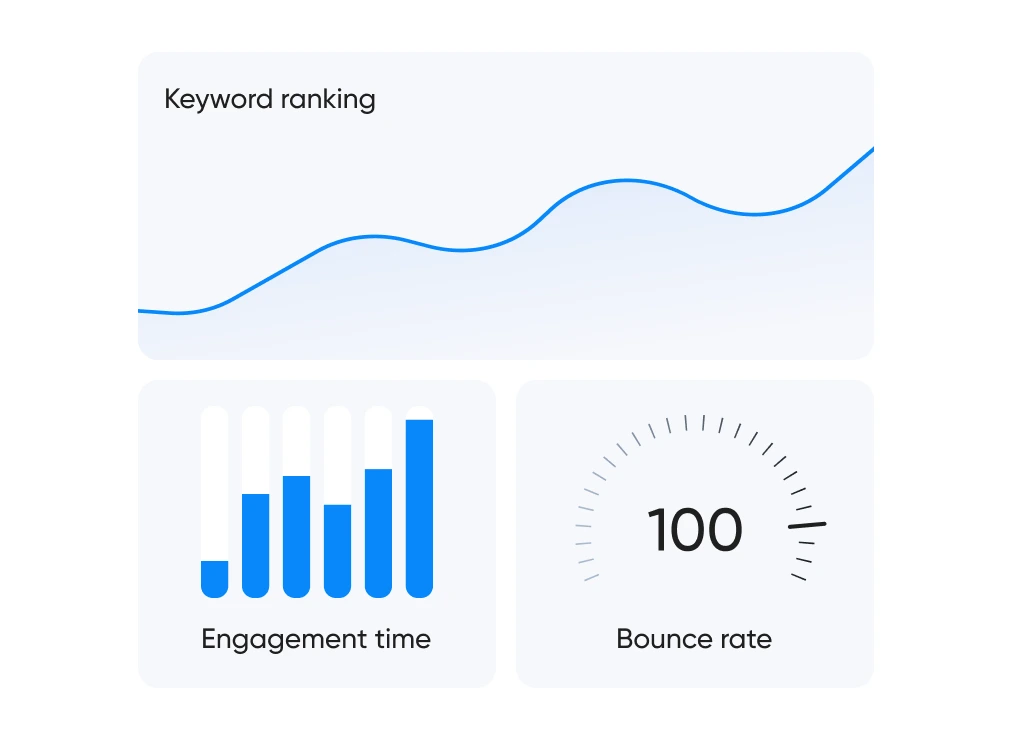
Comprehensive review of your site, competitors, and demand to uncover hidden gaps and growth opportunities.
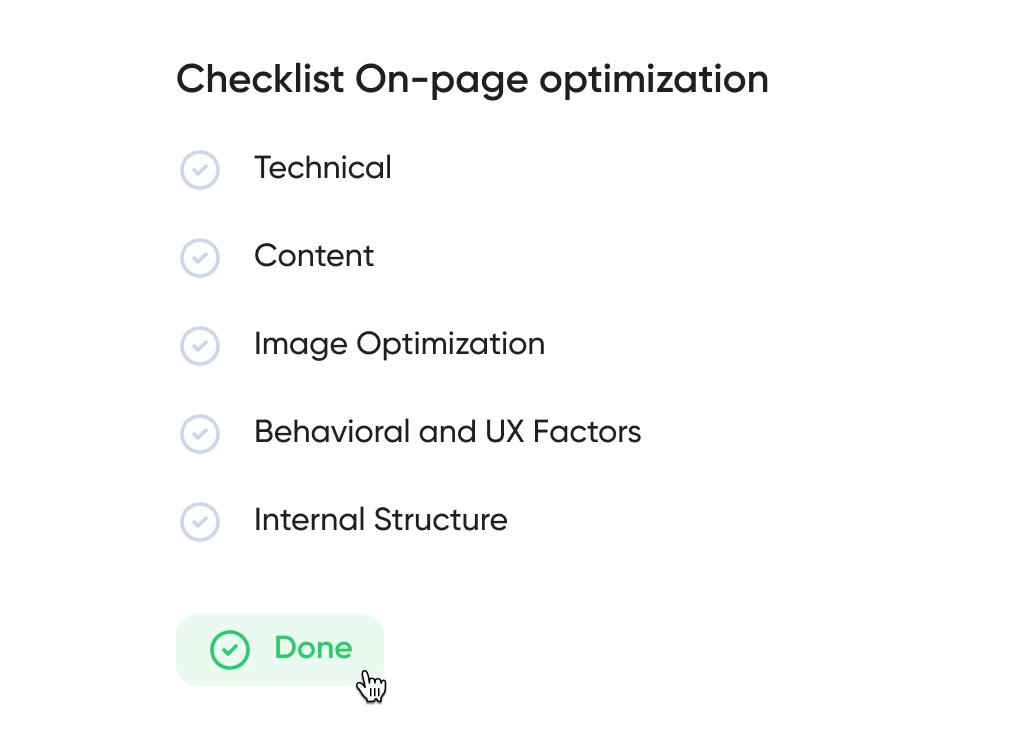
A roadmap built on analytics: technical corrections, optimized site structure, and finely tuned content for maximum results.

Link building, content expansion, and domain authority mapping — all measured by real data, not assumptions.
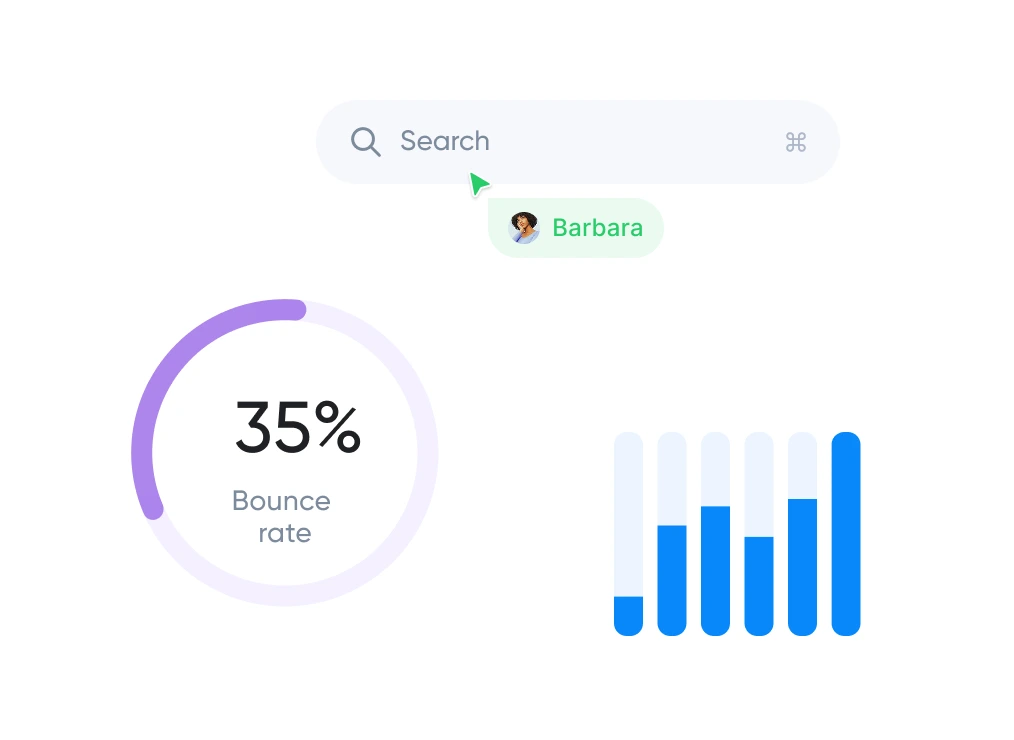
Advanced reporting, performance tracking, and continuous improvements of all SEO aspects to keep rankings growing.


Helping you gain visibility at the right pace — tailored to your business needs.
Each project is scoped individually — based on site size, market competition,
and the depth of optimization required.
SEO strategies tailored to different sectors — from local services to global enterprises.
Didn’t find what you were looking for? Drop us a line at info@toimi.pro.
SEO pricing for Fairfax companies depends on your current site health, competition level, and goals — whether you're targeting local George Mason University students or competing regionally with government contractors. Budget varies based on the scope of technical fixes, content development, and link-building efforts required. Prices start at about $300 for analytics setup, with exact costs defined after we audit your site and understand your market position. We provide a detailed proposal once we review your project brief and competitive landscape.
Fairfax businesses benefit from a mix of local and regional SEO tactics given the city's proximity to federal agencies and Northern Virginia's competitive market. We focus on technical site optimization, Google Business Profile management for visibility in Fairfax City and surrounding areas, and content that speaks to your specific audience — whether that's university-affiliated organizations or B2G service providers. Keyword research targets both local searchers and broader DMV-area prospects. We also address mobile performance and page speed, which directly impact rankings and user experience.
Initial improvements often appear within 8-12 weeks, with more significant ranking gains typically materializing around the 4-6 month mark. Fairfax's competitive environment — especially for sectors serving government clients or educational institutions — means timelines vary based on your industry and current domain authority. We start with quick wins like technical fixes and local listing optimization, then build momentum through content creation and authority-building efforts. Patience is essential, as sustainable SEO is a long-term investment rather than an overnight fix.
Absolutely — local SEO is critical for Fairfax businesses targeting customers in specific neighborhoods like Old Town Fairfax or near the Fairfax County Government Center. We optimize your Google Business Profile, ensure NAP consistency across directories, and create location-specific content that resonates with Northern Virginia searchers. For businesses serving surrounding areas like Vienna or Arlington, we implement geo-targeted strategies to capture relevant traffic. Local link-building and citation management help you appear in map packs and local search results where your customers are actively looking.
We rely on industry-standard platforms including Google Search Console, Google Analytics, SEMrush, and Ahrefs for keyword research, rank tracking, and competitor analysis. These tools help us monitor your Fairfax site's performance, identify content gaps, and discover opportunities your competitors might be missing. We also use specialized technical audit tools to uncover crawl errors, broken links, and mobile usability issues. Monthly reports show ranking progress, organic traffic growth, and conversions — giving you full transparency into how your SEO investment performs in the competitive Fairfax market.
Yes — we conduct thorough penalty assessments to determine whether you're dealing with an algorithmic or manual action. Fairfax businesses occasionally face issues from outdated link-building tactics or thin content that doesn't meet current quality standards. We audit your backlink profile, remove or disavow toxic links, fix technical violations, and rebuild your site's authority through white-hat methods. Recovery timelines depend on penalty severity, but we've helped businesses restore rankings and regain organic traffic after significant Google updates.
We provide monthly reports with clear metrics — rankings, organic sessions, goal completions — and schedule regular check-ins to discuss strategy adjustments. You'll have direct access to our team via email and scheduled calls, ensuring you're never left wondering what's happening with your Fairfax site. We use shared dashboards so you can monitor real-time performance whenever you want. Transparency is non-negotiable — you'll understand exactly what we're doing, why we're doing it, and how it impacts your bottom line.
SEO isn't a set-it-and-forget-it solution — ongoing maintenance keeps you competitive as algorithms evolve and new competitors enter the Fairfax market. We continue monitoring rankings, updating content to reflect seasonal trends or industry changes, and building authority through fresh backlinks. Technical upkeep ensures your site remains fast and crawlable as you add new pages or features. Most clients transition to a retention plan that maintains momentum while allowing flexibility to pivot strategy based on performance data and business goals.


