info@toimi.pro
Thank you!
We have received your request and will contact you shortly
Okay

SEO website promotion that drives growth
in Austin

avatar Toimi
Full-cycle SEO for Austin companies — from technical optimization and semantic core to link building and content strategy.
Austin-focused flows
Clean UX paths
Fast product logic

SEO Services in Austin, TX: solving the SEO challenges
90% of businesses face

Traffic’s flat?
We fix what SEO tools miss.

We dig into your site’s structure, content, and backlinks to uncover hidden blockers and turn them into ranking power.

Publishing content but not getting visits?

We align pages with real user intent.

Building links that don’t help?

We focus on authority sources that pass real value.

Traffic is coming but not converting?

We optimize landing pages for leads and sales.

Need results in Google and Yandex?

We tailor strategies for both search engines.

SEO Services in Austin, TX: who we work with

Startups
Get found fast in competitive markets with lean SEO strategies built for growth.
  • First rankings in 4–8 weeks
  • Keyword map for your niche
  • Scalable content plan for visibility
Kickstart your presence
Small businesses
Stand out locally and online with SEO that fits your scale and supports your operations.
  • Local SEO and map pack rankings
  • On-page fixes for quick wins
  • Content + backlinks
Boost local reach
Corporations
Complex websites demand enterprise-level SEO solutions fit for complexity.
  • International and multilingual
  • Advanced site audits
  • Authority building
Explore enterprise SEO

Why local search here is getting harder, not easier

Texas has no state personal income tax, and that single line in the tax code has pulled a steady stream of companies and individual filers into Austin for the better part of a decade. Every one of those new arrivals is a new LLC, a new local listing, and in a lot of cases a new competitor for the same local search terms an established Austin business used to have mostly to itself. Organic search here isn't getting easier as the city grows; the competitive floor keeps rising because the population growth is disproportionately made up of people who already ran a business somewhere more expensive and know how to market one. A ranking strategy that would have been enough five years ago in Austin is frequently not enough now, simply because the field of competitors has changed shape.

SXSW compresses a full year of search-interest volatility into one March week, spiking demand for hospitality, events, and short-term service categories and then dropping it just as fast — a pattern that trips up ranking strategies built around steady month-over-month growth assumptions. Outside of that week, Austin's baseline demand is a mix of enterprise-software buyers researching vendors, healthcare search tied to the Dell Medical School research ecosystem, and a hardware and manufacturing supply chain that grew up around the Tesla and Apple campuses on opposite sides of the metro. Each of those baseline categories has its own competitive rhythm — enterprise software buyers do long research cycles across many pages before converting, while local healthcare search tends to resolve faster and closer to a specific need, and a content calendar that treats both the same way underserves one of them.

The keyword sets that actually move in Austin

Local-service categories — contractors, healthcare, legal — compete in a market where a large share of the population is relatively new to the city, which means "near me" and neighborhood-qualified searches (Domain, East Austin, South Congress) carry more relative weight than they would in a market with a more stable, longer-tenured population that already knows which business to call. B2B and SaaS keyword competition, by contrast, is shaped by the enterprise employers now anchored here — searches increasingly assume the reader already knows Austin is a tech market, which raises the bar for generic "software company Austin" content that doesn't say anything a competitor couldn't also claim. The University of Texas also generates a steady stream of research-adjacent and student-driven search volume that a handful of local categories — tutoring, off-campus housing, early-career recruiting — can build content around directly.

Technical baseline before content

We run a full crawl and indexation audit before any content or link work starts, because a fast-growing local business market means a lot of new sites are competing on infrastructure that hasn't caught up with their growth — slow server response times during traffic spikes (SXSW week being the extreme case), inconsistent local business schema across locations for multi-location operators, and mobile performance issues that show up disproportionately given how much local search here happens on a phone during a commute. We also check for duplicate or thin location pages, a common byproduct of a business scaling quickly across multiple fast-growing Austin-area suburbs like Round Rock, Cedar Park, and Pflugerville without a clear content plan for each one.

How we run the engagement

Month one is audit and foundation: technical fixes, schema markup for local business and service categories, and a keyword map built against actual Austin search volume rather than a national keyword list with the city name appended. Months two and three build out content against that map, prioritized by which gaps a competitor analysis shows are actually winnable rather than which pages are easiest to write. From month three onward we shift toward measurement and iteration — rank tracking against the specific competitor set in each service category, and a monthly report that ties movement back to the pages and technical changes that caused it, not just a ranking screenshot. For businesses with a genuine SXSW-week demand spike, we add a pre-festival readiness check in the preceding month, covering both content and server capacity.

Relocation search is its own content category

Austin's population growth over the past decade has been driven heavily by people moving from other states, and that produces a large, recurring volume of informational search — "moving to Austin," "best neighborhoods in Austin," "cost of living Austin vs [origin city]" — that has almost nothing to do with a business's core service keywords but sits directly upstream of it. Real estate, moving services, home services, and even local healthcare providers can capture a meaningful share of future customers by building content that answers the relocation question first and the service question second, since that's the actual order in which a new arrival searches.
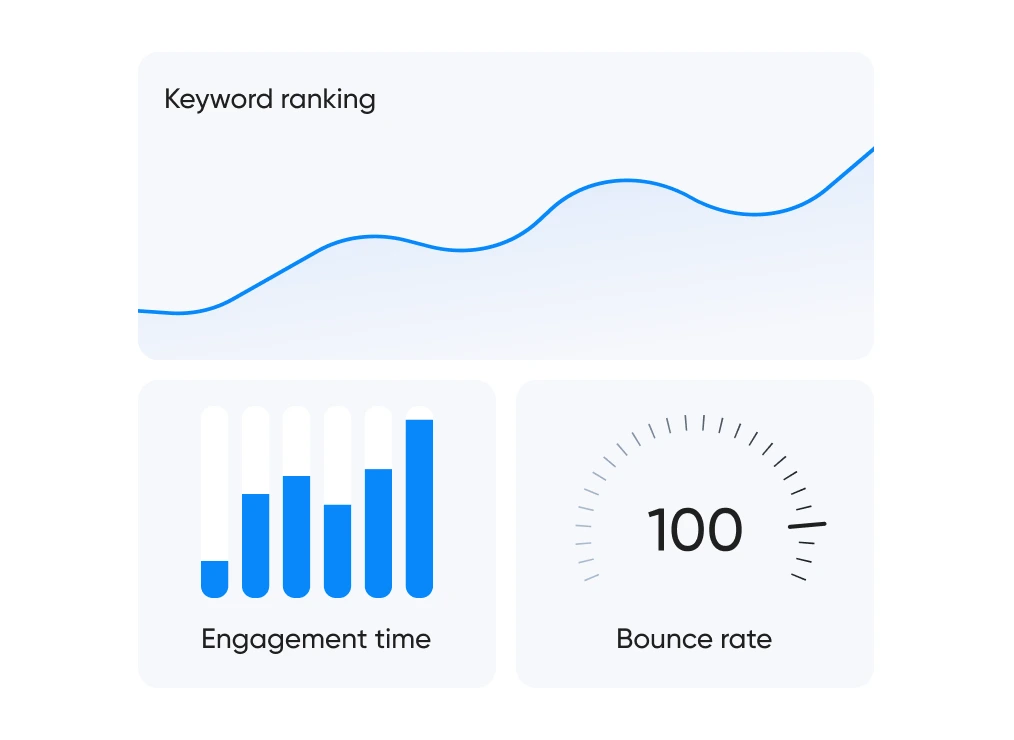
I already run ads. Why should I even consider SEO?
Because SEO delivers ROI up to 5x higher than paid ads.
Unlike ads, it keeps driving traffic even when you stop spending.
Done right, it builds steady traffic and trust — without paying for every click.

What’s included in proper SEO practices

Traffic & Rankings growth
Making sure the right audience finds you in Google and Yandex.
Organic growth
Local & global rankings
Content & Relevance
Aligning every page with both user intent and search engine signals.
Intent matching
Content signals
Website authority
Building credibility in the eyes of search engines with strong link profiles.
Quality backlinks
Brand mentions
Technical stability
Keeping your site technically sound and future-proof for long-term results.
Speed & security
Error monitoring

Ready to rank where it matters most?

Let’s chat

Our SEO process: Data-driven, not guesswork

SEO audit & research

SEO audit & research

Comprehensive review of your site, competitors, and demand to uncover hidden gaps and growth opportunities.
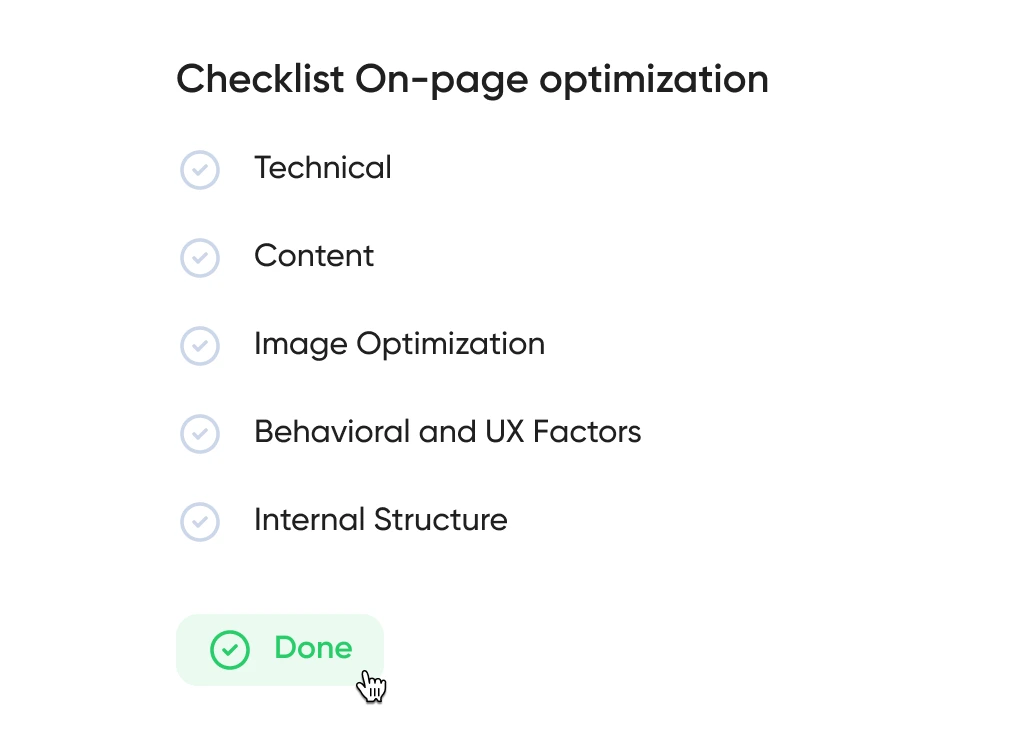
Strategy & On-page fixes

Strategy & On-page fixes

A roadmap built on analytics: technical corrections, optimized site structure, and finely tuned content for maximum results.

Authority & Content growth

Authority & Content growth

Link building, content expansion, and domain authority mapping — all measured by real data, not assumptions.
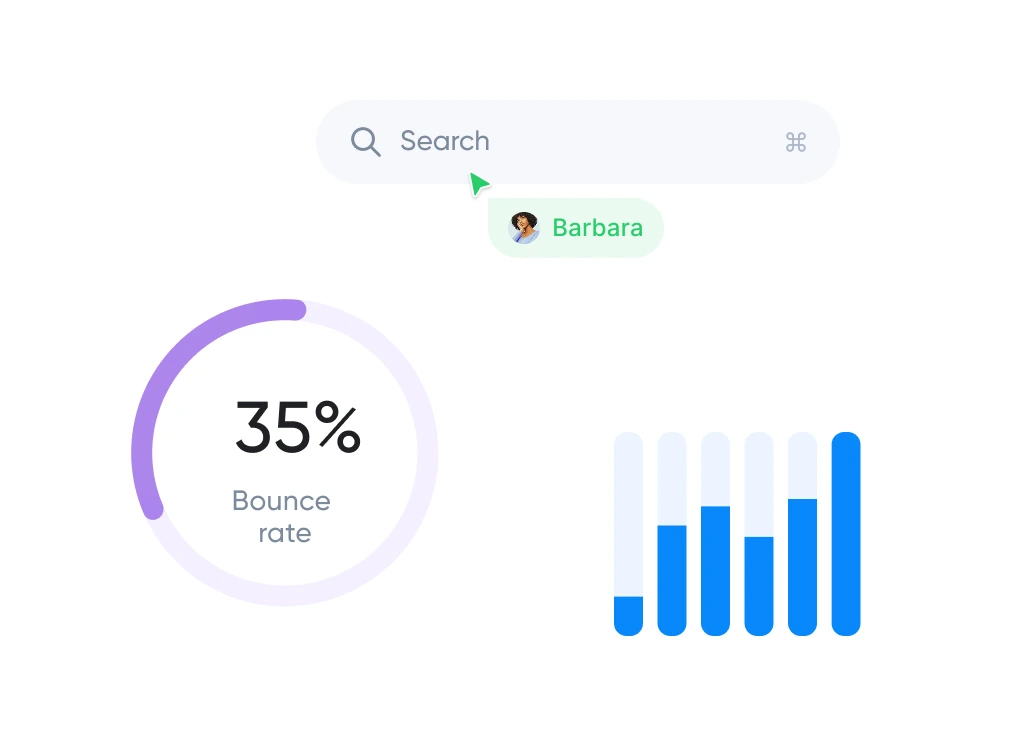
Monitoring & Scaling

Monitoring & Scaling

Advanced reporting, performance tracking, and continuous improvements of all SEO aspects to keep rankings growing.

How we work

Artyom Dovgopol
SEO is not a single action but a sequence of steps that build on each other. Each stage adds strength and prepares your site for growth.
Laying the groundwork
avatar avatar
We analyze your market and competitors, build the semantic core, and carefully cluster queries. This creates a solid roadmap for attracting traffic that matters and aligns with your business goals.
Semantic research
Query clustering
Fixing the foundation
avatar avatar
avatar avatar
Technical issues often block visibility without being noticed. We improve site speed, structure, and indexing so search engines can fully read, understand, and value your content.
Technical cleanup
Structural optimization
Building authority
avatar avatar avatar
Links and mentions shape long-term credibility. We strengthen your domain with sustainable link-building, trusted mentions, and relevant domain mapping to boost rankings steadily.
Link growth
Domain mapping
Creating impactful content
avatar avatar
Content is the driver of search visibility. We optimize existing pages and create new ones that match user intent while supporting your brand's voice and goals.
Content creation
On-page SEO
Growing without limits
avatar avatar
SEO is never finished. We track performance, refine strategies, and expand into new regions, languages, and topics to keep visibility growing year after year.
International SEO
Continuous monitoring

SEO delivery formats

Helping you gain visibility at the right pace — tailored to your business needs.

Quick boost
For companies that need results fast or want to test SEO potential before scaling.
  • Targeted optimizations in 2–4 weeks
  • Focus on high-impact fixes and quick wins
  • No major website rebuild required
Full cycle
Comprehensive SEO — from research and technical work to scaling and long-term growth.
  • In-depth audit and full strategy design
  • On-page, off-page, and technical improvements
  • Continuous development as your business expands

SEO scope and cost in Austin

Each project is scoped individually — based on site size, market competition,
and the depth of optimization required.

Analytics setup and conversion tracking
~ $300
SEO + business analytics (CRM integrations and goals)
~ $1,500
Deep analytics and sales funnel optimization
~ $1,000
The final scope depends on your website’s size, competition level, and chosen strategy.
Each stage is estimated separately — with full transparency from the start.
Get your custom estimate

Solutions by industry

SEO strategies tailored to different sectors — from local services to global enterprises.

  • E-commerce & Marketplaces
  • Real Estate & Property Listings
  • Healthcare & Clinics
  • Education & Online Courses
  • Travel & Hospitality
  • Technology & SaaS
  • Professional Services (law, finance, consulting)
  • Local Businesses & Franchises
  • Media
Show more

Let's chat

FAQ

Didn’t find what you were looking for? Drop us a line at info@toimi.pro.

How long does it take to see SEO results in Austin?

Typically 3–6 months, depending on your site's current state and industry competition. Highly competitive sectors in Austin may take longer to reach top positions in search results.

Will SEO disrupt our website or daily operations?

No. Most SEO improvements are implemented in the background without affecting site functionality. Major redesigns may temporarily affect workflows, but we coordinate to avoid downtime for Austin businesses.

Do you focus only on Google, or also Bing and other search engines?

Google is the primary focus for Austin markets, but we also optimize for Bing and other engines where relevant. Results vary depending on market share in your region.

How do you measure SEO success for Austin companies?

We track rankings, organic traffic, and conversions. Rankings alone aren't enough — real success means more qualified leads and sales for your Austin business.

Do we need to create new content for SEO?

In most cases, yes. Existing content can be optimized, but long-term growth requires adding new, valuable content that matches search intent and addresses user needs.

Can SEO fix technical issues on our website?

Yes. We handle site speed, mobile responsiveness, indexing, and structured data. Some issues, however, may require deeper development changes beyond standard SEO work.

Is link building still important for SEO in Austin?

Yes, but quality matters more than quantity. We avoid spammy links and focus on partnerships and authoritative mentions from reputable sources relevant to Austin markets.

How does local SEO differ from general SEO?

Local SEO targets location-based searches — like "near me" queries or Google Maps results. It's critical for Austin businesses serving specific neighborhoods or the greater metro area.

Can you guarantee first-page rankings?

No. SEO is influenced by competition and search engine updates. What we guarantee is a data-driven strategy that steadily improves visibility and performance.

What happens after SEO is implemented?

SEO is ongoing. Search algorithms change, competitors adapt, and content needs updates. We provide long-term monitoring and adjustments to maintain and improve results.

Do you build separate strategies for SXSW-week traffic versus the rest of the year?

For hospitality, events, and short-term service categories, yes — we treat that week as a distinct demand spike requiring its own content and technical readiness rather than folding it into a steady-state strategy.

Can you handle multi-location schema for a business with more than one Austin-area address?

Yes — consistent local business schema across locations is part of the technical foundation work before content begins.

Is Austin's SEO competition really different from a mid-size market?

In the categories tied to the relocation wave — SaaS, healthcare, professional services — yes, because a meaningful share of the competing businesses arrived already knowing how to run a modern SEO program, which raises the baseline compared with a market with less inbound business migration.

Do you build content targeting Austin's fast-growing suburbs separately from the city itself?

For businesses actually operating in Round Rock, Cedar Park, or Pflugerville, yes — each gets its own page and local schema rather than one page trying to rank for all of them at once.

Does the University of Texas create any distinct local search opportunity?

For categories like tutoring, student housing, and early-career recruiting, yes — that population generates a specific, recurring seasonal search pattern worth building content around directly.

Should a local business build content for people who haven't moved to Austin yet?

For real estate, moving, and home-services categories especially, yes — relocation-stage informational content captures demand before it turns into a direct service search, often with less competition than the bottom-of-funnel keyword.

How do you measure whether relocation-focused content is actually working?

By tracking it as its own funnel stage — assisted conversions and downstream service-page traffic from relocation content, not just direct rankings on the relocation keywords themselves.

Does Austin's live-music identity create search opportunity beyond venues themselves?

Yes — hospitality, food and beverage, and short-term rental businesses near music districts can reasonably build content around "things to do near [venue/district]" style searches tied to the city's entertainment identity, not just their core service keywords.

Is weekend nightlife search meaningfully different from weekday local search in Austin?

For hospitality and entertainment-adjacent categories, yes — weekend search volume skews toward immediate, mobile, "open now" intent, which favors fast-loading pages and current, accurate hours over long-form content.

Do you track ranking performance differently across Austin's different demand categories?

Yes — SXSW-week hospitality terms, steady-state B2B and healthcare terms, and weekend nightlife terms each get tracked against their own baseline and timeline, since blending them into one report would obscure how each category actually performs.

What's a realistic first-quarter deliverable for a new Austin SEO engagement?

A completed technical audit, corrected schema and indexation issues, and the first wave of content built against the highest-opportunity keyword gaps identified in the competitor analysis — ranking movement itself typically follows in the second quarter.

Do you adjust reporting cadence for a business with a genuine SXSW-week spike?

Yes — reporting adds a dedicated pre- and post-festival check alongside the standard monthly cycle, since a single blended monthly number would understate how much of the year's traffic is concentrated in that one week.

Top articles on SEO and conversion growth star

All categories
GEO and AEO: How to Make Your Brand Visible to AI Search 
Traditional SEO optimizes for ten blue links. AI search optimizes for citation in ChatGPT, Claude, and Perplexity answers. GEO and AEO are the disciplines for being visible in this new layer — and brands that ignore them in 2026 are already losing share to competitors who don't. Artyom Dovgopol SEO…
May 4, 2026
22 min
998
All categories
Mobile App Development Cost in 2026 
"How much does a mobile app cost?" is the wrong question — costs range from $25K to $500K+ depending on factors most buyers don't know to ask about. This guide breaks down what actually drives mobile app costs in 2026, where buyers consistently overspend, and how to scope projects accurately…
May 4, 2026
21 min
946
All categories
Best Web Design Agencies in Austin 2026 Rankings
Austin has 530+ web design agencies in 2026, but most build sites that look good and convert poorly. This ranking identifies the best web design agencies in Austin that actually deliver measurable results for Texas businesses. Artyom Dovgopol Austin businesses keep asking which agency has the best portfolio. That's the…
March 18, 2026
23 min
643
All categories
Top Branding Agencies in Austin (2026)
In 2026, Austin continues to blur the lines between creative expression and business clarity. Local agencies don’t just design — they build stories rooted in culture, strategy, and purpose. Artyom Dovgopol I’ve always admired how Austin manages to stay both ambitious and grounded. You’ll find tech founders and designers in…
October 17, 2025
13 min
603
All categories
Top Web Development Companies in Austin (2026)
This list highlights the teams combining smart engineering, clean design, and business empathy — the mix that keeps Austin at the heart of U.S. innovation. Artyom Dovgopol Every strong digital product starts with clarity — in purpose, structure, and execution. Code is just the language that clarity speaks. Key Takeaways…
October 20, 2025
14 min
600
All categories
Best Web Development Companies in Austin TX 2026
The best web development companies in Austin TX for 2026, ranked by verified portfolios, pricing transparency, and real client outcomes. Compare top Austin web development agencies across every budget tier and specialization. Artyom Dovgopol Since 2017 building web apps for Austin startups, I've seen agencies charge 40% more just for…
March 23, 2026
24 min
496
All categories
Best UX/UI Design Agencies in Austin 2026
Austin's tech boom reshaped its design market — the city now rivals coastal hubs for UX/UI agency depth. This guide profiles 10 vetted firms across the Austin metro, ranked by specialization, verified client outcomes, and value for different buyer types. Artyom Dovgopol Austin agencies operate at Silicon Valley quality levels…
April 14, 2026
20 min
441
All categories
How to Choose a Web Development Agency in Austin Without Wasting $20K
531 Austin web agencies say the same things on their websites. Here are the five criteria that actually separate good from expensive mistakes — with the exact questions to ask before signing anything. Artyom Dovgopol Most Austin businesses pick an agency based on the pitch and the portfolio. The ones…
March 18, 2026
22 min
369
All categories
Branding in NYC vs Los Angeles vs Austin: Pricing, Talent, and Market Fit 2026
NYC, Los Angeles, and Austin attract very different branding agencies. This comparison breaks down pricing, specialization, timelines, and industry fit to help you pick the right market for your next branding project. Key takeaways 👌 NYC branding agencies charge 2–3x more than Austin but offer unmatched depth in finance, healthcare,…
April 13, 2026
21 min
368
All categories
How to Choose a WordPress Developer in Austin — 6 Things to Check Before You Sign
You've Googled "WordPress developer Austin" and now face 200+ results — agencies quoting $3,000, freelancers quoting $30,000, everyone claiming they're the best. Here are six criteria to evaluate any developer before you sign, so you hire correctly the first time. Artyom Dovgopol The biggest mistake Austin businesses make isn't choosing…
March 24, 2026
23 min
364

Your application has been sent!

We will contact you soon to discuss the project

Close
