Not a typical request? No problem.
Get in touch

UX reviewed, UI redesigned, interfaces refreshed — all to make things easier for users and better for business.
Need to test an idea fast, without going all in?
Expect a streamlined, functional UX/UI in no time.
Visitors getting lost and dropping off?
Time to adjust user navigation logic.
Afraid a redesign could do more harm than good?
The update will be careful — what works stays untouched.
No one to take care of UX/UI design?
From UX research to clean UI mockups — we’ve got it covered.
Austin runs on two clocks. One is set by the University of Texas pipeline and the startup floor space around East Austin and the Domain, where a product can go from sketch to seed round in a season. The other is set by the companies that turned Austin into a manufacturing and campus town in the last five years — Tesla assembles vehicles at its Gigafactory southeast of the city, Apple runs a second campus on the north side, and Dell's headquarters sits twenty minutes up the road in Round Rock. A design studio working in this market has to serve both clocks at once: a founder who needs a clickable prototype before Thursday's demo day, and a product org inside a much larger company that needs a design system nobody has to relitigate every sprint. Neither clock is more "real" than the other, and treating a fast-growth startup brief and a campus-scale enterprise brief with the same process is one of the more common ways a design engagement in this city underdelivers on both.
Texas has no state personal income tax, and that single fact has done more to shape Austin's product landscape than most marketing decks admit — it's part of why the relocation wave from California and the Northeast kept landing here through the 2020s, bringing both capital and a harder-to-satisfy user base that's used to coastal-city software. SXSW every March turns the city into a one-week showcase where product teams launch, demo, and get judged in public; a design that looks fine in a Figma review can fall apart in a noisy convention hall on a five-inch phone screen, and we plan for that difference rather than discover it on site. Outside of festival season, the baseline is quieter and more durable: enterprise software, health tech spun out of Dell Medical School's research base, and a hardware-adjacent scene that follows the Gigafactory supply chain. That last category in particular brings design requirements a purely web-software studio doesn't usually see — inventory and logistics dashboards that have to stay legible on a warehouse floor tablet, and supplier-facing tools built for people who are not sitting at a desk.
Austin's design labor market is tighter than its reputation for cheap Texas overhead suggests, because a large share of the people who moved here already worked at the companies whose design bars they now expect their new employer to match. That means a local team competing for the same hire as a well-funded relocation has to win on process rather than on offer size — a documented design system, a research cadence, and design debt that gets paid down instead of shipped around. The University of Texas's design and computer science programs also feed a steady junior-to-mid pipeline into the city, which is a genuine advantage for a studio building a bench of researchers and interface designers locally rather than relying entirely on remote contractors.
The work splits along that same fault line between festival-speed startups and campus-scale operators. Startups need a product that can survive a live demo, a fast pivot, and a fundraising deck all built from the same component library — which argues for a design system from month one, not month twelve. Larger, more established teams need the opposite discipline: governance over an existing system, accessibility audits that satisfy enterprise procurement checklists, and design QA that catches regressions before a release train leaves without them. A third, smaller category sits in between: hardware-adjacent supply-chain companies that need internal tools designed for a warehouse or assembly-line context rather than an office desk, where large touch targets, high-contrast states, and glanceable status information matter more than visual polish.
We start with a working session, not a questionnaire: two to three days mapping the current product, the users who actually touch it, and the metric the redesign is meant to move. From there we build low-fidelity flows fast enough to kill bad ideas before anyone falls in love with them, then move to a component-level design system in Figma that a Texas-based or remote engineering team can build against without guessing. Usability testing runs in rounds of five to eight sessions — enough to surface the pattern, not so many that we're paying for diminishing returns — and we hand off with annotated specs, not a PDF that goes stale the week after launch. Design QA happens against a live build, not a static comp, because that's where Austin's fast release cadence actually breaks things. For teams working toward a specific public moment — a demo day, a launch tied to SXSW week, a funding announcement — we build a separate readiness checklist scoped to that date, so the deadline doesn't quietly override every other design decision in the weeks before it.
Austin is the seat of Texas state government, and the Texas Capitol complex anchors a large public-sector employer base that most "Austin tech" narratives skip over entirely. State agency websites and constituent-facing digital services carry their own compliance bar — Texas's own state accessibility requirements sit alongside WCAG, and a public-facing tool that fails an accessibility audit here is more than a UX miss: it can be a procurement blocker for a state contract. That public-sector layer also means a meaningful share of Austin's design and research talent has experience with government-adjacent product work — longer procurement cycles, more formal documentation requirements, and stakeholder groups that include compliance and legal review earlier in the process than a typical startup engagement would.
We focus on what matters: user behavior, thoughtful structure, and data-driven improvements. Design that is measured, then proven to work.
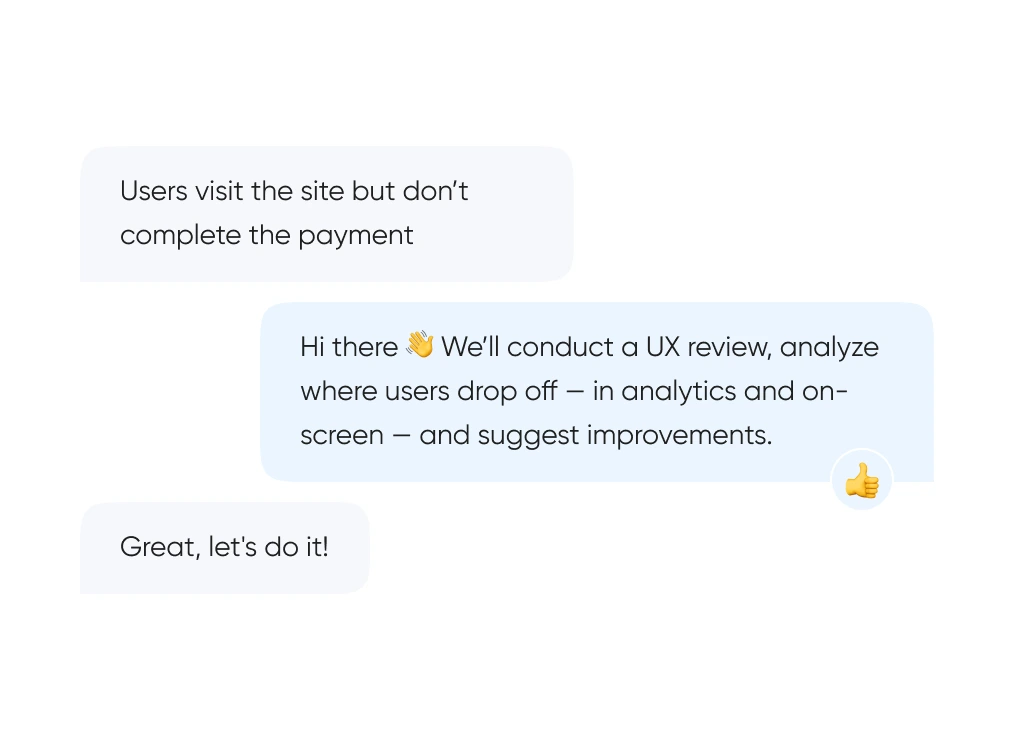
We start with real behavior: run UX reviews, analyze the full funnel, and identify exactly where and when users drop off.
We build out logic and structure — from user flows and prototypes to final layouts. Everything gets tested before it ever reaches code.
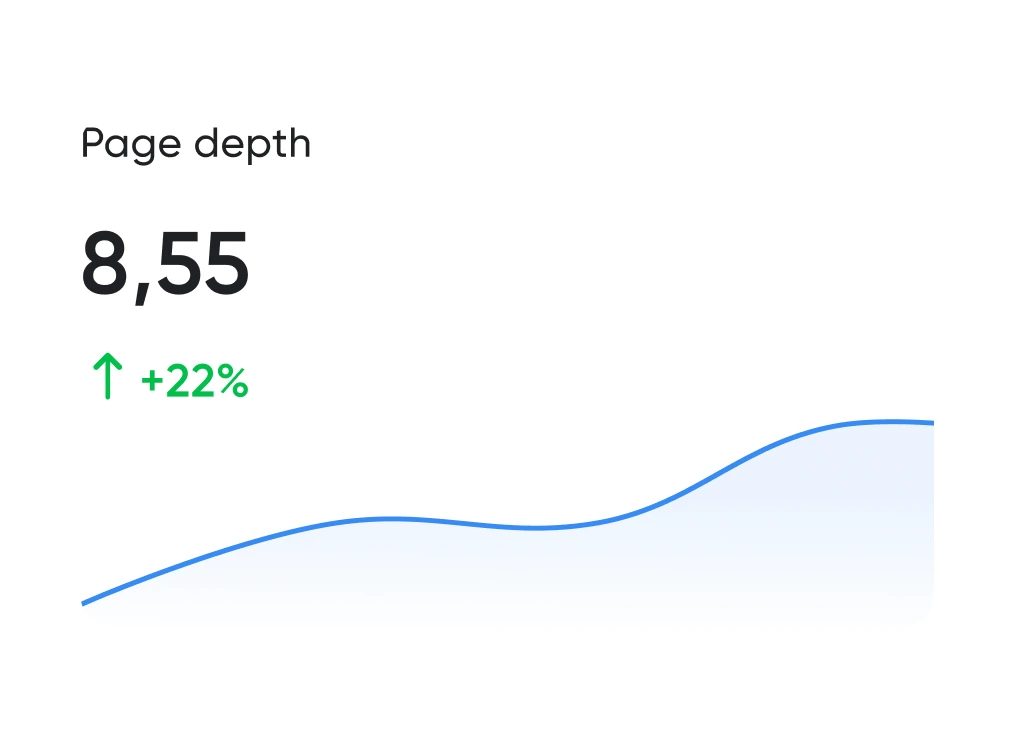
Looking good is the easy half. The work is working well. We track the numbers: time to complete key actions, scroll depth, conversion rate. All measurable.
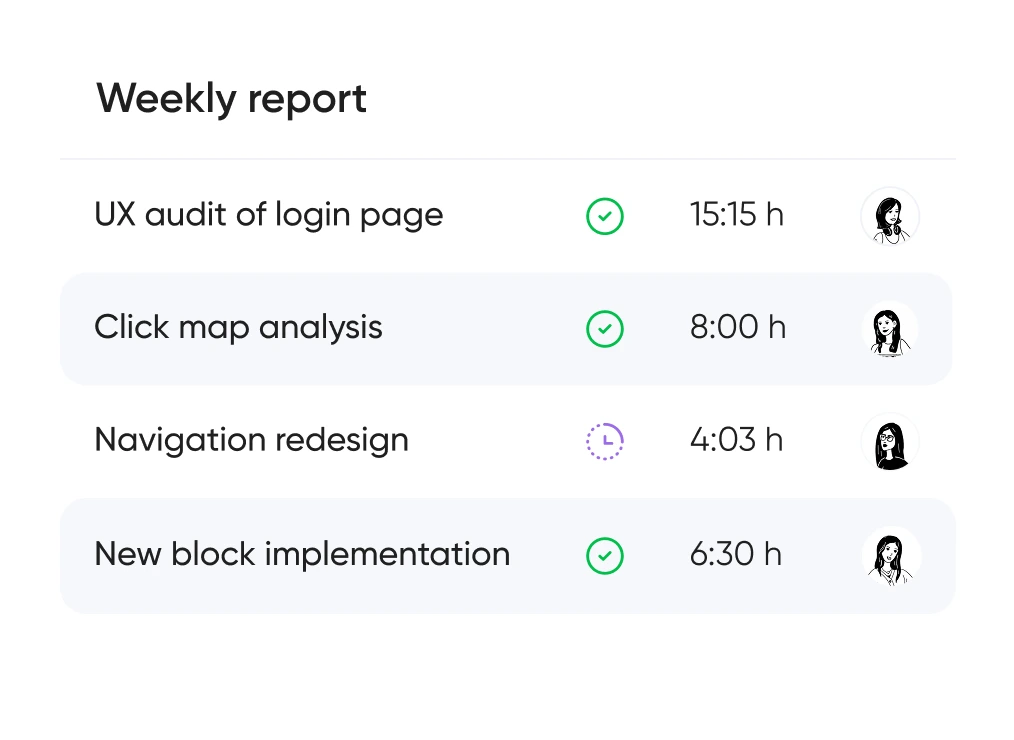
You always know which hypotheses we’re testing, what we’re improving — and why. No design for design’s sake — only what brings real business value.


Support for launching, refreshing, or rethinking an interface — at the right pace
and tailored to your product and business goals.
Pricing is tailored to each project — based on its stage, scope, and business objectives.
We use only the tools that help us create intuitive, responsive, and scalable interfaces.
UX/UI design for ecommerce, fintech, edtech, and more.
Didn’t find what you were looking for? Drop us a line at info@toimi.pro.
We design for Austin startups, SaaS products, and creative agencies focused on fast, user-driven growth.
We analyze user behavior specific to Austin’s tech scene — combining data insights with local usability testing.
Yes. Many Austin companies come to us for full redesigns that improve usability, accessibility, and conversion.
Usually 4–8 weeks, depending on the number of user flows, testing stages, and revisions.
Yes. We collaborate directly with local teams using shared tools like Figma, Notion, and Jira.
Absolutely. We build scalable systems to help Austin startups grow consistently across new features and platforms.
We follow WCAG standards and test interfaces with diverse Austin user groups to ensure full accessibility.
Yes. Most of our Austin projects include responsive web apps, native mobile screens, and cross-platform consistency.
Yes, we audit Austin-based apps and websites to identify friction points and improve retention and engagement.
We balance startup speed with design depth — combining Austin’s creative energy with structured, measurable UX work.
Yes — a compressed discovery-to-prototype sprint is a standard shape for us, and we scope it explicitly as a separate track from a full product engagement so speed doesn't quietly become the only design decision that gets made.
We hand off in whatever the team already builds against — component specs for a design system in code, redlines where there isn't one yet — rather than asking a team to adopt our tooling.
WCAG 2.1 AA is our default target for anything selling into procurement processes that require it, checked with both automated scanning and manual keyboard and screen-reader passes, not automated scanning alone.
For a team with an existing product to extract patterns from, three to five weeks is a realistic range for a working component library covering the core flows; a from-scratch product usually needs the discovery phase first.
Yes — for hardware and logistics-adjacent companies, that means large touch targets, high-contrast status states, and layouts tested on the actual device the tool will run on as well as a designer's laptop screen.
We scope engagements in phases specifically so a Series A or B raise can reset priorities between phases without forcing a mid-sprint pivot — a pattern common enough in Austin's startup market that we plan for it rather than treat it as scope creep.
Yes — Texas state accessibility standards alongside WCAG 2.1 AA, with the more formal documentation and earlier legal-review checkpoints that a public-sector procurement process typically requires.
Usually slower, with more sign-off stages — we scope those engagements with that cycle in mind from the outset rather than applying a startup-speed timeline to a process that isn't built to move that fast.
Yes — ticketing, venue-booking, and event-discovery products built around Austin's "Live Music Capital of the World" identity have their own design pattern: high-volume weekend traffic spikes, mobile-first purchase flows, and a tolerance for last-minute schedule changes that a standard e-commerce checkout doesn't need to account for.
It needs to handle frequent last-minute changes — lineup swaps, sold-out re-releases, weather-driven outdoor-venue changes — as a normal state rather than an exception, with clear, fast-updating status communicated to a mobile user who's often deciding in real time.


