Not a typical request? No problem.
Get in touch

UX reviewed, UI redesigned, interfaces refreshed — all to make things easier for users and better for business.
Need to test an idea fast, without going all in?
Expect a streamlined, functional UX/UI in no time.
Visitors getting lost and dropping off?
Time to adjust user navigation logic.
Afraid a redesign could do more harm than good?
The update will be careful — what works stays untouched.
No one to take care of UX/UI design?
From UX research to clean UI mockups — we’ve got it covered.
Los Angeles County contains 88 separate incorporated cities, and Los Angeles proper is only one of them — which means a product built to serve "LA" is usually built to serve a specific slice of that patchwork: Santa Monica and Venice's tech cluster, long nicknamed Silicon Beach; the entertainment-industry core around Hollywood and Burbank; the ports of LA and Long Beach, which together form the largest container port complex in the Western Hemisphere and drive a logistics and e-commerce economy most people never think of as "LA" at all. Product design here has to pick a lane inside that patchwork before it can be any good, because the interface conventions, the review culture, and even the devices people actually use to look at a comp differ meaningfully across those lanes.
Entertainment-adjacent software — production management tools, talent and rights platforms, streaming-adjacent internal tools — comes with its own interface culture: heavy reliance on NDA-gated content, complex versioning across cuts and rights windows, and users who are often reviewing on set with a phone, not at a desk with two monitors. E-commerce and DTC brands clustered around the ports and the broader LA logistics corridor need a different kind of design rigor: checkout conversion, fulfillment-status transparency, and return flows built for a customer base that increasingly buys cross-border into and out of the LA supply chain. Both categories share one constraint that a lot of outside studios underestimate: review cycles in LA often move through a chain of stakeholders with unequal availability — a studio executive, a brand founder, an agency partner — and a design process built around a single decision-maker's calendar tends to stall here.
Much of LA's tech and creative workforce operates on a freelance or project basis rather than as in-house staff — a structural feature of an economy built around film and TV production cycles — and that changes how design work gets briefed and reviewed. Stakeholder sign-off often runs through a smaller in-house team coordinating a larger network of contractors, which means design documentation has to be legible to people who weren't in the room for the original discovery sessions. We write design rationale down explicitly for that reason, rather than relying on live walkthroughs that a distributed, partly freelance team may not all be able to attend.
LA is home to the largest Korean community outside Korea, concentrated in and around Koreatown, alongside a Spanish-speaking population that makes up a substantial share of the county. A consumer product designed only in English is designed for a fraction of the actual metro, and for retail, healthcare, and local-service products specifically, bilingual or trilingual interface design isn't a localization afterthought — it's core to the initial information architecture, because text length, reading direction conventions, and even color association shift across those languages. That same linguistic range extends into user research: a usability test recruited only in English is systematically missing a meaningful slice of the actual customer base for a lot of LA-based consumer businesses.
Discovery starts by naming which of LA's overlapping markets the product actually serves — entertainment, e-commerce/logistics, or Silicon Beach tech — because the brief changes materially depending on the answer. We then map current flows and pain points, build a component-based design system in Figma sized for whichever primary language set the product needs (with room built in for the others), and run usability testing with participants who match the actual customer base rather than a convenience sample. Handoff includes developer-ready specs and, for multilingual products, a content-length audit so strings don't silently break layouts in production. For entertainment-adjacent clients, we also build the review and approval workflow into the project plan up front, sequencing check-ins around the realistic availability of a multi-stakeholder chain rather than assuming a single weekly meeting will cover it.
Art Center College of Design in Pasadena is one of the most established design schools in the country and sits inside the same metro as the studios and brands its graduates go on to design for — a tighter feedback loop between design education and industry than most cities have. That pipeline shapes the local design culture toward strong visual craft and storytelling instinct, useful for consumer and entertainment-adjacent product work, and it also means portfolio review and design-critique conventions here often carry a visual-arts sensibility that a purely engineering-driven product culture in another city wouldn't share.
A large share of LA's entertainment workforce operates under union agreements — SAG-AFTRA and the WGA among the most prominent — that set specific rules for how freelance and project-based work gets scheduled, credited, and paid. Product tools built for entertainment-industry scheduling, payroll, or crew management have to encode those rules directly into the product logic rather than treating them as a policy document someone checks separately, since a scheduling conflict with a union rule is a compliance problem rather than a UX inconvenience.
We focus on what matters: user behavior, thoughtful structure, and data-driven improvements. Design that is measured, then proven to work.
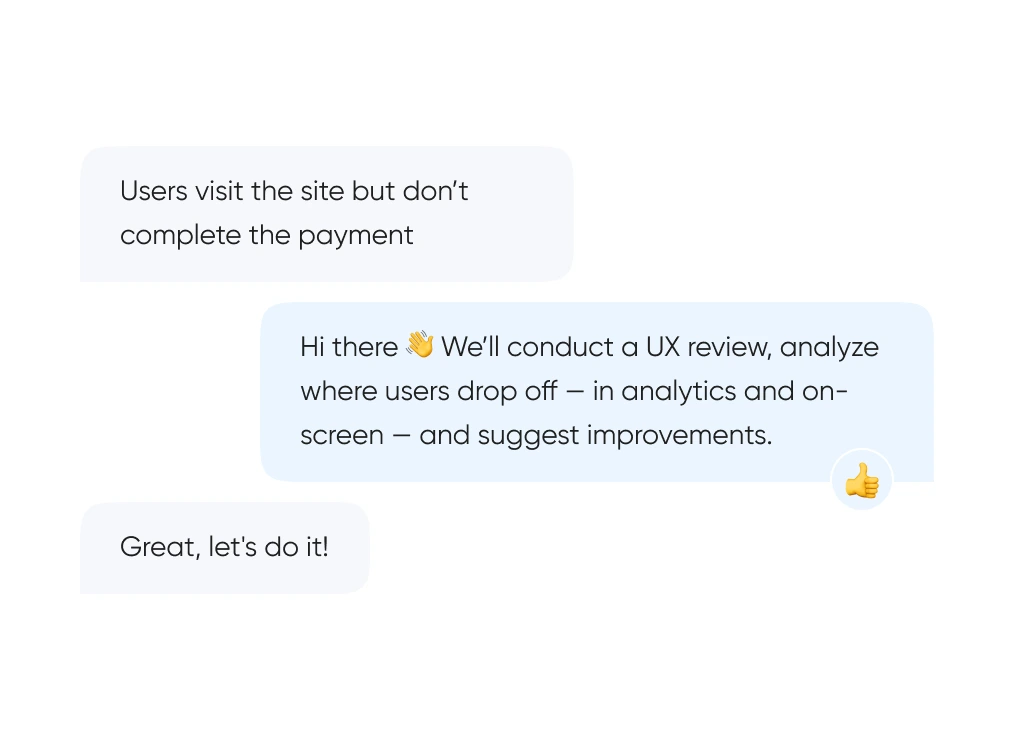
We start with real behavior: run UX reviews, analyze the full funnel, and identify exactly where and when users drop off.
We build out logic and structure — from user flows and prototypes to final layouts. Everything gets tested before it ever reaches code.
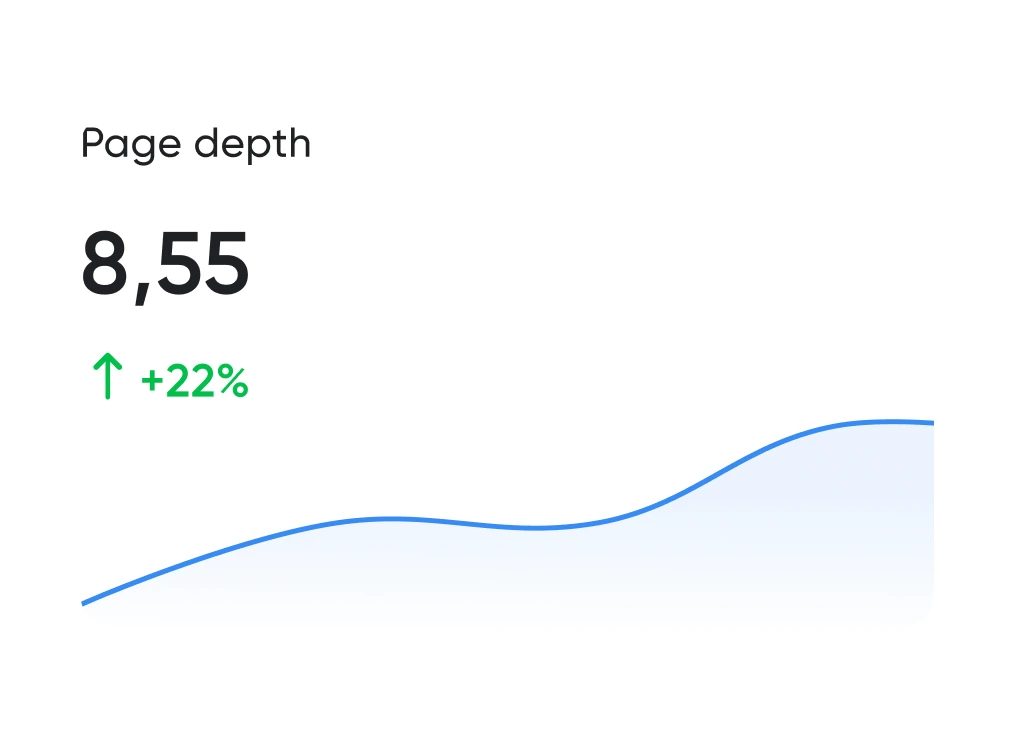
Looking good is the easy half. The work is working well. We track the numbers: time to complete key actions, scroll depth, conversion rate. All measurable.
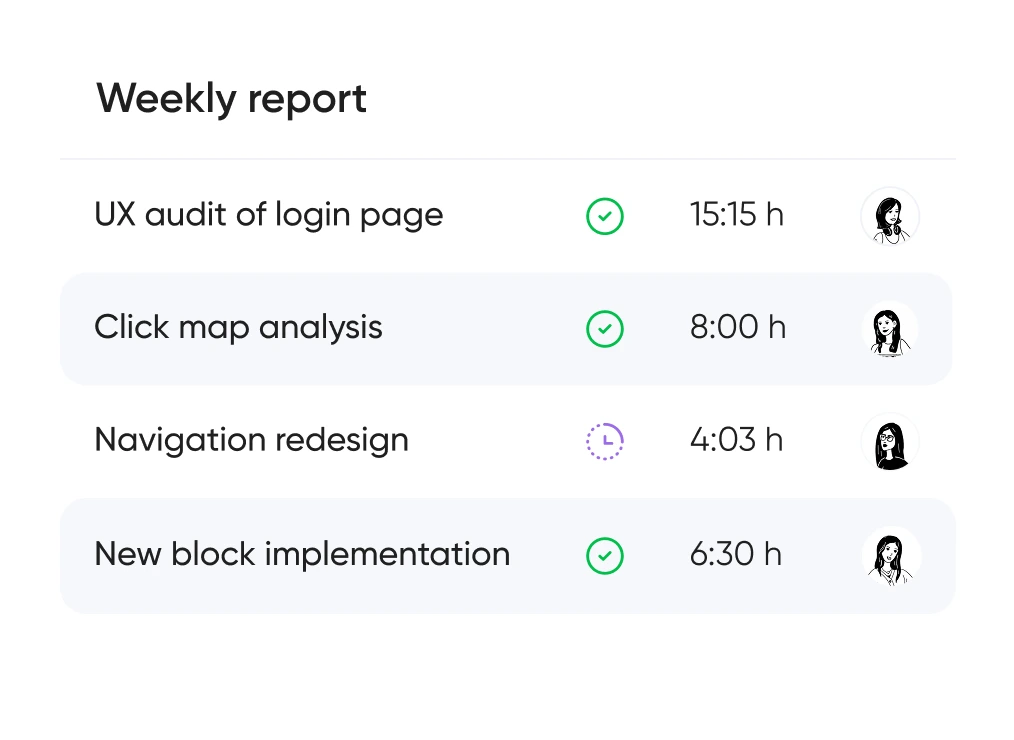
You always know which hypotheses we’re testing, what we’re improving — and why. No design for design’s sake — only what brings real business value.


Support for launching, refreshing, or rethinking an interface — at the right pace
and tailored to your product and business goals.
Pricing is tailored to each project — based on its stage, scope, and business objectives.
We use only the tools that help us create intuitive, responsive, and scalable interfaces.
UX/UI design for ecommerce, fintech, edtech, and more.
Didn’t find what you were looking for? Drop us a line at info@toimi.pro.
We account for LA's competitive market — your design needs to stand out against Silicon Beach startups and established brands in Culver City's creative corridor. Timeline flexibility matters here given the fast-paced entertainment and tech sectors.
Most Los Angeles product design engagements run 8-14 weeks from discovery to final handoff. Discovery and research take 2-3 weeks — crucial in LA where user personas differ dramatically between Westside tech users, downtown fashion district customers, and Valley service businesses. Design and iteration phases span 4-6 weeks, followed by 2-3 weeks for developer handoff and documentation. Rush timelines exist for LA's entertainment industry when launch dates align with festivals or award season.
Entertainment tech dominates — streaming platforms, production management tools, and creator economy apps from Burbank to Hollywood need sophisticated interfaces. E-commerce brands in the Fashion District require mobile-first shopping experiences. Healthcare startups in Westwood and Marina del Rey demand HIPAA-compliant patient portals. LA's massive hospitality sector — hotels, restaurants, tourism — needs booking and management systems. We design for talent agencies, logistics platforms, and fitness apps in the wellness market.
Effective mobile design starts with understanding your users' actual context — Los Angeles drivers spend 119 hours yearly in traffic, so apps need thumb-friendly navigation and quick task completion. We prioritize progressive disclosure over cramming features, ensuring first-time users aren't overwhelmed while power users find depth. Performance matters critically — slow load times kill retention, especially for LA's impatient user base accustomed to instant gratification. Every interaction should have clear feedback, and we ruthlessly cut features that don't serve core user goals validated through testing.
We begin with stakeholder interviews to align business goals with user needs, then conduct competitive analysis of products your Los Angeles audience already uses. User interviews with 8-12 participants reveal pain points and mental models — for LA projects, we often recruit across different neighborhoods since a downtown professional's needs differ from a Valley small business owner's. Usability testing happens in iterative rounds: low-fi wireframe testing, high-fi prototype testing, then post-launch optimization. We use tools like Maze and Optimal Workshop, supplemented by in-person sessions when clients want direct observation of their LA customer base.
Absolutely — many Los Angeles companies need evolution, not revolution. We conduct UX audits identifying friction points through analytics, heatmaps, and user feedback. We take on apps that haven't been updated in years and feel dated compared to competitors. We prioritize improvements by impact versus effort, often delivering quick wins within 4-6 weeks while planning larger structural changes. Your existing user base is an asset; we respect that muscle memory while modernizing the experience. Migration strategies ensure longtime customers aren't alienated during transitions.
Weekly check-ins keep projects on track — Tuesdays or Thursdays work best for most LA clients juggling meeting schedules. You get access to our Figma workspace in real-time, so stakeholders from different departments (common in LA's matrix organizations) can review progress asynchronously. We use Slack or your preferred platform for quick questions that don't need meetings. Major milestone presentations happen via video call with screenshare, though we're happy to meet in person for clients in West LA, Santa Monica, or DTLA. Every deliverable includes annotations explaining design decisions — critical when you're presenting internally to executives who weren't in working sessions.
Post-launch, we offer 30 days of revision support for adjustments during development implementation — developers sometimes encounter edge cases not caught in prototypes. Quarterly optimization sprints based on analytics and user feedback from the first months live are available as an ongoing engagement. We provide detailed design systems and component libraries so your in-house team or developers can extend the interface consistently. If your LA startup raises a Series A and needs to scale features rapidly, we're available for ongoing design partnership.
Yes — version control, access-tiered viewing, and rights-window-aware content states are standard parts of the brief for that category.
That's our default approach for LA consumer and local-service work — architecture built to hold Spanish, Korean, or other languages without layout breakage, rather than a translation pass bolted onto an English-only design.
With documentation built for handoff to people outside the original discovery sessions — annotated specs and a written rationale rather than visual comps that require a meeting to interpret.
We scope each engagement to the specific industry's conventions rather than applying one playbook to both — the interface patterns that work for a production-management tool don't transfer to a DTC checkout flow.
By mapping the realistic chain up front and building review checkpoints around it, rather than assuming a single decision-maker will be available on a standard weekly cadence.
For consumer products with a meaningful non-English-speaking customer base, yes — testing only in English would systematically miss how a large share of LA actually experiences the product.
It skews the local talent pool toward strong visual and narrative craft, which is an asset for consumer and entertainment-facing work and something we account for explicitly when a brief actually calls for a more data-density-first, engineering-adjacent design approach instead.
Yes — critique format and feedback conventions are adapted to the team's background rather than imposing one house style across every engagement.
Yes — those rules get built into the product's underlying logic, not left as a separate compliance checklist a coordinator has to remember to apply manually.
It shifts the compliance burden entirely onto a human coordinator to catch every conflict manually, which is exactly the kind of error a well-designed system should be preventing in the first place.
Yes — LA is a well-established hub for fitness and wellness brands, and product work in that category tends to prioritize habit-forming daily-use patterns and a calm, low-friction visual tone distinct from both the entertainment and e-commerce conventions covered above.
Multilingual design still applies if the customer base warrants it, though wellness brands more often run an in-house marketing team than the project-based freelance structure common in entertainment and e-commerce.


