Not a typical request? No problem.
Get in touch

UX reviewed, UI redesigned, interfaces refreshed — all to make things easier for users and better for business.
Need to test an idea fast, without going all in?
Expect a streamlined, functional UX/UI in no time.
Visitors getting lost and dropping off?
Time to adjust user navigation logic.
Afraid a redesign could do more harm than good?
The update will be careful — what works stays untouched.
No one to take care of UX/UI design?
From UX research to clean UI mockups — we’ve got it covered.
San Francisco is 49 square miles — a fact that surprises people who assume the tech industry it hosts is proportional to the city's footprint. Salesforce Tower, the tallest building in the city, is also its namesake tenant's headquarters, and that pairing is a fair summary of San Francisco's product economy: a small, dense city that punches enormously above its geographic weight in enterprise and B2B software, with a design and engineering labor market shaped almost entirely by that industry's hiring standards rather than the city's actual size. Product work here also runs on a funding calendar most other markets don't share as intensely — a company's design priorities often shift hard around a raise, because the product has to demonstrate something specific to the next set of investors as well as to its existing users.
Because so much of the city's economy is headquartered software rather than distributed operations, the design bar here gets set by what the best-funded competitor down the street is shipping this quarter, not by a national average. A product team in San Francisco is rarely benchmarking against "good enough" — it's benchmarking against whichever category leader happens to be three blocks away and hiring from the same design-school and bootcamp pipeline. That proximity also means design talent moves between competitors more often than in a less concentrated market, which raises the value of a well-documented design system that can survive turnover on the design team itself.
San Francisco and the wider Bay Area consistently post some of the highest software engineer and product designer compensation in the country, which means the practical effect of a weak design process here goes past a worse product: it means a harder time retaining the expensive team that's supposed to be building a better one. Enterprise B2B software specifically competes less on visual novelty and more on how quickly a new admin or end user can get to their first successful action, which shifts design investment toward onboarding flows, empty states, and permission-based UI rather than marketing-site polish.
California's privacy law, the CCPA, applies statewide, and enterprise SaaS products selling to security-conscious buyers increasingly need consent, data-access, and deletion-request flows designed as first-class product surfaces rather than a legal-team afterthought bolted onto account settings. In a market this dense with well-funded, well-designed competitors, a product that treats those flows as compliance boilerplate rather than product surface loses deals in procurement as well as in user reviews. The same density effect applies to fundraising-cycle timing: a product review scheduled to prepare for a specific board meeting or investor demo needs a design process that can compress without silently cutting the usability-testing step that catches the mistakes a rushed demo tends to make.
We start with a product audit focused on time-to-first-value, since that's the metric enterprise SaaS buyers in this market actually evaluate against competitors during procurement. From there: information architecture and flow mapping for onboarding and permission-based states specifically, a Figma design system built to support the empty, loading, error, and permission-denied states that dense B2B products need, usability testing with the actual buyer-side and end-user personas (often different people in enterprise sales), and developer handoff with specs that account for a fast, competitive release cadence. For teams working toward a fundraising milestone, we scope a compressed but still tested version of the same process, rather than skipping validation entirely to hit the date.
GitHub is headquartered in San Francisco, and the city carries an outsized share of companies whose product is aimed at other developers rather than a general consumer — a distinct design discipline where the "user" is often technically sophisticated, impatient with marketing gloss, and evaluating an interface partly through its API and documentation as well as its visual layer. Designing for that audience shifts priorities toward clarity and information density over persuasive visual design, and toward consistency between the product UI and its developer-facing documentation, since a mismatch between the two reads as a credibility problem to this specific user base.
San Francisco is also where much of the consumer social and sharing-economy category grew up, and that heritage still shapes local design culture alongside the current enterprise-SaaS concentration — growth-loop-driven onboarding, viral referral mechanics, and marketplace trust design are still well-understood local disciplines even for a company that's never built a consumer product itself. A design team here often has to consciously choose between that consumer-growth design tradition and the enterprise time-to-value tradition, because the two optimize for different first-session experiences and borrowing tactics from the wrong one is a common early misstep.
We focus on what matters: user behavior, thoughtful structure, and data-driven improvements. Design that is measured, then proven to work.
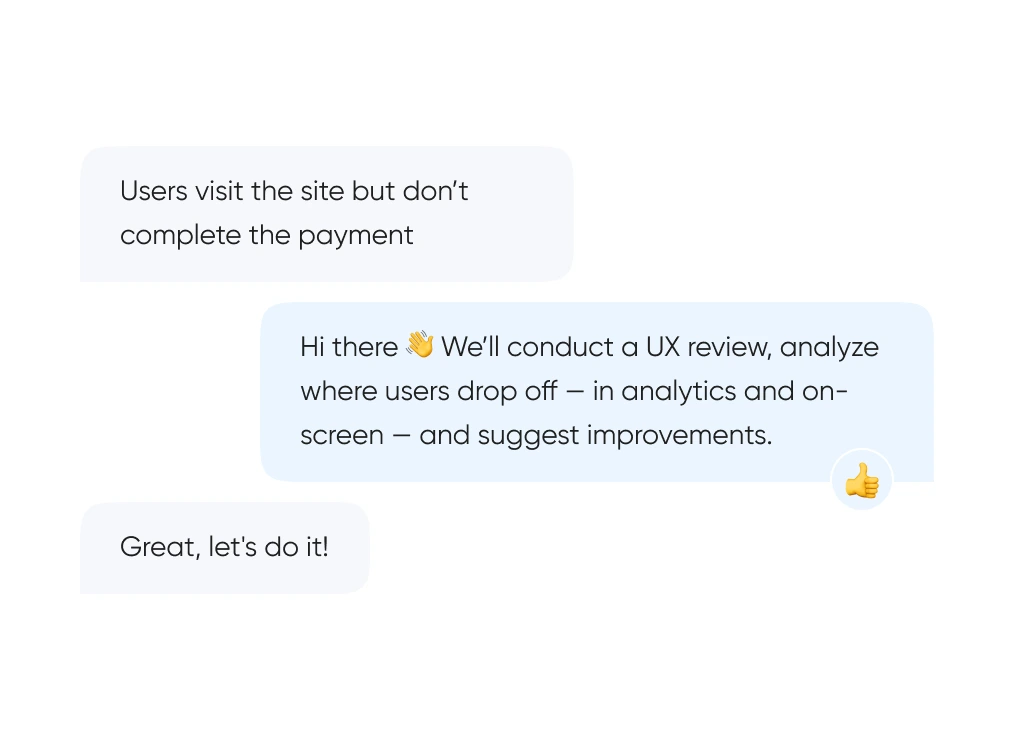
We start with real behavior: run UX reviews, analyze the full funnel, and identify exactly where and when users drop off.
We build out logic and structure — from user flows and prototypes to final layouts. Everything gets tested before it ever reaches code.
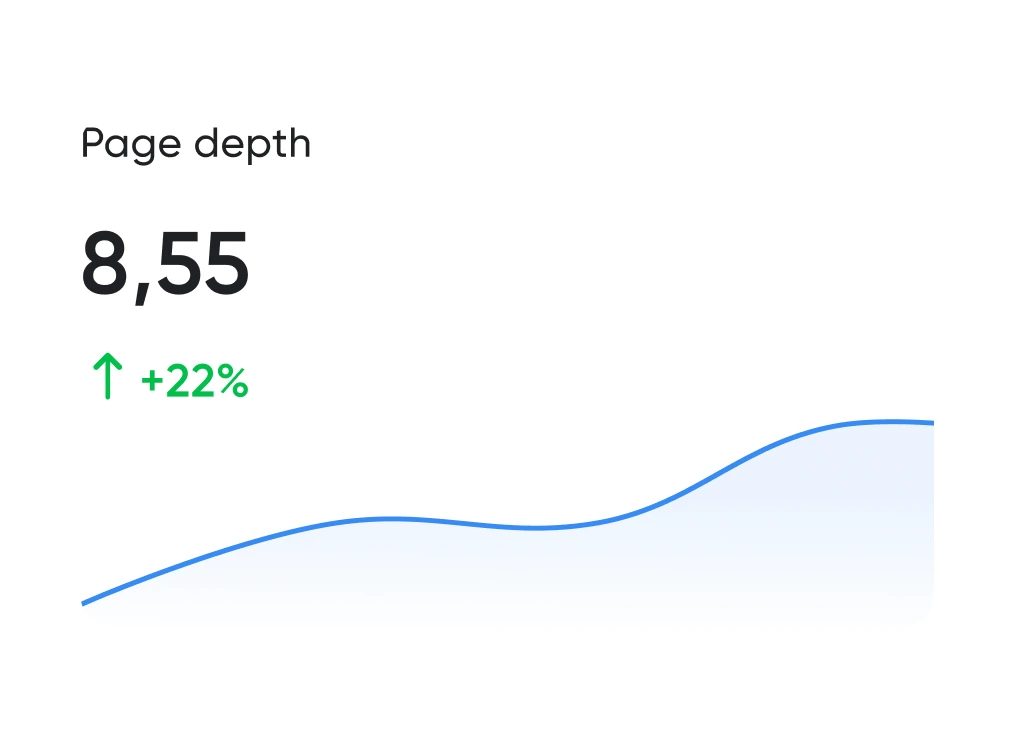
Looking good is the easy half. The work is working well. We track the numbers: time to complete key actions, scroll depth, conversion rate. All measurable.
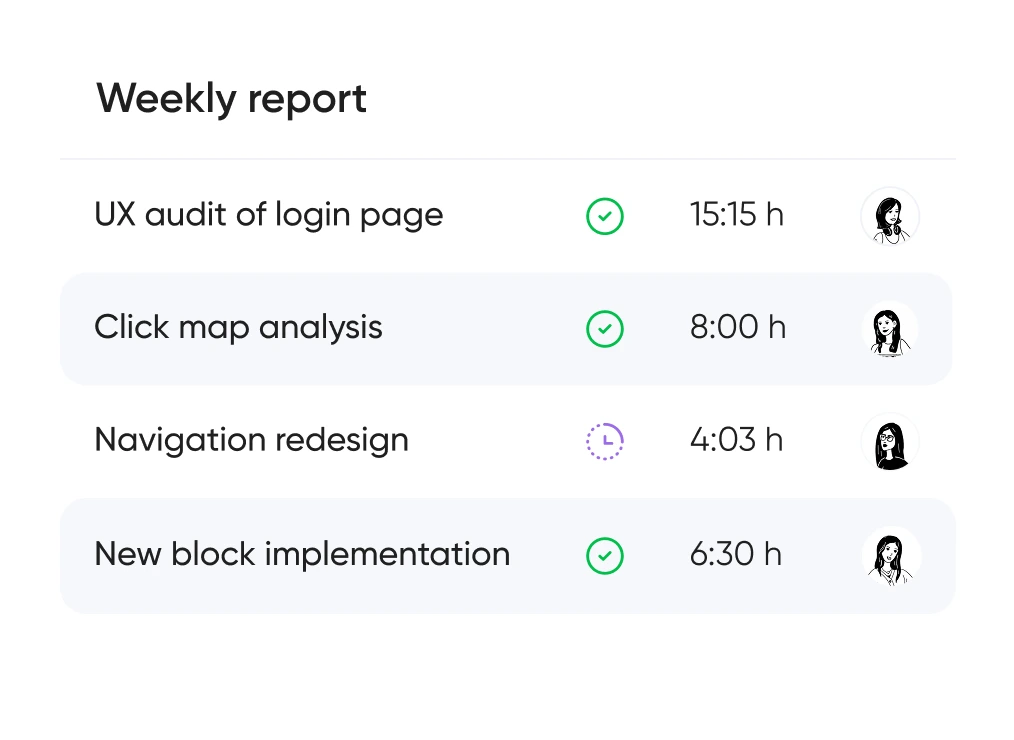
You always know which hypotheses we’re testing, what we’re improving — and why. No design for design’s sake — only what brings real business value.


Support for launching, refreshing, or rethinking an interface — at the right pace
and tailored to your product and business goals.
Pricing is tailored to each project — based on its stage, scope, and business objectives.
We use only the tools that help us create intuitive, responsive, and scalable interfaces.
UX/UI design for ecommerce, fintech, edtech, and more.
Didn’t find what you were looking for? Drop us a line at info@toimi.pro.
We provide detailed estimates after a discovery call where we assess your product goals, target users, and technical constraints.
Most projects span 6 to 12 weeks from kickoff to final delivery. A mobile app for Mission District retailers might take 6–8 weeks — discovery, user flows, prototyping, and usability testing included. More complex products, like a fintech platform for Montgomery Street firms with regulatory dashboards and investor portals, often need 10–14 weeks. Timeline depends on stakeholder availability, feedback cycles, and whether you need brand identity work alongside the interface design. We build buffer time for real user testing with your San Francisco audience.
We work extensively with SaaS companies in SoMa and the Financial District, fintech startups around Montgomery Street, healthtech firms in Mission Bay near UCSF, and enterprise software teams throughout the Bay Area. Recent projects include investor dashboards for venture platforms, patient portals for telehealth services, and operational tools for logistics companies serving the Port of San Francisco. We understand the compliance needs of financial services, the speed requirements of startup environments, and the accessibility standards expected in San Francisco's diverse market.
Yes — user research anchors every project we take on. We start with stakeholder interviews to understand business goals, then move to user interviews, surveys, or usability tests depending on your product stage. For a San Francisco client launching a new feature, we recruited local users from Dogpatch and the Sunset District to validate assumptions before committing to high-fidelity designs. Research findings shape personas, user journeys, and interface priorities. We can work with your existing customer base or help recruit participants that match your target demographics in the Bay Area.
You receive user flows, wireframes, high-fidelity mockups in Figma, interactive prototypes, and a design system with reusable components. For San Francisco tech companies planning to scale, we document spacing, typography, color tokens, and component behavior so your engineering team can implement designs consistently. Deliverables also include usability testing reports, design rationale documents, and developer handoff notes with asset exports and CSS specifications. Everything is organized for smooth collaboration whether your dev team sits in Palo Alto or works remotely.
Absolutely — many San Francisco clients come to us with live products that need refinement, not reinvention. We conduct a UX audit to identify usability issues, navigation problems, and conversion blockers. Then we prioritize improvements based on user impact and engineering effort. Often the fix sits in the onboarding flow and dashboard layout, and the underlying architecture can stay intact. We work within your technical constraints and release schedule to deliver incremental, measurable improvements.
We schedule weekly check-ins via Zoom or Google Meet to review progress, gather feedback, and align on next steps. Between meetings, we share updates through Slack or email and use Figma for real-time collaboration — you can leave comments directly on designs, and we respond within one business day. For San Francisco teams working across time zones or managing remote stakeholders, we record walkthroughs and maintain a shared project brief that tracks decisions, open questions, and upcoming milestones. You always know what's happening and why.
We provide 30 days of post-delivery support to answer developer questions, clarify design specs, and make minor adjustments based on implementation realities. If your San Francisco engineering team discovers edge cases or responsive breakpoints that need refinement, we address those without additional fees during the support window. Beyond that, many clients return for ongoing design partnership — adding features, conducting quarterly usability reviews, or evolving the design system as the product grows. We're here for the long term as well as the handoff.
It's a large share of the San Francisco engagements we scope, given how concentrated the local economy is in that category — the brief centers on time-to-value and permission-based states rather than consumer visual trends.
Yes — CCPA-driven consent, access, and deletion flows are designed as first-class states in the system, which matters increasingly in enterprise procurement reviews.
We benchmark against the specific category leaders a client is actually losing deals to, not a generic industry average, since that's the real comparison happening inside a buyer's procurement process.
Six to ten weeks from audit to a validated, developer-ready design system is a realistic range for an onboarding-focused engagement; a full product redesign runs longer.
We scope a compressed version of the standard process rather than cutting usability testing, since a demo built on untested assumptions tends to create the exact problems a fundraising demo can't afford to surface live.
We document the system so it survives a change in who's maintaining it — a meaningful risk in a market where design talent moves between nearby competitors more often than in less concentrated cities.
Yes — clarity, information density, and consistency with the product's own documentation take priority over persuasive visual design for a technically sophisticated developer audience.
By treating documentation as part of the same design system rather than a separately maintained artifact, so terminology and interface states match across both surfaces.
Selectively — referral and activation mechanics can translate, but a viral consumer growth loop and an enterprise time-to-value flow are solving different problems, and we scope which tradition a given onboarding decision should draw from rather than mixing them by default.
By the actual first-session goal — persuading an individual to invite others points toward growth-loop design, getting a paying team's admin to a working setup points toward time-to-value design.
Indirectly — many of the firms funding SF-based companies sit a short drive down the Peninsula, and the metrics they track during a fundraise (activation rate, time-to-value, retention curves) often become the same metrics a design engagement is asked to move, which is part of why we scope discovery around a measurable funnel from day one.
Yes — an earlier-stage team usually needs faster, lighter-weight validation to inform a fundraise narrative, while a later-stage company needs the fuller design-system and permission-state discipline described above.
By scoping usability testing as a fixed, non-negotiable line item within the compressed timeline rather than the first thing cut when a schedule tightens, since it's usually the step whose absence causes the most expensive mistakes later.


