Not a typical request? No problem.
Get in touch

UX reviewed, UI redesigned, interfaces refreshed — all to make things easier for users and better for business.
Need to test an idea fast, without going all in?
Expect a streamlined, functional UX/UI in no time.
Visitors getting lost and dropping off?
Time to adjust user navigation logic.
Afraid a redesign could do more harm than good?
The update will be careful — what works stays untouched.
No one to take care of UX/UI design?
From UX research to clean UI mockups — we’ve got it covered.
New York is five boroughs, and in product terms it's closer to five different markets stitched together by one subway system. Manhattan carries the financial-services core around Wall Street and the New York Stock Exchange, plus the Nasdaq's physical presence in Times Square; the Garment District anchors a fashion industry that still runs a meaningful share of US apparel design and buying decisions from the same few blocks; Madison Avenue gave its name to an entire advertising industry that still clusters media and agency work in the city. A product built for "New York" without specifying which of those industries it serves is a product built for none of them particularly well — and New York also happens to have one of the densest concentrations of design agencies and in-house product studios in the country, which means the local competitive bar for design quality is set unusually high before a single user ever opens the product.
Financial-services product work in New York runs against a regulatory and disclosure bar set by proximity to the actual exchanges and the institutions that trade on them — audit-trail visibility, permissioned data access, and compliance copy that can't be trimmed for visual cleanliness. Fashion and retail product work runs on an entirely different clock, keyed to seasonal buying cycles and a visual bar set by an industry that treats brand presentation as inseparable from the product itself. Media and publishing product work sits somewhere between the two: high content velocity, but with the same New York expectation of visual polish. Each of these industries also tends to hire from the same small pool of design talent that's already worked at a recognizable competitor, which raises expectations for craft even on internal, non-customer-facing tools.
New York carries some of the highest advertising costs per click in the country across finance, legal, and real estate verticals in particular, which raises the stakes on product-side conversion work — when the cost of acquiring a visitor is that high, a confusing onboarding flow or a checkout with unnecessary friction is a far more expensive mistake here than in a lower-CPC market. That pressure shows up in how we scope New York engagements: conversion-focused usability testing gets prioritized earlier in the process than it might in a market where traffic is cheaper to replace.
New York's density means product and design teams are frequently distributed across boroughs even within one company — a finance-sector product org headquartered in Manhattan with an engineering team based in Brooklyn is a common shape, not an exception — and stakeholder alignment has to account for a workforce that includes some of the longest average commutes of any major US metro, which affects everything from meeting cadence to how much can reasonably get decided synchronously versus in writing. That same density also means design review culture here tends to be more formal than in a smaller market — written critique docs and versioned Figma files with a clear decision log, because too many stakeholders are involved for decisions to live only in someone's memory of a meeting.
We scope discovery to the specific New York industry the product serves — finance, fashion/retail, or media — because the compliance, seasonality, and visual-bar requirements diverge sharply between them. From there: current-state audit against real usage data (essential in a market where a small conversion improvement is worth disproportionately more given local acquisition costs), a Figma design system built with the relevant industry's compliance or seasonal constraints as first-class states, usability testing prioritized around the highest-cost points in the funnel, and developer handoff with annotated specs built for asynchronous review across a distributed team. Given how competitive the local design labor and agency market is, we also default to a more formal, written decision log throughout the engagement, rather than relying on verbal alignment in meetings that not every stakeholder attended.
Movement in an interface is information before it is decoration. When a panel slides in from the right, the person learns where it came from and where it will go when closed. When a row fades out after deletion, they see that the action landed. Remove those cues and the screen feels abrupt.
Speed matters more than style. Transitions that linger make a fast product feel slow. We keep most of them short enough that nobody consciously notices them. Longer movement is reserved for changes of place, such as opening a record or switching between workspaces.
Some people turn motion off. The operating system setting for reduced motion should be honoured everywhere. A plain fade or an instant change replaces sliding and zooming.
Every animation in the design file gets a written purpose. Nobody can explain it? It goes.
New York hosts one of the largest concentrations of major law firms in the country, and legal-technology and document-management products built for that market carry their own interface discipline: dense, precisely versioned document workflows, redlining and comparison views that have to be trustworthy down to the punctuation, and permission structures that mirror a firm's actual matter-based confidentiality walls rather than a generic role-based access model borrowed from another industry.
We focus on what matters: user behavior, thoughtful structure, and data-driven improvements. Design that is measured, then proven to work.
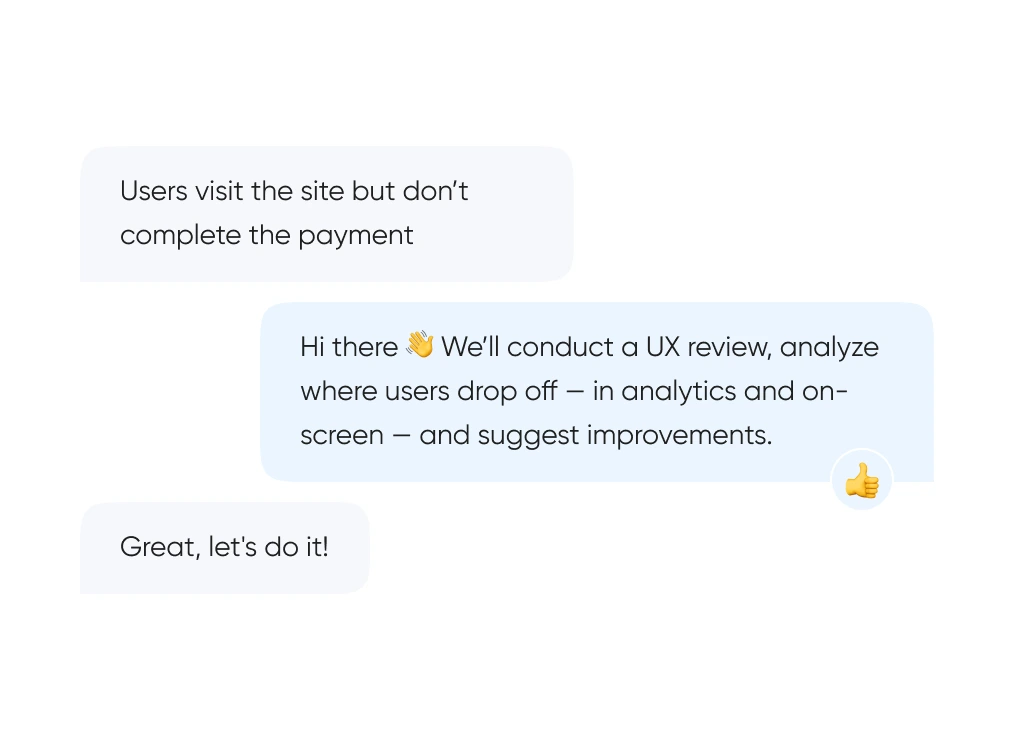
We start with real behavior: run UX reviews, analyze the full funnel, and identify exactly where and when users drop off.
We build out logic and structure — from user flows and prototypes to final layouts. Everything gets tested before it ever reaches code.
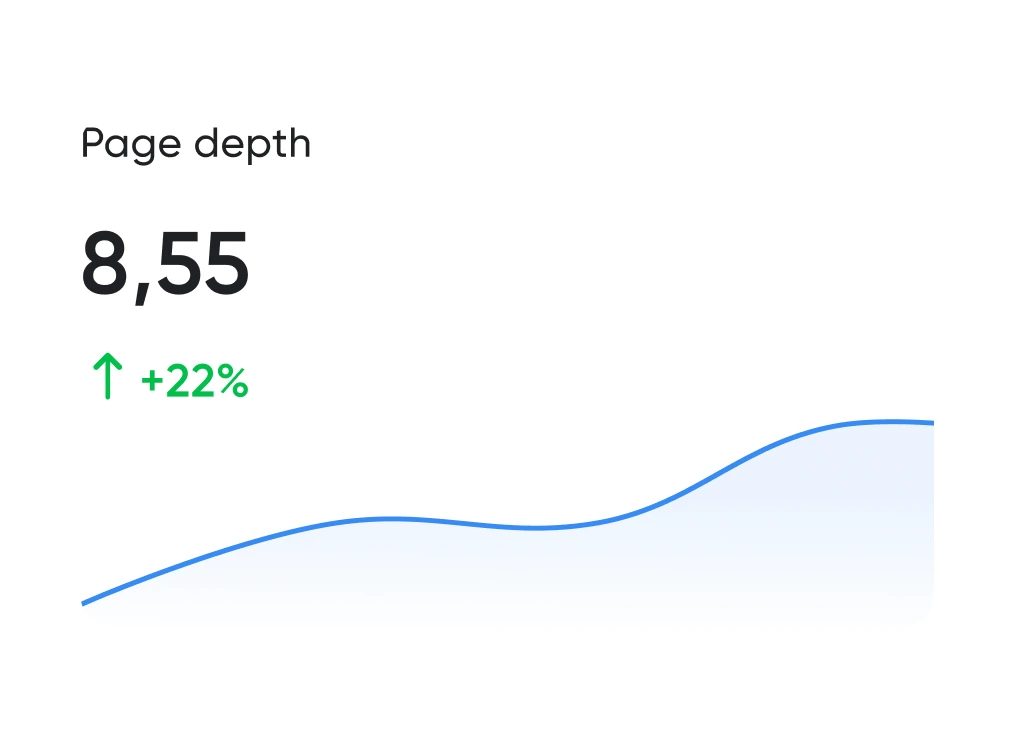
Looking good is the easy half. The work is working well. We track the numbers: time to complete key actions, scroll depth, conversion rate. All measurable.
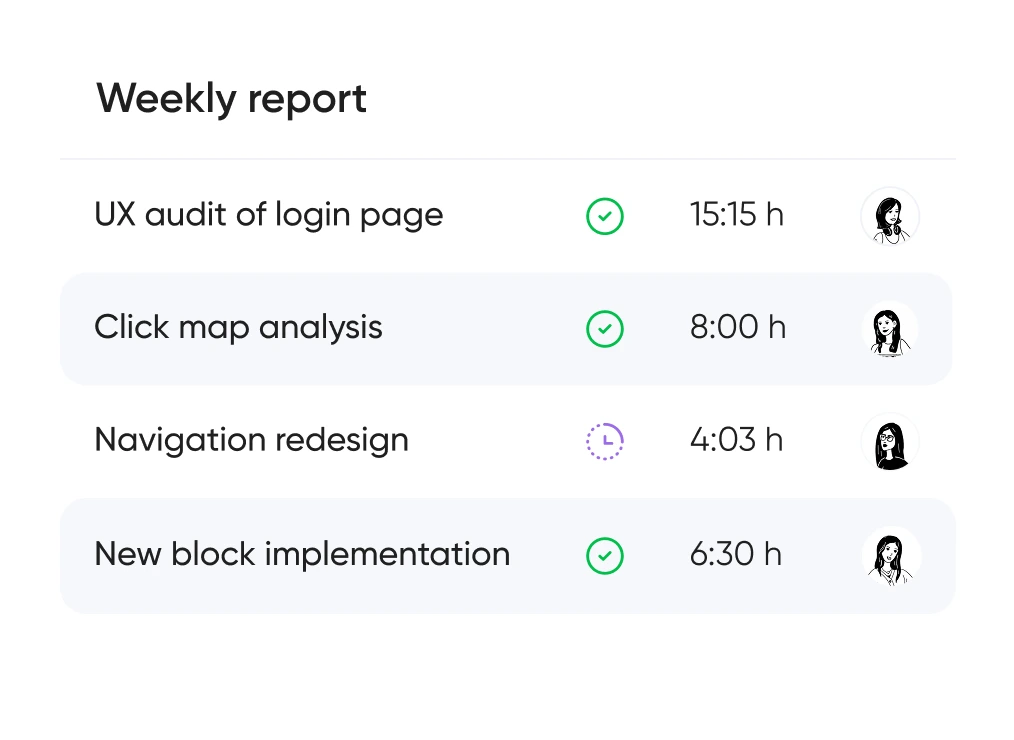
You always know which hypotheses we’re testing, what we’re improving — and why. No design for design’s sake — only what brings real business value.


Support for launching, refreshing, or rethinking an interface — at the right pace
and tailored to your product and business goals.
Pricing is tailored to each project — based on its stage, scope, and business objectives.
We use only the tools that help us create intuitive, responsive, and scalable interfaces.
UX/UI design for ecommerce, fintech, edtech, and more.
Didn’t find what you were looking for? Drop us a line at info@toimi.pro.
We design for New York startups, SaaS products, and creative agencies focused on fast, user-driven growth.
We analyze user behavior specific to New York’s tech scene — combining data insights with local usability testing.
Yes. Many New York companies come to us for full redesigns that improve usability, accessibility, and conversion.
Usually 4–8 weeks, depending on the number of user flows, testing stages, and revisions.
Yes. We collaborate directly with local teams using shared tools like Figma, Notion, and Jira.
Absolutely. We build scalable systems to help New York startups grow consistently across new features and platforms.
We follow WCAG standards and test interfaces with diverse New York user groups to ensure full accessibility.
Yes. Most of our New York projects include responsive web apps, native mobile screens, and cross-platform consistency.
Yes, we audit New York-based apps and websites to identify friction points and improve retention and engagement.
We balance startup speed with design depth — combining New York’s creative energy with structured, measurable UX work.
Yes — usability testing on the highest-traffic-cost steps in a funnel gets scheduled earlier, since the cost of a confusing flow is proportionally higher here than in markets with cheaper acquisition.
Audit-trail visibility, permissioned data states, and disclosure copy that can't be shortened for layout are standard parts of the brief for that sector.
Yes — handoff documentation is built for asynchronous review by design, given how common a Manhattan-headquartered, Brooklyn-engineering team structure is in New York specifically.
Seasonal buying-cycle timelines and a stronger visual/brand bar drive the fashion brief; compliance and data density drive the finance brief — we scope the process differently for each rather than using one template.
The density of stakeholders and the competitiveness of the local design labor market both push toward written critique and a versioned decision log, since verbal-only alignment doesn't hold up across a large, distributed team.
The concentration of design agencies and in-house studios here is unusually high, which raises the baseline craft expectation even for internal tools that never reach an external user.
Given the documented volume of ADA digital-accessibility litigation filed in New York federal courts, yes — we scope a WCAG audit as a pre-launch requirement rather than a post-launch nice-to-have for clients here.
Not the documentation itself, but it does mean incoming junior designers often arrive with strong visual training and less exposure to component-system discipline, which we account for in onboarding a design system to a client's in-house team.
Yes — precise versioning, trustworthy redlining and comparison views, and matter-based permission structures are standard parts of the brief for that category.
It has to mirror the firm's actual confidentiality walls between matters and clients, which is usually a more granular and conflict-sensitive structure than the department-level role permissions a generic enterprise product assumes.
For fashion and retail clients specifically, yes — the twice-yearly event (February and September) creates its own readiness deadline, and we scope a dedicated pre-show checklist for clients launching or updating a product around it rather than treating it as a routine release window.
Less often — their major moments tend to be earnings calls, funding announcements, or breaking-news cycles rather than a fixed calendar date, so readiness planning there is scoped around a trigger event rather than an annual fixed week.


