Not a typical request? No problem.
Get in touch

UX reviewed, UI redesigned, interfaces refreshed — all to make things easier for users and better for business.
Need to test an idea fast, without going all in?
Expect a streamlined, functional UX/UI in no time.
Visitors getting lost and dropping off?
Time to adjust user navigation logic.
Afraid a redesign could do more harm than good?
The update will be careful — what works stays untouched.
No one to take care of UX/UI design?
From UX research to clean UI mockups — we’ve got it covered.
Miami stopped being a satellite office market in the early 2020s. Citadel moved its headquarters from Chicago to Miami in 2022, part of a broader wave of finance and fintech relocation that turned Brickell into a genuine competitor to older financial districts, on top of the role the city has held for decades as the US headquarters city of choice for companies doing business across Latin America. Product teams building here are usually building for one of those two audiences — a fintech or capital-markets user base that expects a coastal-tier interface bar, or a LatAm-facing customer base that needs the product designed in Spanish or Portuguese first, English second. A smaller but growing third category sits alongside them: real-estate and property-investment platforms built for international, often LatAm-based buyers purchasing property in Miami remotely, which brings its own trust and disclosure design requirements.
That headquarters status changes the design brief in a specific way: Miami-based product teams increasingly compete for the same senior design and engineering talent as New York and San Francisco, which means the interface quality bar those new arrivals expect doesn't get a pass just because the office is in Florida. Florida also has no state personal income tax, a factor that's been part of the relocation calculus for both companies and individual hires, and part of why the design talent pool here has grown faster than the city's reputation as a design market would suggest.
For any product serving Miami's LatAm-facing business, Spanish isn't a translated add-on — it's frequently the primary language of the actual customer, and increasingly Portuguese for anything targeting Brazil specifically. That reshapes the design brief from the first wireframe: content architecture that holds multiple languages without breaking, culturally specific payment and identity-verification flows for cross-border fintech, and copy review that goes through a native speaker rather than machine translation layered on top of an English-first design. For real-estate and investment platforms specifically, that also means designing trust signals — verification badges, transaction-status transparency — that read correctly to a buyer who may never set foot in the property before purchasing it.
The companies that relocated to Miami in the past several years split roughly into fintech and crypto-adjacent firms chasing a more favorable regulatory and tax environment, and traditional finance firms following talent and clients south. Both categories need product interfaces that read as credible to a sophisticated financial user — dense data display, compliance-aware disclosure patterns, and none of the "friendly fintech" visual tropes that work for a consumer budgeting app but undercut trust in an institutional trading or custody product. Hospitality and tourism-adjacent products round out the local mix, with a design bar shaped by PortMiami's role as one of the world's busiest cruise ports and the seasonal booking behavior that comes with it.
We start by identifying which side of Miami's dual market a product serves — institutional finance, LatAm-facing consumer/SMB, or the smaller real-estate and hospitality categories — since the design conventions genuinely diverge. From there: flow mapping, a Figma design system built with bilingual (or trilingual) content architecture from day one where relevant, usability testing run in the customer's primary language rather than English by default, and developer handoff with content-length notes so Spanish and Portuguese strings don't break a layout tuned for English. For fintech and capital-markets interfaces specifically, we build compliance-aware states — disclosure text, verification steps, audit visibility — into the system rather than adding them after visual design is locked. For real-estate and investment platforms, trust and transaction-transparency states get the same early treatment.
Art Basel Miami Beach each December turns the city into a global stage for design-forward retail, hospitality, and brand experiences, briefly pulling in an audience that expects a visual bar closer to a flagship international market than a typical regional city. Products and digital experiences tied to hospitality, retail, and event brands often see a real spike in both traffic and scrutiny during that week, similar in shape to what SXSW does to Austin's product calendar, and we treat it the same way — as a distinct, dated readiness milestone rather than folding it into a standard release cadence.
Florida's hurricane season runs roughly June through November, and any Miami-based product with a real-world operational dependency — logistics, hospitality, property management, insurance — needs interface states built for storm disruption as a recurring, predictable event rather than a rare edge case: clear degraded-service messaging, offline-tolerant data entry for field staff, and status pages that stay usable even when the underlying infrastructure is under real strain. Treating that seasonal risk as a design requirement rather than an operations afterthought is part of what separates a Miami-ready product from one that simply happens to be hosted there.
We focus on what matters: user behavior, thoughtful structure, and data-driven improvements. Design that is measured, then proven to work.
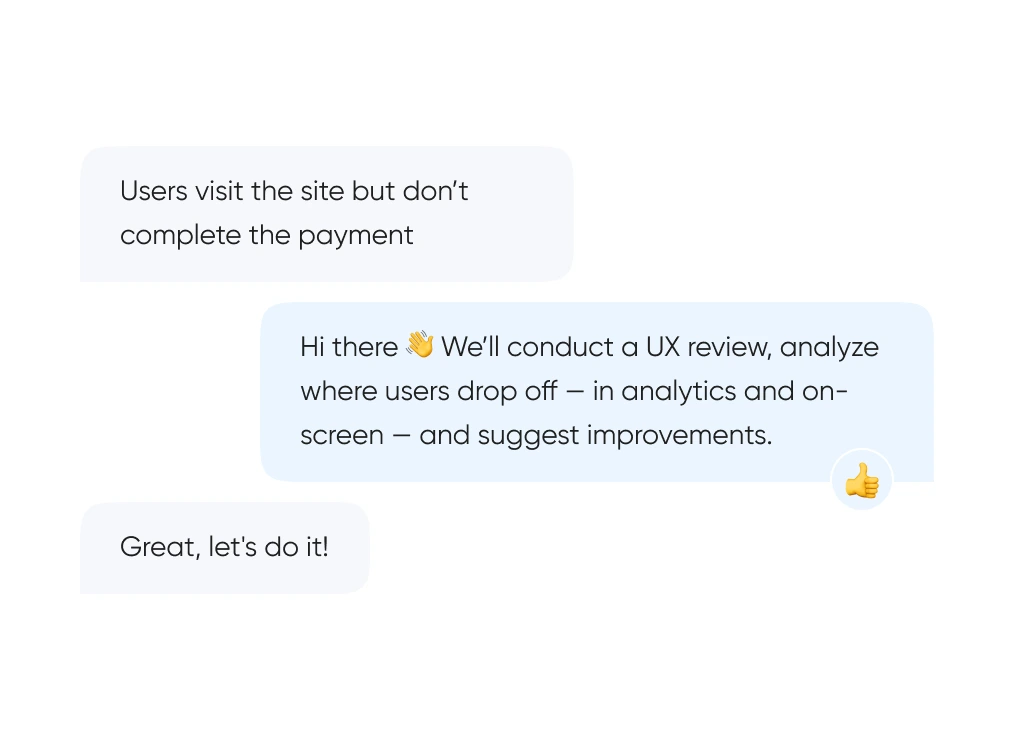
We start with real behavior: run UX reviews, analyze the full funnel, and identify exactly where and when users drop off.
We build out logic and structure — from user flows and prototypes to final layouts. Everything gets tested before it ever reaches code.
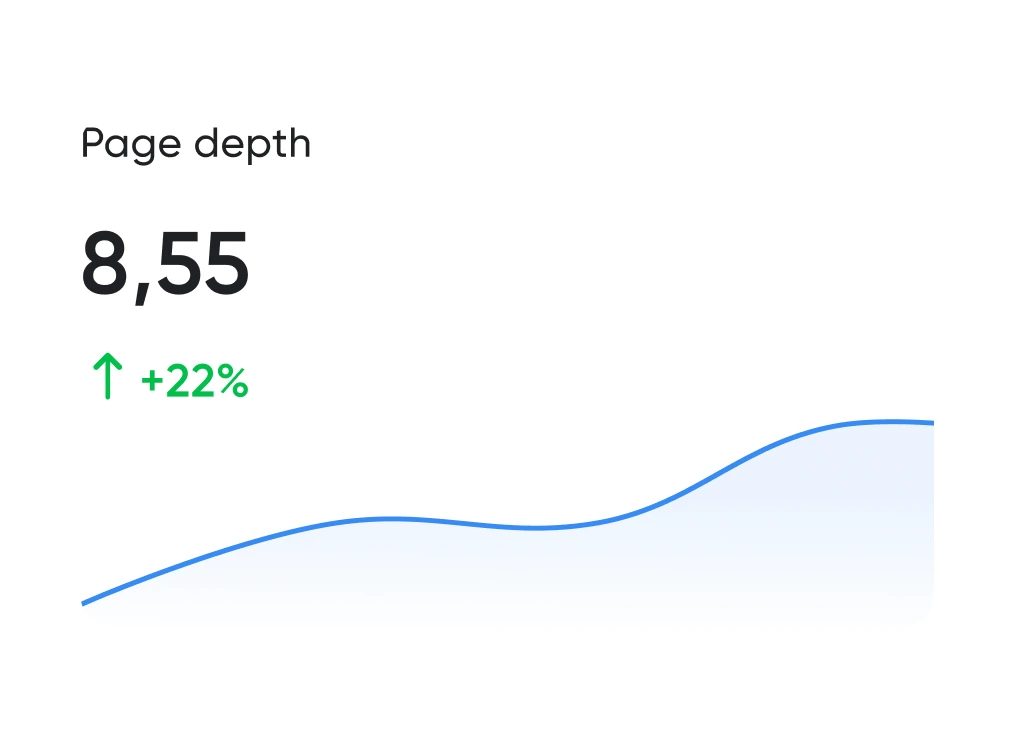
Looking good is the easy half. The work is working well. We track the numbers: time to complete key actions, scroll depth, conversion rate. All measurable.
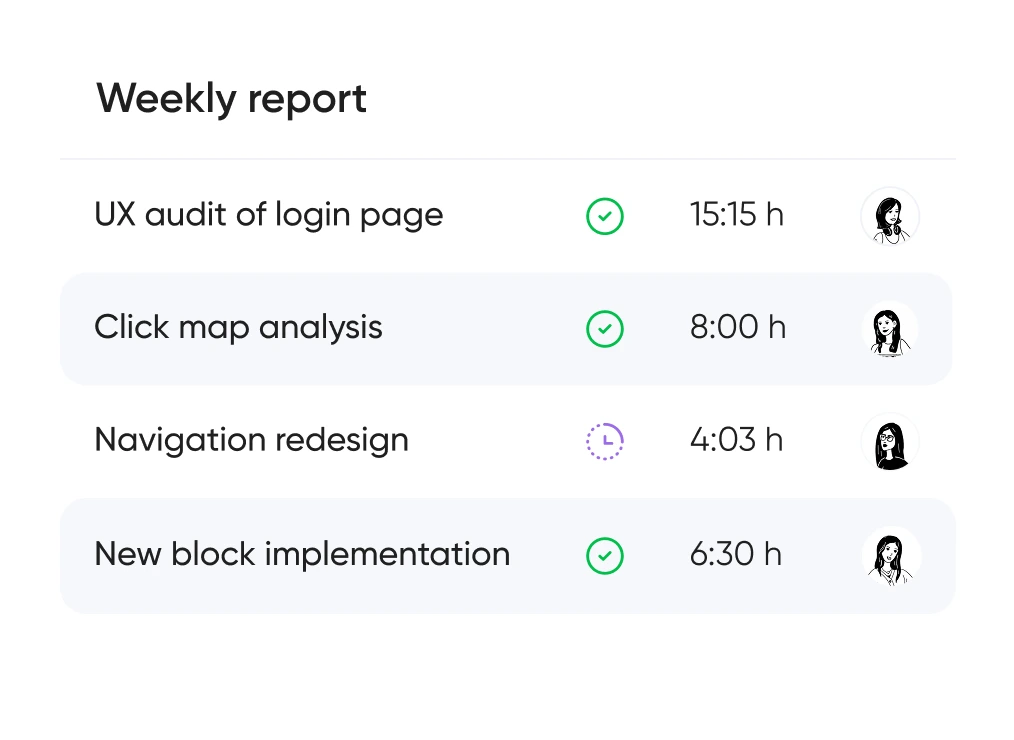
You always know which hypotheses we’re testing, what we’re improving — and why. No design for design’s sake — only what brings real business value.


Support for launching, refreshing, or rethinking an interface — at the right pace
and tailored to your product and business goals.
Pricing is tailored to each project — based on its stage, scope, and business objectives.
We use only the tools that help us create intuitive, responsive, and scalable interfaces.
UX/UI design for ecommerce, fintech, edtech, and more.
Didn’t find what you were looking for? Drop us a line at info@toimi.pro.
Given Miami's competitive tech market and strong presence of fintech, hospitality, and maritime industries, pricing reflects both the city's demand for bilingual interfaces and sophisticated user experiences. We offer transparent, project-based pricing tailored to Miami businesses.
Most UX/UI projects in Miami take 8-16 weeks from discovery to final handoff. The timeline depends on your product's complexity, stakeholder availability, and research requirements. Miami's fast-paced business environment often requires accelerated schedules, which we accommodate through agile sprints and rapid prototyping. A typical timeline includes 2 weeks for user research and discovery, 3-4 weeks for wireframing and architecture, 3-4 weeks for high-fidelity design, and 2-3 weeks for testing and iteration with Miami-based users.
Miami's hospitality, real estate, fintech, healthcare, and maritime logistics sectors see tremendous ROI from professional product design. The city's position as a gateway to Latin America means many products require multilingual interfaces and culturally-aware experiences. Cruise lines, hotel management platforms, property technology solutions, and international payment systems headquartered in Miami particularly benefit from user-centered design. We improve conversion through strategic UX and localized design.
Our comprehensive service includes user research, competitive analysis, information architecture, wireframing, high-fidelity visual design, interactive prototyping, and usability testing. We conduct research with your actual users—in Miami's case, often diverse audiences requiring Spanish and English interfaces. Deliverables include design systems, component libraries, responsive layouts for all devices, and developer-ready specifications. For Miami clients, we emphasize mobile-first design given high smartphone usage and incorporate cultural considerations for the city's international user base.
We begin with stakeholder interviews and analytics review, then conduct user interviews, surveys, and behavioral analysis with your target audience. For Miami projects, we often recruit bilingual participants reflecting the city's demographics. Methods include contextual inquiry, usability testing, A/B testing, and heat mapping. We analyze competitor products and industry benchmarks, then synthesize findings into personas, journey maps, and actionable insights. This research foundation ensures designs solve real user problems rather than assumptions, particularly important in Miami's multicultural market.
We excel at both redesigning existing products and creating new ones from scratch. Redesigns often yield faster ROI since you already have user data and market validation. We audit your current product, identify UX pain points through analytics and user feedback, then systematically improve flows, visual design, and interactions. Many Miami companies come to us with products that work but need modernization for competitive advantage. Whether refreshing a legacy platform or designing something entirely new, our process adapts to your specific situation and business goals.
We assign a dedicated design lead as your primary contact and use collaborative tools like Figma, Miro, and Slack for real-time visibility into progress. Weekly check-ins, milestone presentations, and shared workspaces keep everyone aligned. For Miami clients, we accommodate EST business hours and offer video calls for workshops and feedback sessions. You'll have constant access to work-in-progress designs with comment capabilities. We believe transparency prevents surprises—you'll always know what we're working on, why decisions were made, and what's coming next in the project timeline.
Yes, we offer post-launch support including design system maintenance, iteration based on user feedback, and analytics review. After handoff to developers, we're available for implementation consultation to ensure pixel-perfect execution. Once your product launches, we can analyze user behavior data and recommend UX improvements. Ongoing design partnerships are available as products evolve. We also provide design system documentation and training so your internal team can create new features consistently. Our goal is your product's long-term success as well as project completion.
Yes, when that matches the actual customer base — the primary-language decision is based on who uses the product, not a default assumption that English comes first.
Yes — dense data display, compliance disclosure, and audit-trail visibility are part of the standard brief for that category, distinct from consumer-fintech visual conventions.
Sessions run in the participant's working language for the product, with a native-speaking facilitator rather than a translated script read by an English-speaking one.
For senior design and product roles, increasingly yes — which is part of why we scope Miami engagements to the same interface-quality bar as those markets rather than a regional discount.
Yes — trust and verification states, transaction-status transparency, and bilingual content architecture are built in for buyers making a purchase decision remotely, often without ever visiting the property.
Booking flows and inventory-status displays are built to hold up under the seasonal traffic swings tied to Miami's cruise and tourism calendar, rather than assuming steady year-round demand.
For hospitality, retail, and brand-experience clients, yes — we treat that week as its own readiness milestone, with a design and content bar raised to match the international audience it briefly brings to the city.
Mostly not directly, though any consumer brand with a Miami storefront or event presence during that period benefits from the same heightened-visibility readiness check.
Yes — degraded-service states, offline-tolerant field data entry, and resilient status communication are treated as core requirements for logistics, hospitality, and property-management products here, not optional hardening.
It extends into core data flows — field staff need a way to keep working with intermittent connectivity, and customer-facing products need honest, clearly worded degraded-state messaging rather than a generic error screen during real disruption.
For consumer and community-facing products, often yes — Miami is also home to one of the largest Haitian-American communities in the country, centered on neighborhoods like Little Haiti, and a product serving that community benefits from Haitian Creole content the same way a LatAm-facing product benefits from Spanish.
From the real customer base and the neighborhoods or markets a business serves, not from a fixed default list — a fintech product serving institutional buyers may need only English and Spanish, while a community health or retail product may reasonably need three or four.
It adds real time to content review and layout testing, but building the architecture to hold multiple languages from the start costs far less than retrofitting an English-only design later, which is why we treat it as a day-one decision rather than a late addition.


