Not a typical request? No problem.
Get in touch

UX reviewed, UI redesigned, interfaces refreshed — all to make things easier for users and better for business.
Need to test an idea fast, without going all in?
Expect a streamlined, functional UX/UI in no time.
Visitors getting lost and dropping off?
Time to adjust user navigation logic.
Afraid a redesign could do more harm than good?
The update will be careful — what works stays untouched.
No one to take care of UX/UI design?
From UX research to clean UI mockups — we’ve got it covered.
We focus on what matters: user behavior, thoughtful structure, and data-driven improvements. Design that is measured, then proven to work.
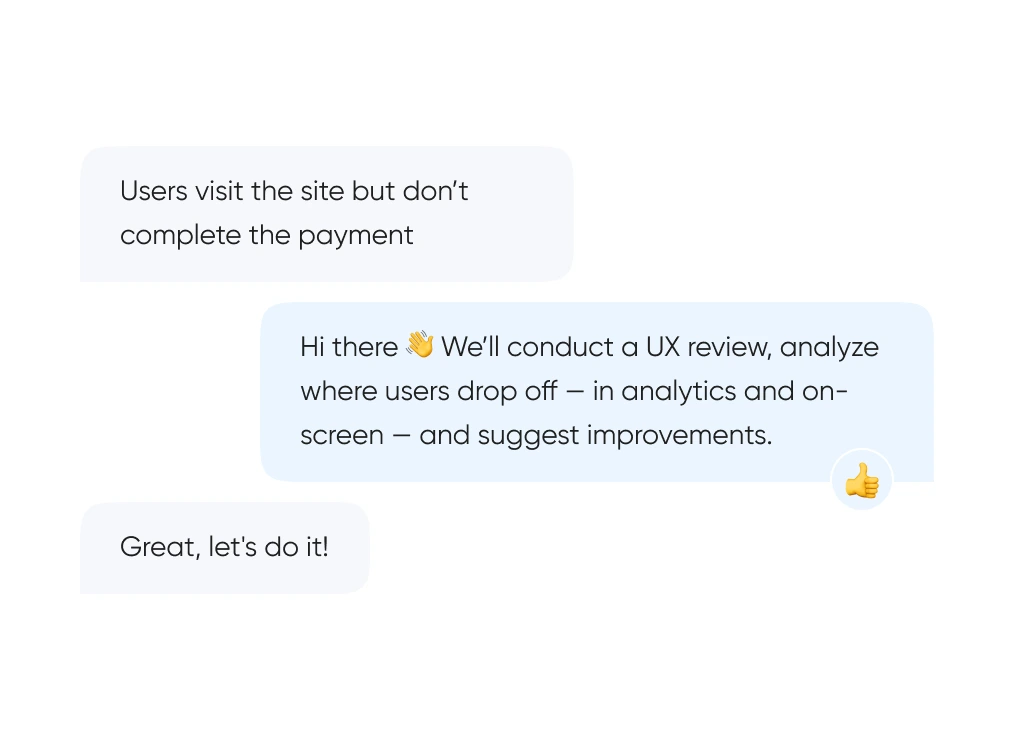
We start with real behavior: run UX reviews, analyze the full funnel, and identify exactly where and when users drop off.
We build out logic and structure — from user flows and prototypes to final layouts. Everything gets tested before it ever reaches code.
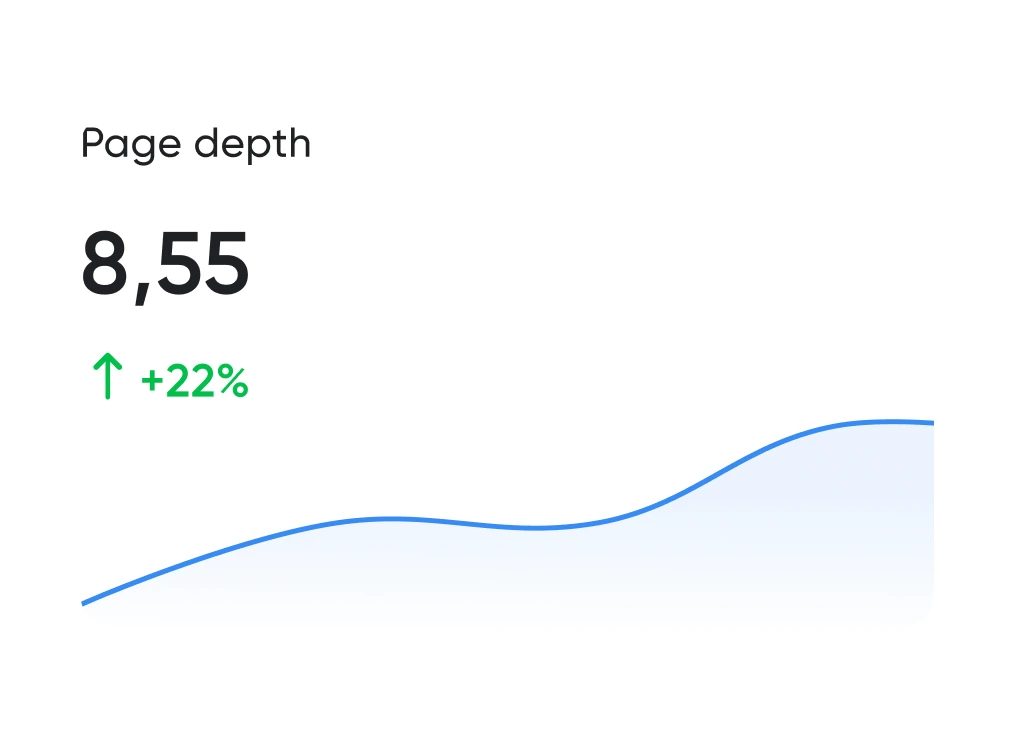
Looking good is the easy half. The work is working well. We track the numbers: time to complete key actions, scroll depth, conversion rate. All measurable.
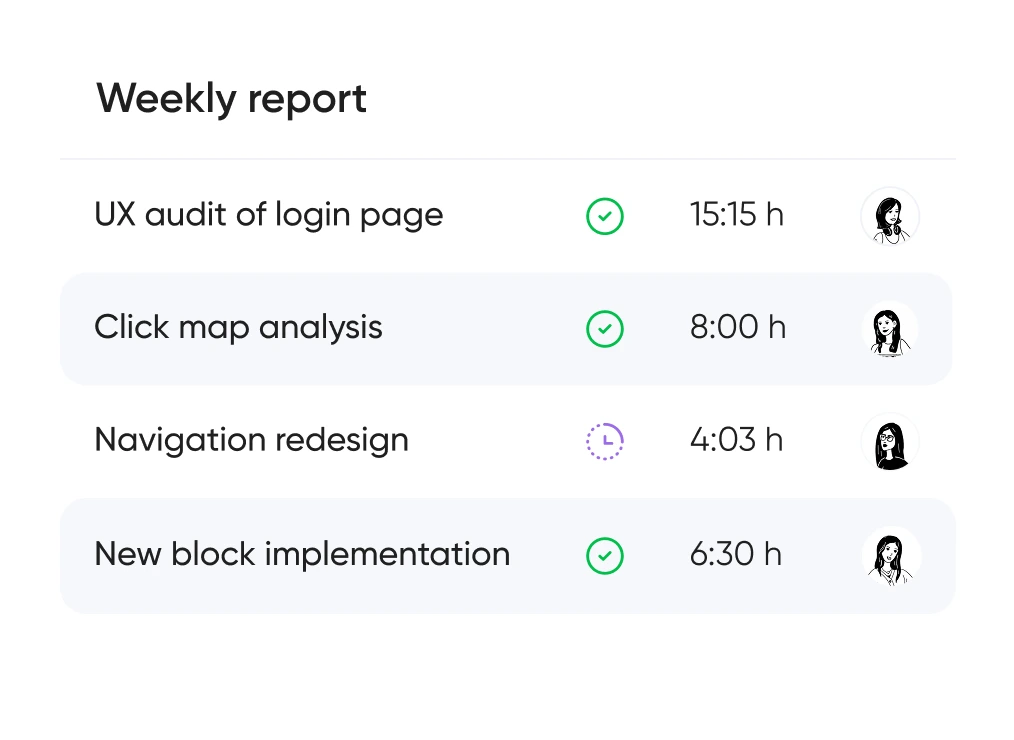
You always know which hypotheses we’re testing, what we’re improving — and why. No design for design’s sake — only what brings real business value.


Support for launching, refreshing, or rethinking an interface — at the right pace
and tailored to your product and business goals.
Pricing is tailored to each project — based on its stage, scope, and business objectives.
We use only the tools that help us create intuitive, responsive, and scalable interfaces.
UX/UI design for ecommerce, fintech, edtech, and more.
Didn’t find what you were looking for? Drop us a line at info@toimi.pro.
Palo Alto users build products at Apple, engineer systems at Google, and study human-computer interaction at Stanford. They recognize weak information architecture, inconsistent spacing, and flawed interaction patterns on first glance. In a city with the highest per-capita PhDs in the country, mediocre interfaces cause immediate churn. UX/UI quality here is not a competitive advantage — it is the minimum bar for product adoption.
We begin with user research and stakeholder interviews, then move through information architecture, wireframing, high-fidelity visual design, interactive prototyping, and usability testing. Palo Alto product teams receive research-validated designs before a single line of code is written. This approach eliminates the expensive cycle of building, discovering design flaws, and rebuilding — saving both budget and time to market.
A focused design sprint covering a core user flow takes two to three weeks. Comprehensive product design spanning multiple features and user roles requires six to twelve weeks. Palo Alto startups frequently begin with rapid sprints to validate a key flow before committing full development resources — an approach that conserves runway and reduces risk.
Cost depends on the number of screens, depth of user research, prototyping fidelity, and total flow count. A marketing website costs significantly less than a multi-role SaaS dashboard with complex data visualizations. Every project is scoped around measurable business impact — whether you are a Sand Hill Road-funded startup or an established enterprise on Stanford Research Park.
Yes. We run moderated usability sessions with participants who match your actual target audience. In a city where users professionally evaluate digital products for a living, testing reveals friction that even experienced internal UX teams overlook. Data consistently outperforms assumptions, and in Palo Alto the gap between assumption-driven and research-driven design is especially visible.
Absolutely. We start with a thorough UX audit identifying friction points, drop-off patterns, and accessibility gaps. The redesign addresses validated problems rather than subjective opinions. Palo Alto SaaS companies that follow this audit-first approach consistently see measurable improvement in conversion, retention, and Net Promoter Score after launch.
We deliver interactive Figma prototypes with real user flows — not static screenshots. Every design decision is accompanied by written rationale explaining why it was made. Structured review sessions use annotation tools so your Palo Alto engineering and product teams can leave precise feedback. This process respects the analytical, evidence-based culture that Silicon Valley teams expect.
Yes. Every project produces organized Figma files with a component library, spacing system, and interaction specifications. Palo Alto engineering teams receive everything needed for pixel-perfect implementation. The design system also scales as your product grows — new features and screens follow established patterns without requiring redesign of existing components.


