Not a typical request? No problem.
Get in touch

UX reviewed, UI redesigned, interfaces refreshed — all to make things easier for users and better for business.
Need to test an idea fast, without going all in?
Expect a streamlined, functional UX/UI in no time.
Visitors getting lost and dropping off?
Time to adjust user navigation logic.
Afraid a redesign could do more harm than good?
The update will be careful — what works stays untouched.
No one to take care of UX/UI design?
From UX research to clean UI mockups — we’ve got it covered.
Most product layouts are drawn with invented content. Names are short and tidy, every photo has the same proportions, each description fits neatly in two lines. The design looks balanced and finished. Then real data arrives, and the screens start to break.
Real content is messier in predictable ways. Names are long, sometimes very long. Some records have no photo at all. Descriptions run to several paragraphs or are missing entirely. Numbers have more digits than anyone expected. Translations are longer than the original text. A layout built for the ideal case has no answer to any of this.
The fix is to collect real samples before drawing anything. Export a few hundred records from the existing system, or from a similar product, and look at the range. What is the longest name? What share of items have no image? How many tags does a typical item carry, and how many does the busiest one carry? These numbers become design constraints, as solid as screen sizes.
Extreme cases deserve their own sketches. Alongside the typical screen, the designer draws the version with the longest title, the empty description, the list with one item and the list with a thousand. Each reveals decisions that would otherwise be made in a hurry by a developer: truncate or wrap, hide or show a placeholder, paginate or scroll.
Content also changes priorities. Designers often assume that users care most about what looks best on screen. Real data may show that the field people actually search for is an order number or a date, not the product name in large type. Layout should follow what people use, which only real content reveals.
Writers should join early. Headings, button labels, empty states and error messages are part of the interface. Drafting them with the first wireframes shows whether a screen can be explained in plain words. If it cannot, the problem is usually in the structure, not in the copy.
Placeholder text hides problems in reviews as well. Stakeholders approve a screen full of neat fake text and then object when they see their own data in it. Showing real examples from the start means feedback arrives while changes are still cheap.
Privacy needs care. Real records may contain personal information, so samples should be anonymised or replaced with realistic fake data that keeps the same shape: similar lengths, similar gaps, similar oddities.
Prototypes benefit most. A clickable prototype filled with realistic data behaves like the product, and user tests on it produce findings that survive into the build.
Design systems should include these lessons. Components documented with long, short and missing content examples save every future team from rediscovering the same problems on their own screens.
Content audits of the existing product are a good source as well. Listing every screen, the data it shows and where that data comes from often reveals fields that nobody reads, labels that mean different things in different places, and information that users need but cannot find. Cleaning that up before the redesign gives the new layout a firmer base than any visual change could.
We focus on what matters: user behavior, thoughtful structure, and data-driven improvements. Design that is measured, then proven to work.
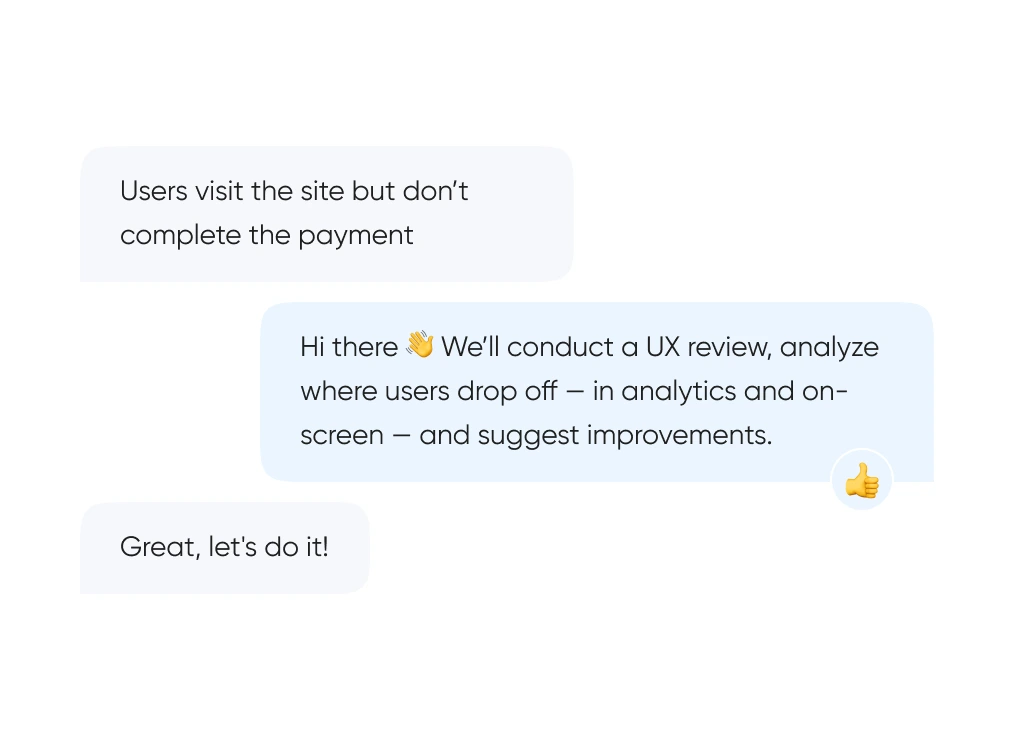
We start with real behavior: run UX reviews, analyze the full funnel, and identify exactly where and when users drop off.
We build out logic and structure — from user flows and prototypes to final layouts. Everything gets tested before it ever reaches code.
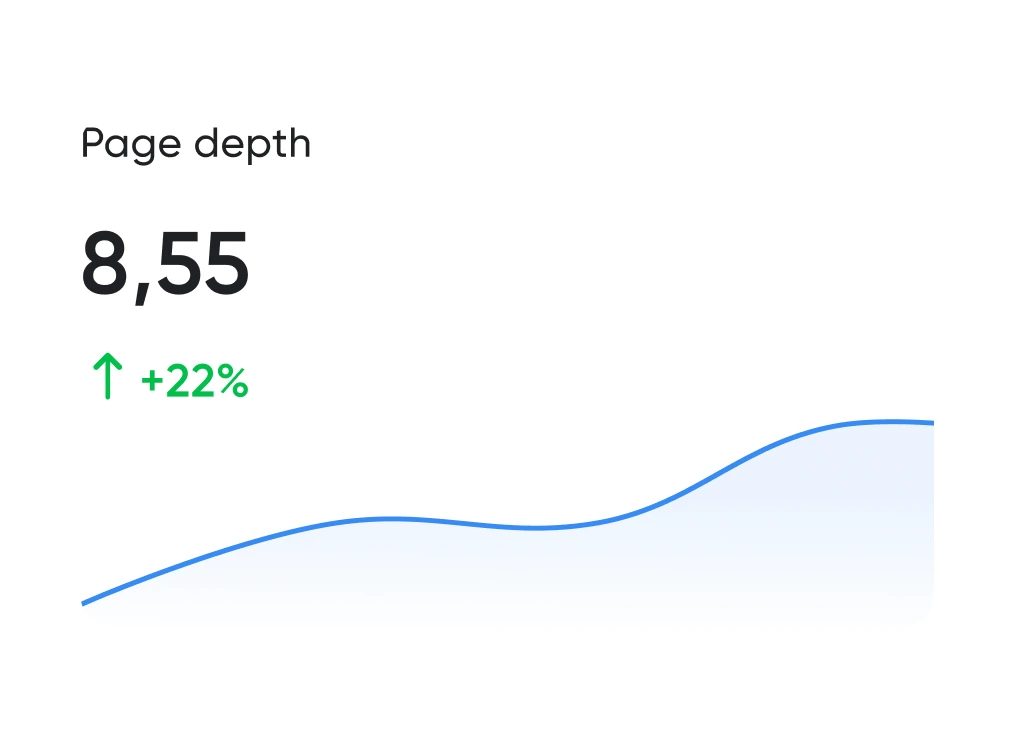
Looking good is the easy half. The work is working well. We track the numbers: time to complete key actions, scroll depth, conversion rate. All measurable.
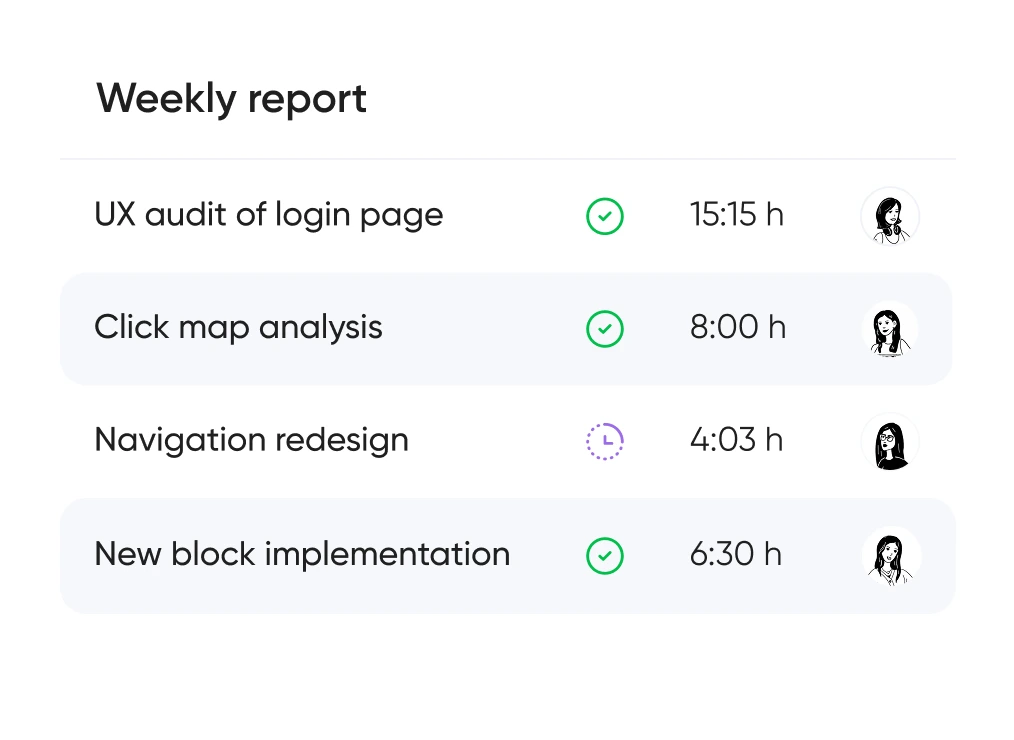
You always know which hypotheses we’re testing, what we’re improving — and why. No design for design’s sake — only what brings real business value.


Support for launching, refreshing, or rethinking an interface — at the right pace
and tailored to your product and business goals.
Pricing is tailored to each project — based on its stage, scope, and business objectives.
We use only the tools that help us create intuitive, responsive, and scalable interfaces.
UX/UI design for ecommerce, fintech, edtech, and more.
Didn’t find what you were looking for? Drop us a line at info@toimi.pro.
Pricing depends on project scope, complexity, and timeline — whether you need a mobile app for federal contractors near Rosslyn or a web platform for Crystal City's tech sector. Costs vary based on research depth, number of screens, and prototyping requirements. Projects typically start from a few thousand dollars for focused redesigns. We provide exact quotes after reviewing your project brief and business objectives specific to Arlington's competitive landscape.
Timeline depends on deliverable scope and revision cycles. A startup MVP in Clarendon might take 4-6 weeks for core flows and visual design. Enterprise platforms serving Arlington's defense contractors or federal agencies require 8-12 weeks for comprehensive research, compliance review, and multi-stakeholder feedback. We work with your launch deadlines — especially important for businesses responding to government RFPs or quarterly funding cycles common in Arlington's innovation corridor.
Government contractors in Rosslyn and Crystal City need secure, compliant interfaces for federal clients. Tech startups around Ballston require investor-ready prototypes and scalable design systems. Healthcare providers serving Arlington's 230,000+ residents benefit from HIPAA-compliant patient portals. Cybersecurity firms near the Pentagon need intuitive dashboards for complex data. We understand Arlington's unique position between defense, federal services, and commercial innovation — your design must work for both government stakeholders and end users.
We start with user research and competitive analysis relevant to your market — whether that's Arlington's federal sector or commercial startups. You receive wireframes, interactive prototypes, and high-fidelity mockups. Deliverables include design system documentation, component libraries, and developer handoff files in Figma. Every project includes usability testing to validate flows before development. For Arlington clients, we ensure designs meet Section 508 accessibility standards required for federal contracts and government partnerships.
Yes — we conduct UX audits to identify friction points without disrupting proven workflows. Many Arlington businesses need modernization that respects existing user habits, especially for platforms serving federal employees or defense personnel. We map current user journeys, prioritize improvements, and deliver phased redesigns that maintain operational continuity. This approach works well for government contractors who can't afford downtime or retraining costs during interface updates.
Absolutely. We create responsive web designs and native mobile interfaces for iOS and Android. Arlington businesses often need multi-platform solutions — field applications for contractors, secure portals for federal users, or customer apps for local services. We ensure consistent experience across devices while optimizing for each platform's patterns. Every design adapts to Arlington users' contexts, whether they're accessing your product from Pentagon offices, Rosslyn co-working spaces, or mobile fieldwork.
We use Slack or email for daily updates and schedule weekly design reviews via video call. You get access to live Figma files to track progress in real time — no waiting for formal presentations. For Arlington clients managing federal contracts or investor timelines, we provide milestone reports and stakeholder presentation decks. Communication adapts to your team's security requirements and approval workflows. You're involved at every validation point, from initial concepts through final developer handoff.
We offer design QA during development to ensure pixel-perfect implementation of your approved designs. You receive all source files, design system documentation, and asset exports developers need. Post-launch, we're available for design adjustments based on user feedback or A/B testing results — common for Arlington businesses iterating based on federal client requirements or market response. Many clients return for feature expansions or design sprints as their product evolves. We prefer long-term partnerships to one-off project transactions.


