
Most user personas in web projects are fiction dressed as research — demographic profiles that sound specific but drive zero design decisions. This guide shows how to build personas that actually shape interfaces, content, and conversion flows.
Key takeaways 👌
Useful personas are built on behavioral patterns — what users do, not who they are demographically. Age and job title don't predict how someone navigates a checkout flow.
A persona without a mapped scenario is decoration. Every persona must connect to at least one user journey that directly informs interface decisions.
Three well-researched personas drive better design outcomes than eight generic ones — the goal is decision-making clarity, not audience coverage.
Introduction
Every UX methodology includes personas. Every design sprint template has a persona step. And in most web projects, that step produces a slide deck with stock photos, fictional names, invented quotes, and demographic details that never influence a single wireframe.
The problem isn't the concept — personas are one of the most powerful tools in product design when built correctly. The problem is how teams build them: from assumptions instead of research, from demographics instead of behavior, and from templates instead of actual user data.
The result is predictable. Designers create interfaces based on what they think users want. Developers build features nobody requested. And stakeholders approve designs based on gut feeling because the "research" was never real enough to challenge anyone's assumptions.
This guide covers how to build personas that earn their place in a web project — personas that change design decisions, resolve stakeholder disagreements, and remain useful long after the initial sprint ends.
What a Persona Actually Is — And What It Isn't

A user persona is a research-based archetype representing a distinct behavioral pattern among your users. It describes how a group of people approach a task, what motivates them, what frustrates them, and what conditions shape their decisions.
A persona is not a customer profile. Customer profiles describe who buys your product — demographics, firmographics, acquisition channels. Personas describe how people use your product — goals, behaviors, friction points, decision patterns.
The distinction matters because demographics don't predict behavior. A 28-year-old startup founder and a 55-year-old enterprise procurement manager might navigate your pricing page identically — scanning for the comparison table, ignoring feature lists, clicking the "Talk to sales" button only after checking three competitors. Grouping them into separate personas based on age and title creates the illusion of user understanding while obscuring the behavioral pattern that actually matters.
Conversely, two people in the same demographic bracket can have radically different behaviors. One researches exhaustively before any purchase decision. The other impulse-buys based on social proof and visual appeal. These are two personas — regardless of whether their LinkedIn profiles look identical.
The test for a useful persona is simple: does it change a design decision? If removing the persona from the project would produce the same interface, it wasn't a persona — it was a character sketch.

Personas without journey maps are incomplete. If you've built your archetypes but haven't mapped their paths yet, start here UX trends: personalization, accessibility and voice interfaces

Why Most Web Project Personas Fail
Three patterns account for the majority of useless personas in web projects:
Assumption-based construction. The team sits in a room, discusses "who our users are," and writes personas based on collective opinion. No interviews, no analytics review, no behavioral data. The personas reflect the team's mental model, not reality — which means they reinforce existing biases instead of challenging them.
Demographic over-indexing. "Sarah, 34, Marketing Manager in Denver. Uses iPhone. Drinks oat milk lattes." None of this information helps a designer decide whether the navigation should be task-based or feature-based. Demographics feel concrete and specific, which tricks teams into thinking they've done rigorous work. They haven't — they've done character design.
Creation without connection. Personas get built during discovery, presented in a kickoff deck, and never referenced again. They exist as artifacts rather than tools. No one maps them to user journeys. No one tests design decisions against them. By the time the team is deep in custom interface design, the personas are forgotten.
The fix for all three patterns is the same: root personas in observed behavior, and connect every persona to specific design decisions they should influence.
Pay attention to what users do, not what they say.
— Jakob Nielsen, Co-founder, Nielsen Norman Group
Research Methods That Produce Useful Personas
Building behavioral personas requires actual data — but not necessarily expensive research programs. The methods below are ranked by effort and reliability.
Behavioral analytics mining (lowest effort, high value)
Your existing analytics contain persona signals. Look for:
- Navigation patterns. Do users follow a linear path (research-oriented) or jump between pages (comparison-oriented)? These represent different behavioral personas with different interface needs.
- Feature usage clusters. In SaaS products, user segmentation by feature usage reveals natural personas more accurately than any survey.
- Conversion path analysis. Users who convert on the first visit behave fundamentally differently from those who return 3–4 times before converting. Two personas, same product.
User interviews (moderate effort, highest value)
Five to eight interviews per suspected persona segment reveal more behavioral insight than any quantitative method. The key is structuring interviews around tasks, not opinions:
- "Walk me through the last time you evaluated a product like ours."
- "What was the hardest part of your last purchase decision in this category?"
- "Show me how you'd find [specific information] on this site."
Task-based questions surface actual behavior. Opinion-based questions ("What features do you value most?") surface aspirational self-image — which is worse than no data because it feels like data.
Contextual observation (high effort, irreplaceable for complex products)
Watching users interact with your product in their real environment reveals friction that interviews and analytics miss. For complex B2B web applications, contextual observation often uncovers workflow interruptions, multi-tool context-switching, and environmental factors (noisy office, dual monitors, mobile-first in the field) that fundamentally shape how personas should be defined.

When was the last time a persona actually changed a design decision on your team — not validated one you'd already made, but genuinely changed the direction?
Anatomy of a Useful Persona
A persona that drives design decisions has six components. Everything else is optional detail that risks distracting from what matters.
1. Behavioral pattern name. Not a fictional human name — a descriptive label for the behavior. "The Comparison Researcher" is more useful than "Marketing Mary" because it immediately signals what this persona does and why they matter for design.
2. Primary goal. One sentence: what is this persona trying to accomplish? "Evaluate three vendors and present a recommendation to their team by Friday." Goals drive information architecture.
3. Key behaviors. Three to five observable actions that define this persona's interaction pattern. "Opens multiple competitor tabs simultaneously." "Scrolls directly to pricing before reading features." "Bookmarks pages to revisit later." Behaviors drive interface layout.
4. Frustrations and friction points. What slows them down or causes abandonment? "Can't find pricing without booking a demo." "Comparison information is spread across multiple pages." Friction drives UX prioritization.
5. Decision criteria. What tips this persona from consideration to action? "Needs social proof from companies in their industry." "Requires downloadable PDF for internal stakeholder review." Decision criteria drive conversion flow design.
6. Scenario mapping. At least one detailed scenario: the situation that triggers this persona's interaction with your product, the steps they take, and the outcome they need. Scenarios are where personas become actionable — they're the bridge between "who uses this" and "what do we build."
Everything else — photo, age, location, hobbies, fictional quote — is optional. If it doesn't influence an interface decision, it's decoration.
Interesting fact 👀
Companies that invest in UX research — including persona development and usability testing — see an average return of $100 for every $1 spent, representing a 9,900% ROI. The majority of this return comes from reduced development rework and higher conversion rates.
Connecting Personas to Design Decisions
The gap between "we have personas" and "personas shaped our design" is bridged by three practices:
Decision mapping. For every major interface decision — navigation structure, page layout, content hierarchy, CTA placement — document which persona the decision serves and why. If a decision can't be traced to a persona need, it's either solving for a persona you haven't identified or solving for the team's preferences instead of user needs.
Persona-driven prioritization. When stakeholders disagree about what to build, personas break the tie. "Our primary persona needs comparison tools before they'll convert" is a stronger argument than "I think a comparison page would be nice." This requires that the team agrees on persona priority — which personas represent the most valuable segments — before design begins.
Validation testing. Recruit test participants who match your persona descriptions and run task-based usability sessions. If your "Comparison Researcher" persona can't complete a comparison task on your site in under 60 seconds, the design failed the persona — regardless of how good it looks. A thorough UX audit can reveal these disconnects between intended persona alignment and actual interface behavior.
The most disciplined teams reference personas in design reviews explicitly: "This layout serves Persona A's scanning behavior but may frustrate Persona B's comparison workflow. Here's how we resolved the trade-off." That's the signal that personas are functioning as tools, not artifacts.
How Personas Work Differently by Project Type
Personas aren't one-size-fits-all. The depth, structure, and number of personas should match the project type.
Corporate websites. Typically need 2–3 personas mapped to the buyer journey: one for initial research, one for comparison/evaluation, and one for the internal champion who builds the business case. Navigation, content hierarchy, and CTA placement should serve all three without forcing any of them through the wrong funnel. A well-designed corporate site makes each persona feel like the site was built for them.
E-commerce platforms. Persona differences here are behavioral, not demographic: impulse buyers vs. researchers, price-sensitive vs. quality-driven, first-time visitors vs. returning customers. These behaviors demand different page layouts, filtering logic, and checkout flows. For e-commerce builds, personas should be tested against actual conversion funnels, not just evaluated against wireframes.
SaaS products. The most complex persona landscape. You likely need separate personas for buyers (who evaluate and purchase) and users (who interact daily). A product that's easy to buy but hard to use — or easy to use but hard to justify purchasing — has a persona alignment problem.
Brand and identity projects. Personas here define audience perception rather than interface behavior. What does each persona segment need to believe about your brand? What visual language, tone, and messaging resonates? Brand platform development should reference these perception-oriented personas alongside any UX-focused behavioral ones.
Keeping Personas Alive After Launch
The most common persona failure mode isn't bad research — it's abandonment. Teams invest in persona development during discovery, ship the product, and never revisit the personas even as user behavior evolves.
Useful personas are living documents. Three practices keep them relevant:
- Quarterly behavioral review. Compare current analytics patterns against persona definitions every quarter. If your "Comparison Researcher" persona was defined by multi-tab browsing behavior but your analytics now show most comparison activity happening on mobile single-screen flows, the persona needs updating.
- Post-launch interview cycles. Five interviews per quarter with users matching each primary persona. Not satisfaction surveys — task-based conversations that verify whether the persona's goals, behaviors, and friction points still match reality.
- Design decision audit. Every six months, review the last quarter's design decisions and ask: which ones referenced a persona? Which ones should have but didn't? The audit reveals whether personas are genuinely embedded in the design culture or just existing in a forgotten Notion page.
Personas that aren't maintained become dangerous — the team makes decisions based on outdated behavioral models while believing they're being user-centered. An out-of-date persona is worse than no persona, because it provides false confidence.
Want to discuss your project?
Share your vision with us, and we'll reach out soon to explore the details and bring your idea to life.

Conclusion
User personas are the most misused tool in web design — not because the concept is flawed, but because most teams skip the work that makes them useful.
The pattern is always the same: build personas from assumptions instead of research, define them by demographics instead of behavior, present them once in a kickoff meeting, and never reference them again. The interface that ships reflects the team's mental model, not the user's reality — and the personas provided no value because they were never real enough to challenge anyone's thinking.
The fix is straightforward. Root personas in observed behavior. Connect every persona to specific design decisions it should influence. Test interfaces against persona-defined tasks. And maintain personas as living documents that evolve alongside your users.
Three well-researched, behavior-based personas connected to mapped scenarios will produce better design outcomes than a dozen demographic profiles with stock photos. The goal was never to describe your audience. The goal was to build something that works for them.
Recommended reading 🤓
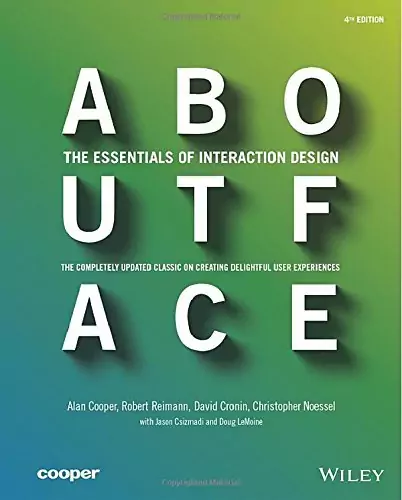
"About Face: The Essentials of Interaction Design", Alan Cooper
Cooper invented the persona methodology. This book explains the original intent — behavioral archetypes that drive design decisions — before the concept was diluted into demographic templates.

"Lean UX", Jeff Gothelf & Josh Seiden
Covers how to integrate lightweight persona research into agile workflows without the overhead of traditional persona programs — practical for teams shipping on tight timelines.
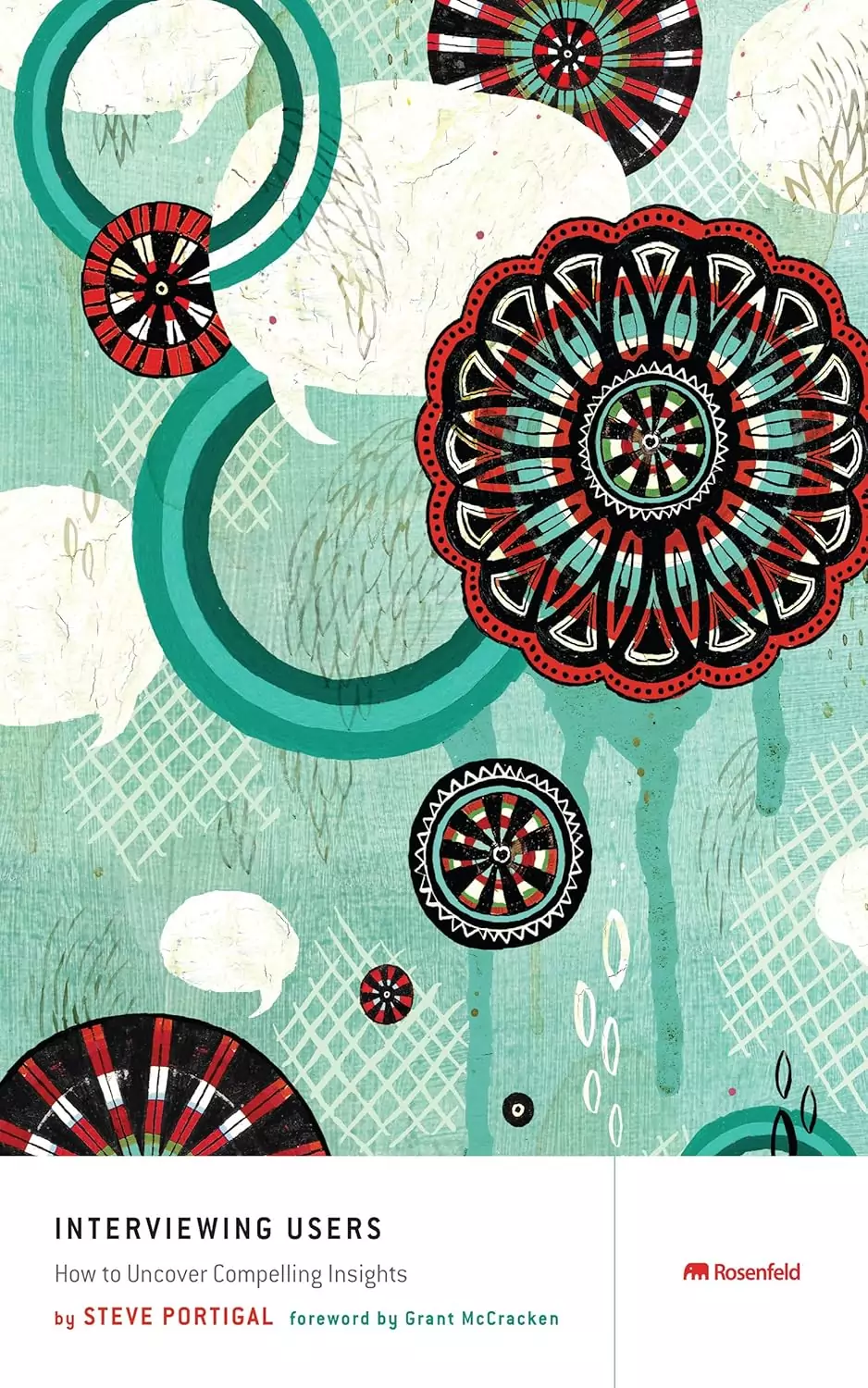
"Interviewing Users", Steve Portigal
The definitive guide to conducting user interviews that surface real behavior instead of aspirational self-reporting — the skill that separates useful persona research from expensive guesswork.
I've reviewed hundreds of project briefs that include personas. Maybe 10% of them influenced a single design decision. The rest were rituals — created because the process said to, then ignored the moment Figma opened.