
Only 22% of businesses are satisfied with their website conversion rates. Here's the 8-element framework behind B2B corporate website design that generates pipeline — and the exact decisions that separate top performers from the other 78%.
Key takeaways 👌
Only 22% of businesses are satisfied with conversion rates — most corporate sites underperform, and companies know it. The gap between revenue-generating sites and budget drains comes down to information architecture, trust engineering, and removing everything that doesn’t drive conversion.
The 5-second value proposition test is non-negotiable. If visitors don’t get what you do, who it’s for, and why you’re different in 5 seconds, they leave. High-performing H1s stay under 8 words and focus on outcomes, not services — driving 340% more demo requests.
Speed is conversion infrastructure. Every 1-second delay cuts conversions by 7%. Sites over 3 seconds lose revenue daily, and multiple CTAs reduce conversion by 17%. One CTA, one path, constant testing: 5% monthly gains compound to 80% yearly growth.
Introduction
Here's a number that should make every B2B executive uncomfortable: only 22% of businesses are satisfied with their website conversion rates. That means nearly four out of five corporate websites are underperforming by their own standards — and the companies running them know it.
The average B2B website converts between 2% and 4% of visitors into leads. Meanwhile, 94% of B2B buyers conduct online research before ever talking to sales, and 67% complete their research before contacting a single vendor. Your website isn't a brochure anymore. It's your most important salesperson — and for most companies, it's the worst performer on the team.
The gap between corporate websites that generate pipeline and those that burn through marketing budgets comes down to design decisions that have nothing to do with aesthetics. Most companies already know their site underperforms — the 22% satisfaction figure proves it. What they don't know is which specific decisions to change first.
Why Most B2B Corporate Websites Fail at Conversion
The branding-first trap. The majority of corporate websites are designed branding-first: beautiful visuals, brand guidelines meticulously applied, executive headshots professionally lit. None of this converts. B2B website success is measured by time on page, form completions, demo requests, and SQLs. The shift required is from branding-first design to conversion-first performance, where brand serves strategy — not the other way around.
The information architecture problem. Corporate websites accumulate pages like a messy desk accumulates paper. A 2014 product page still lives somewhere on the site. Three different teams have added "Resources" sections that overlap. The navigation has 12 top-level items because every department demanded representation. The result: visitors can't find what they need. They visit 2.3 pages on average, spend 2.1 minutes total, and leave without converting — not because they weren't interested, but because the site made it too hard to take the next step.
The everybody problem. Corporate sites try to serve everyone simultaneously: prospects, customers, investors, job seekers, media, partners, analysts. Without deliberate audience routing, every page becomes a compromise that serves no one well.
A purpose-built B2B corporate website solves all three problems at the architectural level — before a single design decision is made. The structure, the navigation, the conversion paths, and the content hierarchy are all determined by how B2B buyers actually research and evaluate vendors, not by how the company wants to present itself.

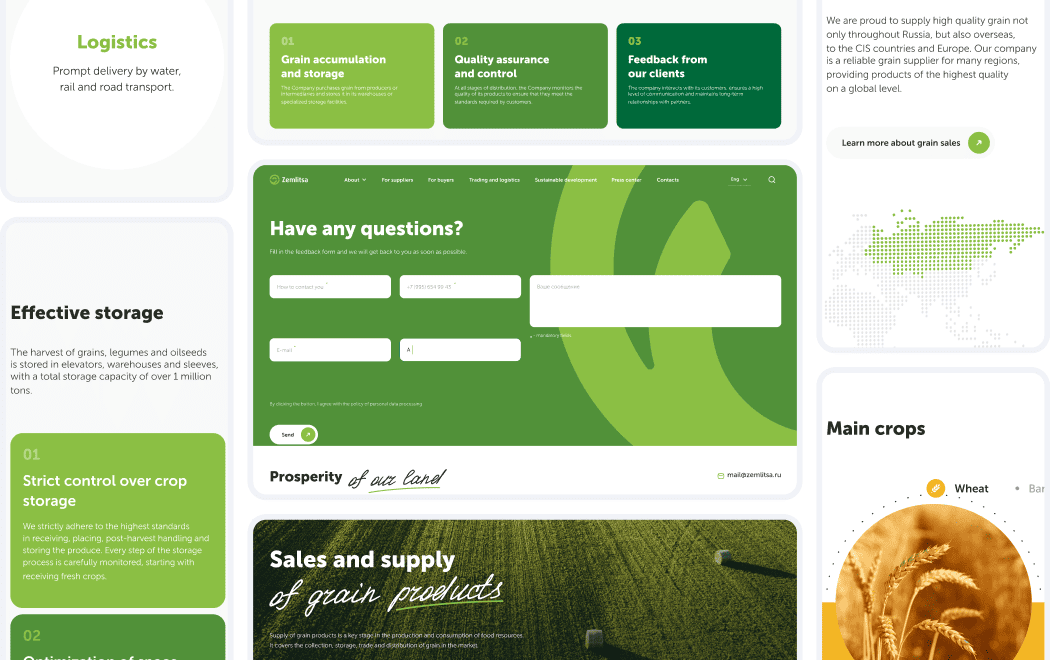
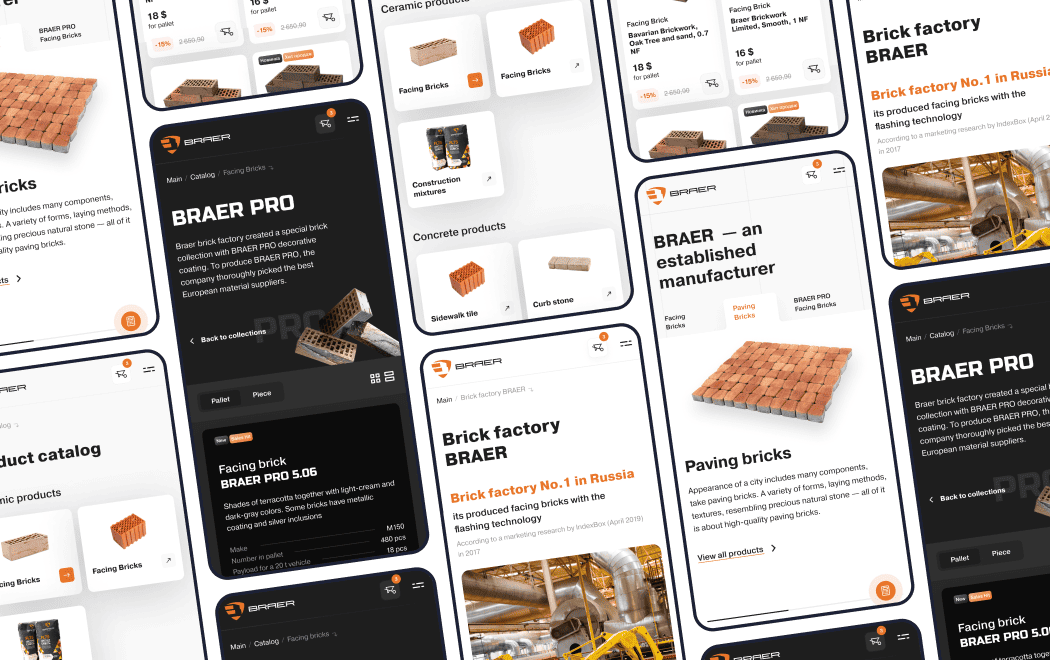
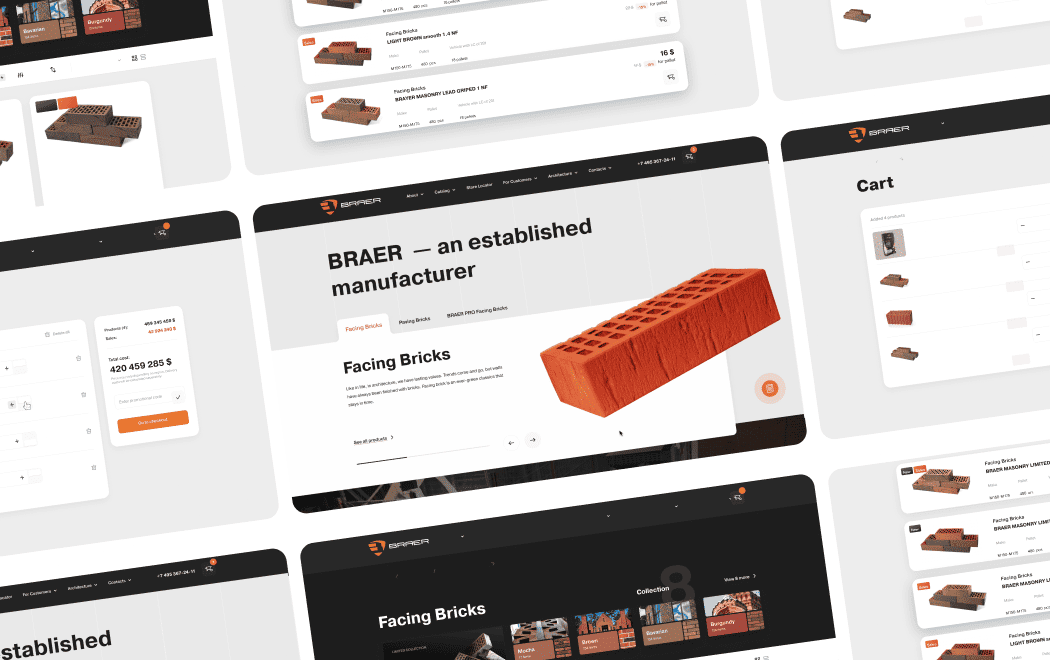
Theory becomes real in case data. This breakdown of how a brick catalogue became a conversion platform shows exactly what changes when a B2B website is redesigned around buyer behavior rather than company structure: How We Transformed Brick Catalogues Into Conversion Platforms

The 8 Elements That Make B2B Corporate Sites Convert
1. A Value Proposition That Passes the 5-Second Test
The most successful B2B websites answer three questions within five seconds of page load: What problem do you solve? What is your product or service? Who is it for?
High-performing H1 headlines contain under 8 words (44 characters maximum). This constraint forces clarity and eliminates jargon.
Before: "Empowering Enterprises with Next-Generation Digital Transformation Solutions."
After: "Cut Supply Chain Costs 30% With Real-Time Inventory AI."
The second version generated 340% more demo requests in A/B testing. It names the outcome, quantifies the benefit, and identifies the solution — in 10 words.
2. Trust Architecture (Not Just Trust Badges)
B2B buyers are risk-averse. Their job is on the line if they choose the wrong vendor. Trust isn't built with a "Trusted by 500+ companies" badge — it's built through systematic proof across every page.
Layer 1: Social proof bar — client logos (6–8 recognizable brands) placed within the first viewport scroll. Nielsen research shows 83% of respondents trust recommendations from people they know, and recognizable logos serve as proxy recommendations.
Layer 2: Specific results, not "we helped companies grow" but "we reduced Acme Corp's customer acquisition cost by 34% in 90 days." Specific, named, measured.
Layer 3: Third-party validation — G2, Capterra, Clutch ratings, industry awards, analyst mentions. Trust signals from outside your marketing team carry 3–5x more weight than self-reported claims.
Layer 4: Transparency — published pricing (even ranges), documented process, named team members with real LinkedIn profiles. Every hidden element creates suspicion in B2B buyers who've been burned before.
3. Conversion Paths Per Audience Segment
Different visitors need different paths. A VP evaluating solutions wants a demo. A technical evaluator wants documentation. A CFO wants pricing. A junior researcher wants a guide they can share upward.
Each conversion path should be accessible from every major page — not buried in a "Contact Us" link in the footer. Map your audience segments to their primary CTA: executive decision-makers to strategy calls, technical evaluators to free trials or documentation, financial stakeholders to custom pricing, researchers to downloadable guides.
4. Page Speed as Conversion Infrastructure
One-second delays kill 7% of B2B conversions. Corporate website speed targets: First Contentful Paint under 1.5 seconds, Largest Contentful Paint under 2.5 seconds, total page load under 3 seconds, Time to Interactive under 3.5 seconds.
Common corporate speed killers: unoptimized hero images (often 3–5MB), excessive JavaScript from analytics and chat widgets, no CDN for global visitors, legacy CMS with bloated plugins. Technical SEO and Core Web Vitals optimization addresses these systematically — connecting the performance signals Google uses to rank pages with the same load-time thresholds that determine whether a B2B buyer stays or leaves.
5. Mobile Performance (Not Just Responsiveness)
Over 60% of B2B research happens on phones. Mobile responsiveness means the layout adjusts. Mobile performance means the experience actually works: forms are completable, CTAs are tappable, content is scannable, and load times are fast on cellular connections. Mobile-specific requirements: touch targets minimum 48px, click-to-call phone numbers, forms that support autofill, content that doesn't require pinch-to-zoom.
6. Content That Serves the Buyer Journey
94% of B2B buyers research online before purchasing. Awareness stage content answers questions buyers type into Google. Consideration stage content — comparison pages, case studies, product deep-dives, integration documentation — is where 67% of the buyer journey happens. Most corporate websites allocate 80% of their content budget to awareness and 20% to consideration. The ratio should be inverted.
Decision stage content: pricing, implementation timelines, onboarding process, SLA documentation, and customer testimonials from similar companies. Reduce every friction point between "I'm interested" and "I've scheduled a meeting."
7. Strategic CTA Design
One primary CTA per page — no exceptions. Competing CTAs reduce conversion by 17%. CTA copy should promise value, not ask for work: "Get Your Custom Analysis" outperforms "Contact Us" by the same mechanism that outcome-based headlines outperform feature-based ones. CTA placement every 300–400 pixels of scroll depth. Sticky CTA on mobile. CTA hierarchy: primary is demo or consultation (highest value), secondary is content download (lead capture), tertiary is newsletter signup (low friction).
8. Continuous Optimization Infrastructure
The best corporate websites aren't launched and forgotten — they're continuously tested and improved. Monthly cadence: Week 1 reviews analytics and identifies underperforming pages, Week 2 designs and launches 2–3 A/B tests, Week 3 analyzes results and implements winners, Week 4 refreshes content based on performance data.
Test in this order for highest impact: homepage headline and value proposition, CTA button copy and placement, form field reduction (each field removed adds approximately 11% conversion), social proof placement and format, page load speed improvements. A 5% monthly improvement compounds to 80% annual improvement.
The more you test, the luckier you get.
— David Ogilvy, Founder, Ogilvy & Mather
Corporate Website Design: Page-by-Page Blueprint
Homepage
Primary job: communicate the value proposition and route visitors to relevant paths.
Structure: Hero with outcome-focused headline, specific subhead, single CTA, and product or service visual. Social proof bar with 6–8 client logos. Problem/solution section with 3 pain points matched to capabilities. Service overview covering 3–4 key offerings with benefit-oriented descriptions. Results section with 2–3 case study snapshots and specific metrics. How it works (3–4 step process). Final CTA with a different angle than the hero CTA.
Service Pages
Primary job: convince visitors you can solve their specific problem.
Structure: Outcome-focused headline (not the service name). Problem description — the pain the buyer feels. Solution approach — how you solve it. Three to four specific benefits with supporting evidence. Relevant case study. Process overview. Pricing indication (range or "starting at"). Service-specific CTA.
Case Studies
Primary job: provide proof that you deliver results for companies like the visitor's.
Structure: Client profile (industry, size, challenge). The problem — specific and quantified. Your approach (process, not just results). Results with specific metrics: revenue impact, time saved, cost reduced. Client quote. CTA: "Get similar results for your business."
For an in-depth breakdown of what makes enterprise corporate websites actually perform — from information architecture to conversion path design — the complete guide to corporate website development covers the structural decisions that determine whether a visitor advances through the evaluation process or abandons.
About Page
Primary job: build human trust and credibility.
What works: team photos (real, not stock), specific experience metrics, company values demonstrated through actions, client relationships highlighted.
What doesn't work: founding story that reads like a novel, mission statements written by committee, stock photography, vague claims without evidence.
The custom design work required to execute this page-by-page blueprint correctly isn't about visual aesthetics — it's about building a conversion architecture where each page type has a defined primary job, a clear visitor path, and elements that reduce buying risk at the specific stage where that visitor is in their decision process.

A B2B website that converts at 2% and receives 1,000 monthly visitors generates 20 leads. The same traffic to a site converting at 4% generates 40 leads — without changing the ad spend, the SEO strategy, or the sales team. The conversion rate gap is the highest-leverage variable in your entire marketing system, and most companies optimize everything else first.
How to Measure B2B Corporate Website Performance
Primary conversion metrics with B2B benchmarks:
Overall conversion rate: B2B average 2–4%, top performers 5–8%. Homepage conversion: average 1–3%, top performers 3–5%. Service page conversion: average 3–5%, top performers 6–10%. Pricing page conversion: average 5–10%, top performers 10–20%. Landing page conversion: average 3–8%, top performers 8–15%.
Supporting metrics: Pages per session target 2.5+ (indicates engagement), average session duration target 2.5+ minutes for B2B, bounce rate below 45% for corporate sites, return visitor rate 25%+ (indicates consideration-stage interest), form abandonment rate below 60%.
Revenue attribution. Connect website activity to actual revenue: Marketing Qualified Leads generated per month, Sales Qualified Leads from website source, pipeline value attributed to the website, closed revenue from website-originated leads, Customer Acquisition Cost from the website channel.
A UX/UI audit maps exactly where visitors drop off, which pages have the largest gap between benchmark and actual conversion rates, and which fixes deliver the fastest return — removing guesswork from optimization priorities and replacing it with data on where the revenue is actually leaking.
Understanding the full mechanics of website conversion and what drives it — micro-conversions, session depth, form abandonment patterns — is the analytical foundation for moving conversion rates from the B2B average to top-quartile performance.
Corporate Website Design Investment: Costs and ROI
Template-based corporate site ($5,000–$15,000). 4–6 weeks. Suitable for small businesses with 5–15 pages. Limited conversion optimization.
Custom corporate website ($25,000–$75,000). 8–14 weeks. Mid-market companies with 20–50 pages. Full conversion architecture, custom design, A/B testing setup.
Enterprise corporate platform ($75,000–$200,000+). 14–24 weeks. Enterprise organizations with 50–500+ pages. Advanced personalization, marketing automation integration, multiple audience routing.
Ongoing optimization retainer ($3,000–$10,000/month). Continuous testing, content refresh, performance monitoring, conversion improvement.
ROI perspective: A $50,000 corporate web development investment that improves conversion from 2% to 4% doubles lead generation. At 1,000 monthly visitors and $5,000 pipeline value per lead, that's an additional 20 leads per month — $100,000 in new pipeline monthly from a one-time investment, recovering the cost in under two months.
Interesting fact 👀
Forrester research shows that the majority of B2B buyers complete most of their research before ever engaging with a vendor—meaning your website effectively makes the first sale. Companies that optimize for this self-directed buying phase consistently achieve higher conversion rates than industry averages, translating into a substantial increase in qualified leads at scale.
FAQ: B2B Corporate Website Design
How long does a corporate website redesign take?
Template-based projects run 4–6 weeks. Custom corporate websites take 8–14 weeks. Enterprise platforms with complex integrations, personalization systems, and multiple audience routing require 14–24 weeks. The most common cause of timeline extensions is content creation and internal approval cycles — both are faster when planned before the project starts.
How do I know if my corporate website needs a redesign or optimization?
If conversion rates are below 2% and the site is over 3 years old, a redesign is usually more efficient than incremental optimization. If conversion rates are 2–4% on a relatively modern site, systematic A/B testing and conversion rate optimization typically deliver faster ROI than a full rebuild. A UX/UI audit establishes the diagnosis before budget is committed.
What's the most important page to get right?
The homepage converts at the lowest rate of any major page type (1–3%) but receives the most traffic — which means small improvements have outsized impact. After the homepage, pricing pages have the highest conversion potential (5–20%) because visitors reaching them have already self-qualified as serious prospects.
How many CTAs should a corporate website have?
One primary CTA per page. Secondary and tertiary CTAs can exist, but only one should receive visual priority. The research is clear: competing CTAs reduce conversion by 17%. The goal is to guide visitors through a defined path — not offer them a menu of options that creates choice paralysis.
How do I measure ROI on corporate web design investment?
Track Marketing Qualified Leads from website source, pipeline value attributed to website-originated leads, and closed revenue from website-initiated contact. Compare these figures against the investment cost amortized over 24 months (the typical effective lifespan of a corporate site build). For most mid-market companies, the payback period is 60–90 days when conversion rate improvement is properly attributed.
Want to discuss your project?
Share your vision with us, and we'll reach out soon to explore the details and bring your idea to life.

Conclusion
The 22% satisfaction figure at the top of this article isn't a design problem. It's a strategic problem: most corporate websites are built around what companies want to communicate, not around how B2B buyers actually research, evaluate, and decide.
The eight elements in this guide aren't a checklist — they're an integrated system. A clear value proposition only works if the trust architecture is there to back it up. Trust architecture only converts if the CTA paths are clear. Clear paths only generate revenue if the page speed doesn't eliminate visitors before they see them. Every element depends on the others.
The math on closing the conversion gap is compelling regardless of industry or company size: moving from 2% to 4% doubles lead generation from existing traffic, without changing a single ad spend or SEO tactic. That's the highest-leverage investment available to most B2B marketing teams — and it starts with treating the corporate website as a conversion system that gets engineered, measured, and continuously improved, rather than a branding asset that gets rebuilt every five years.
Recommended reading 🤓
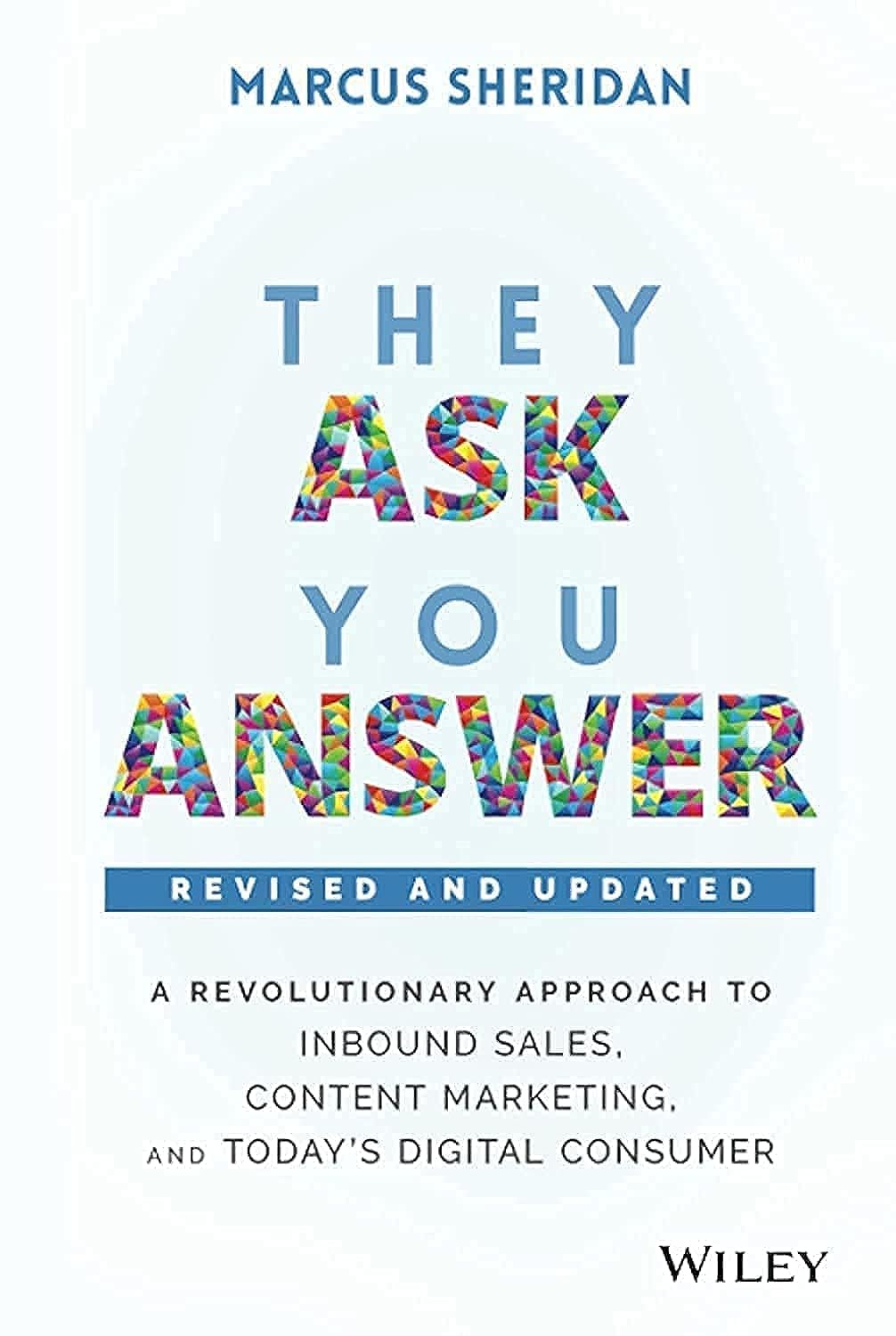
"They Ask You Answer", Marcus Sheridan
The definitive guide to content strategy for B2B companies — explains why transparent, buyer-focused website content outperforms every other marketing investment and how to build the content architecture that drives the consideration-stage conversion this guide describes.

"Predictably Irrational", Dan Ariely
Behavioral economics research that explains the psychological mechanisms behind the trust layers, CTA design principles, and choice-reduction strategies in this guide — essential context for understanding why these elements work, not just that they do.
"Web Analytics 2.0", Avinash Kaushik
Framework for measuring website performance through business outcomes rather than traffic metrics — the analytical foundation for connecting corporate web design investment to pipeline, conversion rates, and closed revenue.
Most corporate websites are built to impress the CEO, not convert the buyer. The CEO wants the company history above the fold. The buyer wants to know if you can solve their problem in under 5 seconds. The sites that actually generate pipeline are designed around what the buyer needs to see — not what the company wants to say.