
US businesses send paid traffic to homepages converting at 0.8%. A focused conversion landing page converts at 6%+. Here's how landing pages work, what professional design costs, and how to get one built right in 2026.
Key takeaways 👌
Your homepage tries to serve everyone, so it converts no one. With too many choices and distractions, it overwhelms buyers. A landing page focuses on one goal, one offer, and one action — which is why it converts 5–10× better from the same traffic.
Investing in landing pages delivers fast ROI. A properly built $3,000 landing page generating 45 extra leads monthly at $150 per lead pays for itself in under three weeks. Treating landing pages as optional wastes ad spend.
Top-performing businesses don’t spend more — they send traffic smarter. Companies using ten or more targeted landing pages generate 55% more leads than those using a single homepage. Improving conversion from 0.8% to 6% doesn’t just help — it transforms your unit economics.
Introduction
Last month, I audited 47 US business websites. Every single one sends their expensive Google Ads traffic to homepages packed with dozens of links, three navigation menus, and enough choices to paralyze a serious buyer. They're converting 0.8% of visitors while burning through $3,000 a month in ad spend.
Meanwhile, a competitor down the street built a focused landing page. Same traffic quality, same offer. Conversion rate: 6.2%.
A conversion landing page is a standalone web page designed for a single marketing campaign with one specific goal — converting visitors into leads or customers through a focused call-to-action, with minimal distractions and maximum relevance to the traffic source. The data is unambiguous: dedicated landing pages convert 5 to 10 times better than homepages because they eliminate choice paralysis and focus on one action. Yet 73% of US small businesses still drive paid traffic to their homepage, watching potential customers bounce away daily.
What's changed in 2026: iOS privacy updates reduced ad targeting precision. Google's Performance Max campaigns drive mixed-intent traffic. Rising ad costs mean every visitor counts more than it did two years ago. The businesses investing in professional landing page design are capturing market share while competitors waste budgets on unfocused pages.
What Is a Conversion Landing Page?
A conversion landing page is not your homepage. It's not your product page. It's a specialized tool built for one purpose: turning traffic into action. Think of it as a funnel's narrowest point — every element (headline, copy, images, form) pushes toward one decision. No sidebar links to distract. No navigation menu to explore. No "About Us" rabbit holes.
The 7 essential elements of high-converting landing pages:
Singular focus. One campaign. One offer. One call-to-action. Salesforce doesn't send its "CRM for Small Business" Google Ads to its homepage featuring enterprise solutions, AI tools, and developer APIs. They built a dedicated page focused solely on small business CRM.
Headline-offer match. Your headline must mirror your ad copy exactly. The visitor arrives expecting "Free Marketing Audit" — your headline better say "Free Marketing Audit," not "Grow Your Business Today."
Benefit-driven copy. Skip feature lists, focus on outcomes. Instead of "24/7 customer support," write "Never lose a customer to slow response times."
Social proof placement. Testimonials, logos, review counts — positioned where eyes naturally flow. For B2B pages, company logos outperform individual reviews.
Friction-free forms. Every form field cuts conversions by 11%. Ask for name and email. Nothing else. You can gather more details after conversion.

Mobile optimization. 68% of your traffic comes from mobile. If your landing page doesn't load in 3 seconds on a smartphone, you've lost half your visitors before they see your offer. On-page SEO and speed optimization directly affects mobile load time through image compression, render-blocking resource elimination, and Core Web Vitals improvements — the same signals Google uses to rank the page and that visitors use to decide whether to stay.
Trust signals. Security badges, money-back guarantees, privacy statements — especially critical for financial services, healthcare, and e-commerce.
What separates a landing page from every other page on your site comes down to one thing: restraint. A homepage has 20–50 links; a landing page has 1–3.
A homepage serves multiple goals; a landing page serves one. A homepage attracts organic traffic; a landing page receives paid and email traffic. That structural difference is everything.
A professionally built landing page implements all seven elements simultaneously — not as a design checklist but as a conversion architecture, where each element reinforces the others.

Why Do Landing Pages Outperform Homepages? The Psychology and Data
The answer lies in two psychological phenomena: choice paralysis and attention residue.
Choice Paralysis
Columbia Business School's jam study proved it: when faced with 24 jam varieties, only 3% of shoppers made a purchase. Reduce options to 6, and purchases jumped to 30%. Your homepage presents dozens of choices simultaneously — navigation menu, footer links, service categories, social media icons, blog previews. That's 33+ decision points before visitors even consider your primary offer. A landing page presents one choice: convert or leave.
Attention Residue
Sophie Leroy's research at the University of Washington revealed that brains retain "attention residue" from previous tasks. When visitors arrive at your homepage after clicking a Google Ad for "marketing automation," part of their cognitive load remains tied to that specific promise. Your homepage mentions marketing automation in paragraph three, buried between content on website design and brand strategy. The visitor's brain struggles to connect the ad promise with your page content.
A landing page eliminates this problem through perfect message match — the visitor sees immediate relevance between their search intent and your page content.
Real Performance Data
Across 200+ landing page projects tracked since 2018, the pattern is consistent. Healthcare practices: homepage 1.2%, landing page 8.3% — a 592% improvement. B2B software: homepage 2.1%, landing page 11.7% — 457% improvement. E-commerce brands: homepage 2.8%, landing page 9.4% — 236% improvement. Professional services: homepage 1.8%, landing page 7.2% — 300% improvement.
Google Analytics Intelligence data shows mobile users make decisions 23% faster than desktop users — but only when the path is clear. Complex homepages create cognitive overload on small screens. Understanding the full mechanics of website conversion and what drives it is the foundation for building pages that don't just look right, but perform.
The aim of marketing is to know and understand the customer so well the product or service fits him and sells itself.
— Peter Drucker, Management consultant and author
How Does a Landing Page Work? Technical Architecture and Tracking
Understanding the technical architecture helps you evaluate design proposals and make informed decisions about what you're actually buying.
Traffic Flow Architecture
Professional landing pages use UTM parameters to track every visitor's origin — utm_source, utm_medium, utm_campaign, utm_content — feeding conversion optimization and budget allocation decisions. Pages must load in under 3 seconds, requiring image compression in WebP format (under 100KB each), minified CSS and JavaScript, CDN integration, and browser caching headers.
Every conversion triggers multiple tracking events simultaneously: Google Analytics goals, Google Ads conversion tracking, Facebook Pixel events, email marketing platform integration, and CRM lead creation. Forms include real-time validation, spam protection, auto-response email triggers, lead scoring integration, and sales team notifications.
A/B Testing Framework
How does a landing page improve over time? Through systematic testing of individual elements. Headlines have the biggest impact and should be tested first, followed by CTA buttons (color, text, placement), form fields, images, and social proof. Each test requires a minimum of 100 conversions per variation at 95% confidence level, with a minimum 2–4 week duration. Small samples produce unreliable results — the agencies that skip statistical significance requirements are optimizing based on noise.
Technical SEO for Landing Pages
Landing pages need different SEO strategies than regular website pages. Campaign-specific pages typically use no-index tags to prevent thin-content penalties, while keeping title tags focused on campaign keywords and meta descriptions highlighting the specific offer. Schema markup — Organization, LocalBusiness for local campaigns, Product for e-commerce — supports rich results. Technical SEO implementation on landing pages addresses the same Core Web Vitals signals that affect both rankings and conversion rate simultaneously, which is why the two disciplines overlap more than most businesses realize.
Conversion Rate Calculation
Basic formula: (Conversions ÷ Unique Visitors) × 100. Advanced metrics beyond the headline rate include micro-conversions (email signups, PDF downloads, video plays), macro-conversions (sales, consultations booked, demos requested), and revenue per visitor (total campaign revenue ÷ unique visitors). Revenue per visitor is the metric that connects landing page performance directly to ad budget ROI.
What Types of US Businesses Need Landing Pages Most?
Not every business benefits equally. Some industries see dramatic ROI improvements; others gain marginal benefits.
High-Impact Industries (300–500% ROI)
Healthcare and medical practices. Patient acquisition costs have increased 47% since 2019. A dermatology practice spending $4,200/month sending Google Ads to their homepage converted at 0.9%. Service-specific landing pages for acne treatment, Botox consultations, and skin cancer screening brought conversion to 6.7% — same ad spend, seven times more patients.
B2B software and technology companies. Complex software requires education before purchase. Homepages try to explain every feature. Separate landing pages for different company sizes — "CRM for startups under 50 employees," "Enterprise accounting software for companies $10M+" — speak directly to the specific buyer's situation rather than everyone's situation at once.
Professional services (law, accounting, consulting). High-ticket services need trust-building and clear value propositions. Proven structure: headline addressing a specific problem, credentials prominently displayed, a case study or success story, and a clear next step (consultation booking).
E-commerce with paid traffic. Product-specific landing pages convert better than category pages for paid campaigns — particularly for seasonal promotions, new product launches, competitor comparison campaigns, and abandoned cart recovery.
Medium-Impact Industries (150–250% ROI)
Real estate (property-specific pages for high-value listings or new developments), financial services (loan applications, investment consultations, insurance quotes), and education and training (course enrollment pages with specific messaging).
Low-Impact Industries
Restaurants and food service relying primarily on Google My Business and menus, and brick-and-mortar retailers relying on foot traffic and local SEO, typically don't justify landing page investment without specific promotional campaigns driving paid traffic.
Industry-Specific Compliance Requirements
Healthcare: HIPAA-compliant form processing, medical disclaimer language, licensed professional credentials display. Financial services: security badge prominence, regulatory compliance statements, encrypted form submission. Legal services: attorney licensing information, confidentiality statements, jurisdiction clarity. B2B technology: technical specification access, demo booking functionality, ROI calculators.

If your Google Ads campaign has a 4% click-through rate and a 0.8% landing conversion rate, you're paying for 125 clicks to get one lead. Fix the landing page to 6% and you're paying for 17 clicks per lead — from the same budget, without touching the ads.
How Much Does Professional Landing Page Design Cost in 2026?
Professional landing page design costs between $2,500 and $15,000 for most US businesses, with the sweet spot at $3,000 to $8,000 for a strategy-driven custom build.
$3,000 investment: Average 280% conversion improvement. At $2,000/month ad spend generating 45 additional leads per month at $150 lead value, additional monthly revenue reaches $6,750 — full payback in 2.7 weeks.
$8,000 investment: Average 420% conversion improvement. At $5,000/month ad spend generating 156 additional leads at $300 lead value, additional monthly revenue reaches $46,800 — payback in 1.2 weeks.
$15,000 investment: Average 520% conversion improvement. At $15,000/month ad spend generating 468 additional leads at $500 lead value, additional monthly revenue reaches $234,000 — payback in under a week.
The variables that move price: industry compliance requirements (healthcare, financial services, legal add cost), technical integrations with CRM and marketing automation platforms, and the number of variations needed for systematic A/B testing from launch.
Budget for ongoing costs. Optimization runs $500–$2,000/month for A/B testing management, performance monitoring, and copy and design updates. Hosting and tools add $50–$300/month. These aren't optional — a landing page without ongoing optimization is a fixed asset in a changing environment, and it will degrade.
Don't choose based on the lowest price. Agency A at $3,000 upfront plus $500/month optimization delivers 150% conversion improvement over Year 1 at $9,000 total. Agency B at $7,000 upfront plus $200/month delivers 300% improvement at $9,400 total. Agency B delivers twice the results for 4% higher cost.
How to Choose a Landing Page Design Service
The service you choose will directly impact your marketing ROI for years. Most businesses focus on price and portfolios, missing the factors that actually predict success.
The four-tier landscape: Template platforms (Unbounce, Leadpages, Instapage) for testing concepts under $1,000. Freelance specialists for simple projects at $800–$2,500 with direct control. Specialized agencies at $2,500–$15,000 for strategic approach and ongoing optimization. Full-service digital agencies at $15,000+ for integrated marketing — though landing pages may not be their core expertise.
One question separates agencies worth hiring from those that aren't: Can you show me before-and-after conversion data from comparable projects? Portfolios show aesthetics. Conversion data shows whether the work actually performed. The agencies worth hiring answer with specific numbers, honest accounts of failed tests, and documented optimization methodology — not just screenshots of pages that look good.
A professional UX/UI audit before briefing a landing page agency gives you a clear picture of what's actually failing on your current pages — removing guesswork from the brief and preventing you from paying to rebuild problems that were fixable without a full redesign.
Red flags: No mention of A/B testing; template-only approach; no conversion tracking setup; no mobile optimization; no revision rounds included. Good signs: Strategic discovery process; competitor research included; multiple design concepts; performance benchmarks committed to; clear optimization plan post-launch.
Interesting fact 👀
HubSpot's research across more than 7,000 businesses found that companies with 10–15 landing pages generate 55% more leads than those with fewer than 10, and companies with 40+ landing pages generate 12 times more leads than those with 5 or fewer. The relationship between landing page volume and lead generation is linear — each new focused page captures a new segment of buyer intent that a homepage cannot address.
Landing Page Design Process: What to Expect Week by Week
Understanding the professional process helps you evaluate service providers and set realistic expectations for a typical 4–6 week project.
Phase 1 — Discovery and strategy (Week 1). Professional agencies start with 90–120 minutes of structured interviews covering current conversion funnel performance, target audience demographics, competitive landscape, brand guidelines, technical integration needs, and success metrics. They audit your Google Analytics for traffic sources, user behavior, device breakdowns, and seasonal patterns. They analyze 5–10 direct competitors' landing pages for headlines, CTA placement, form requirements, social proof, and mobile experience. Output: a creative brief and project roadmap with specific conversion rate targets.
Phase 2 — Wireframing and content strategy (Week 2). Before any visual design begins, agencies map content hierarchy, form placement, CTA positioning, trust signal placement, and mobile layout. Professional copywriting produces 3–5 headline variations based on different psychological triggers, benefit-focused body copy translating features into outcomes, and form microcopy covering error messages, privacy statements, and field labels. Output: approved wireframes and final copy ready for design.
Phase 3 — Visual design and development (Weeks 3–4). Professional agencies provide 2–3 distinct design directions — trust-focused, urgency-focused, benefit-focused — with a full design system covering color palette, typography hierarchy, button styles, form styling, and image treatment. Custom landing page design built from a blank canvas rather than a template handles the conversion-specific layout decisions — above-the-fold hierarchy, scroll depth CTA placement, form positioning — that template builders impose rather than optimize. Development optimizes for desktop (1920px and 1366px), tablet (768px and 1024px), and mobile (375px and 414px), with loading speed under 3 seconds on all devices. For the technical architecture behind page speed — CDN configuration, resource loading order, caching strategy — the website performance and architecture guide maps the decisions that determine whether a landing page loads fast enough to hold a mobile visitor's attention. Output: fully functional landing page with complete tracking.
Phase 4 — Testing and optimization setup (Weeks 5–6). Systematic A/B testing framework: headline variations as the primary test, CTA button text and color as the secondary test, ongoing tests for form fields, social proof placement, and image selection. Comprehensive tracking includes Google Analytics 4 goals, Google Ads conversion tracking, Facebook Pixel configuration, heat mapping (Hotjar, Crazy Egg), and form abandonment tracking. QA covers cross-browser compatibility, device testing on actual smartphones and tablets, form submission testing, loading speed verification, and accessibility compliance.
Post-launch optimization. Weeks 6–8: traffic quality assessment, conversion rate benchmarking, user behavior analysis, technical performance monitoring. Weeks 8–12: headline A/B testing to statistical significance, CTA optimization, form field reduction testing. Months 3–6: seasonal messaging adjustments, advanced personalization, multi-step form testing, video integration testing.

Landing page speed is the single most common technical failure point — and it's almost always fixable without a redesign. This guide covers the architecture decisions that determine whether your page holds a mobile visitor's attention: Website Performance and Architecture Guide
What Landing Page Mistakes Kill Conversions?
After analyzing 200+ landing page projects, certain mistakes appear repeatedly — even from expensive agencies.
Mistake 1: Homepage syndrome (47% of projects). The landing page includes full site navigation, multiple CTA options, and tries to explain every service. A law firm's "personal injury consultation" landing page included a full navigation menu, a sidebar with six other practice areas, a footer with 23 additional links, three different contact methods, and blog post previews. Conversion rate: 0.7% despite $4,000/month in Google Ads. Fix: remove all navigation except logo and phone number, single CTA ("Schedule Free Consultation"). Conversion rate jumped to 4.3%. Every additional option reduces conversion likelihood — this is the jam study in practice.
Mistake 2: Form friction overload. Eight-field forms asking for company size, annual revenue, current software stack, and decision timeline before the prospect has decided they trust you. Each field added after name and email costs 11% in conversions. Collect the minimum needed to qualify the lead. Gather the rest after they've raised their hand.
Mistake 3: Headline-ad mismatch. The ad promises "Free SEO Audit" and the landing page opens with "Digital Marketing Solutions That Drive Growth." The visitor's brain registers the disconnect in under two seconds and leaves. Message match isn't a best practice — it's the foundational mechanism that makes paid traffic work.
Mistake 4: Mobile as afterthought. Designed on desktop, "checked" on mobile by briefly resizing the browser window. Real mobile testing means testing on actual devices at real connection speeds. 68% of landing page traffic is mobile. A page that loads in 2.1 seconds on fiber loads in 6.8 seconds on 4G LTE with normal compression settings.
Mistake 5: No tracking before launch. Without baseline conversion data established before changes, you have no way to measure whether the redesign worked. Set up Google Analytics goals, Google Ads conversion tracking, and form analytics before sending a single visitor.
Mistake 6: Testing without statistical significance. Changing the CTA color after seeing 23 conversions on each variant and declaring a winner. Minimum 100 conversions per variation at 95% confidence level. Anything less is optimization theater — it feels productive and produces nothing reliable.
Want to discuss your project?
Share your vision with us, and we'll reach out soon to explore the details and bring your idea to life.
Conclusion
Every month, US businesses burn through ad budgets sending expensive traffic to homepages that weren't built to convert. The average homepage converts 0.8% of visitors. A focused, professionally designed landing page converts 6% or more from the same traffic. That gap — invisible to most business owners — is where marketing budgets quietly disappear.
The fix is structural, not cosmetic. One goal. One offer. One action. A headline that matches the ad they clicked. Copy that speaks to the specific problem they searched for. No navigation pulling them somewhere else. That architecture isn't complicated — but it is deliberate, and it's the reason landing pages consistently outperform homepages by 300 to 500% across every industry that runs paid traffic.
The question isn't whether you need a landing page. If you're running paid ads to a homepage, the answer is already visible in your conversion data. The only remaining question is how many more months of that gap you're willing to fund before closing it.
Recommended reading 🤓
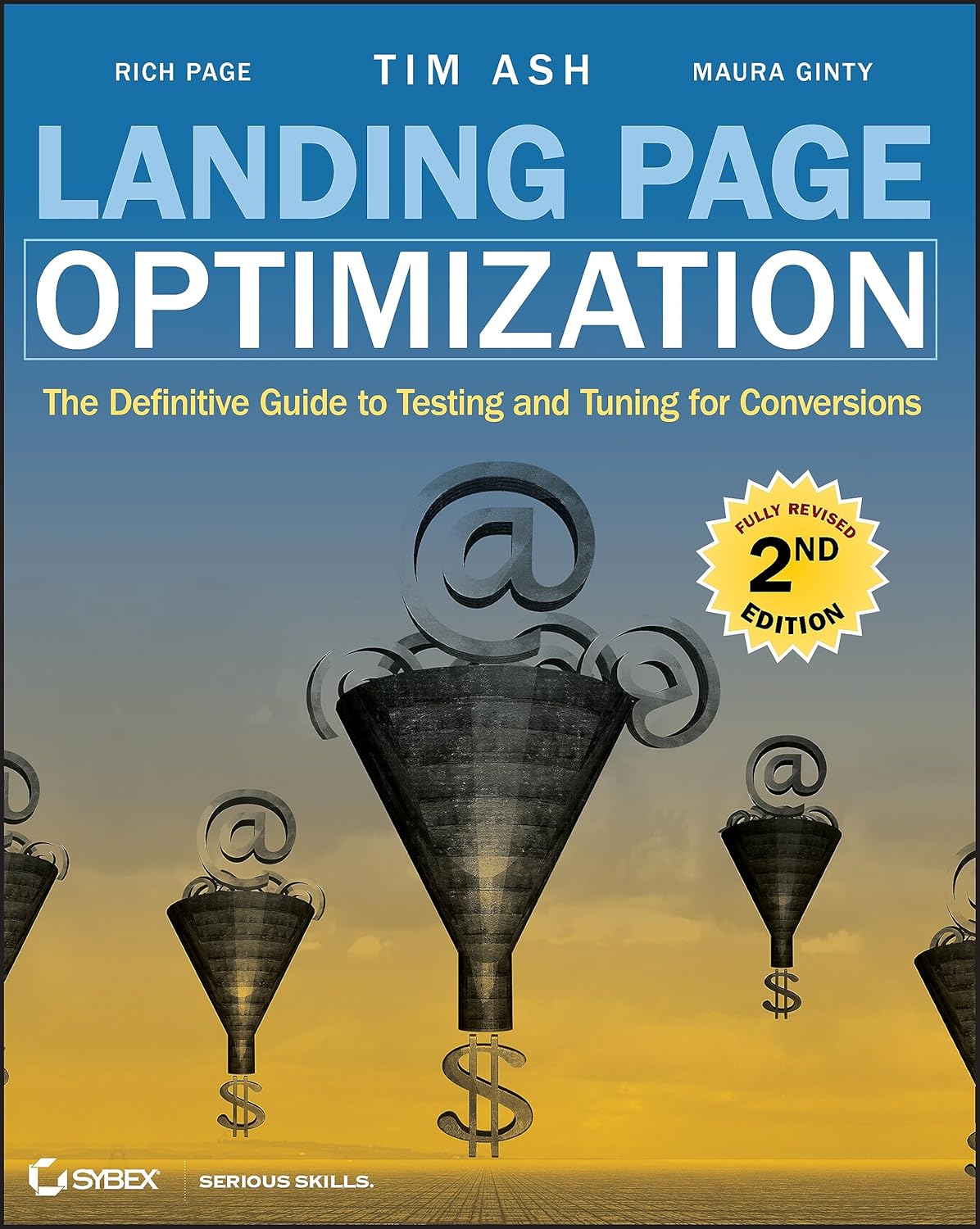
"Landing Page Optimization", Tim Ash
The definitive guide to conversion-focused landing page design — covers the psychological principles, testing methodology, and design decisions that separate pages that perform from pages that just look good.
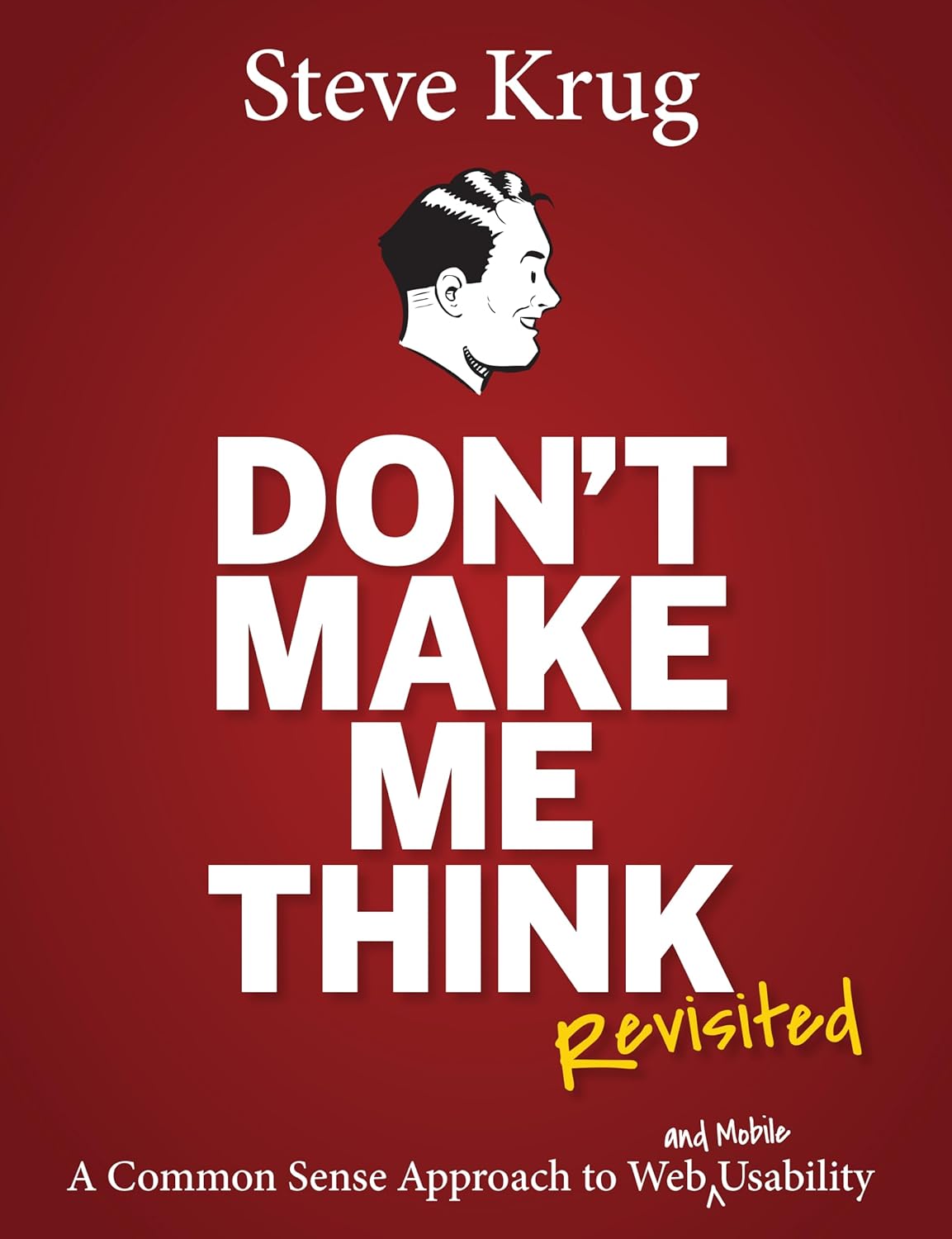
"Don't Make Me Think", Steve Krug
Explains how users actually navigate pages versus how designers assume they do — essential for understanding why choice paralysis kills conversions and what structural simplicity actually accomplishes.
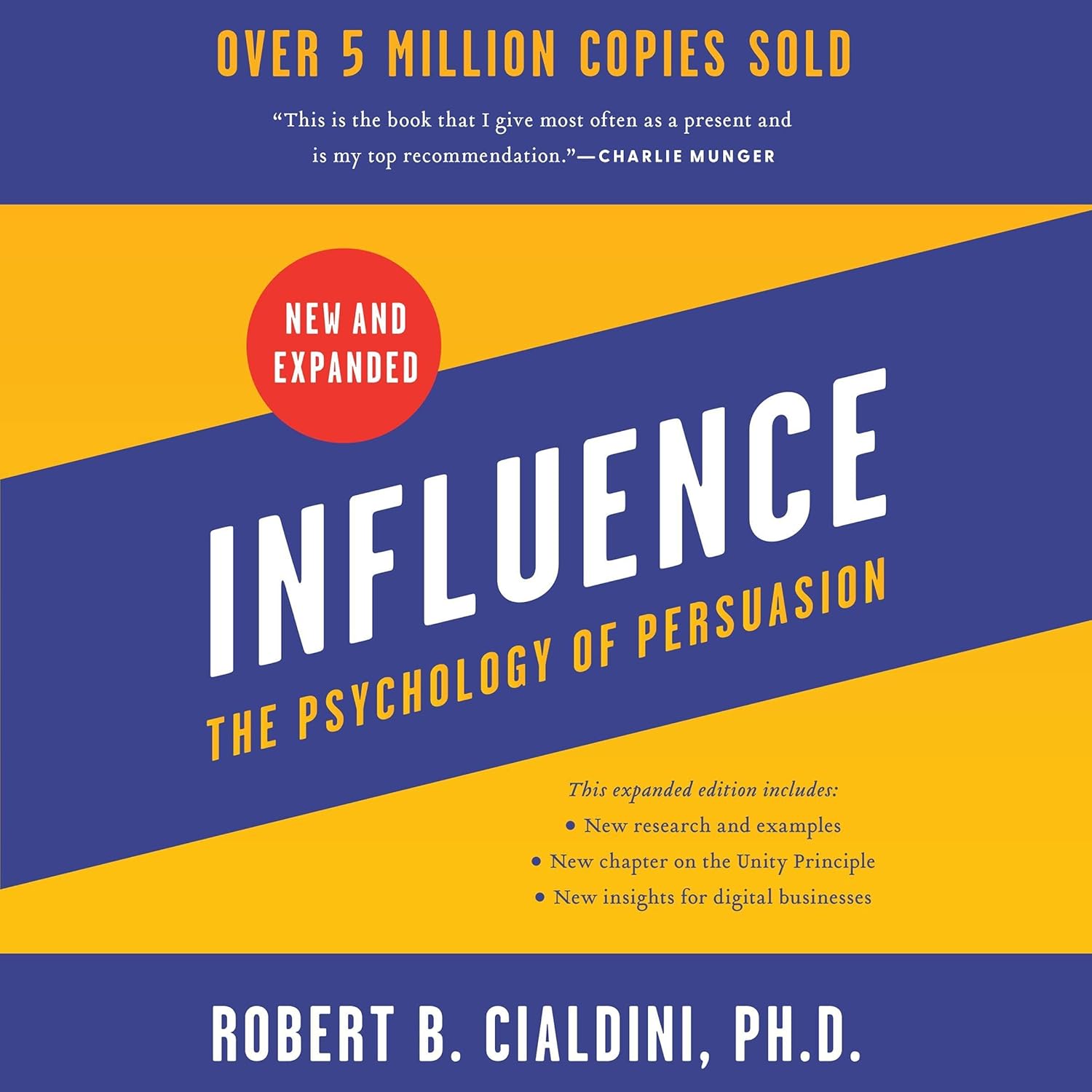
"Influence: The Psychology of Persuasion", Robert Cialdini
The foundational text on decision-making psychology — scarcity, social proof, authority, commitment — all of which map directly to the seven essential elements of a high-converting landing page.
Most businesses blame their ads when leads dry up. Nine times out of ten, the ads are fine — the page is the problem. You can't send someone through a revolving door and wonder why they didn't stay.