
Shopify, WooCommerce, Magento, BigCommerce, headless — every platform promises to be the right choice. This comparison cuts through the marketing with real cost data, scaling limits, and decision criteria based on where your business actually is, not where it hopes to be.

Key takeaways 👌
Headless commerce is the right architecture for fewer than 5% of e-commerce businesses — but for those 5%, nothing else comes close to the performance and flexibility it delivers.
Shopify wins for speed-to-market and total cost of ownership under $5M annual revenue — but its customization ceiling becomes a real constraint for businesses with complex product logic or multi-channel operations.
WooCommerce offers the most flexibility per dollar but shifts infrastructure responsibility to your team — hidden hosting, security, and plugin costs add 30–50% to the sticker price.
Introduction
Choosing an e-commerce platform feels like a technology decision. It's not. It's a business architecture decision that determines your operational costs, development speed, scaling ceiling, and migration pain for the next 3–5 years.
The platform you launch on shapes everything downstream. What checkout optimizations are possible. How complex your product catalog can be. Whether your marketing team can run promotions without filing a developer ticket. How fast your pages load on mobile in markets where 70% of your traffic shops on phones.
And yet most teams choose platforms the same way: they read comparison articles that list features in a table, pick the one with the most checkmarks, and discover the real trade-offs 12 months later when growth exposes the limitations nobody mentioned.
This guide compares the five major e-commerce platform categories — Shopify, WooCommerce, Magento/Adobe Commerce, BigCommerce, and headless/composable — with honest assessments of where each excels, where each breaks down, and which business profiles each actually serves. No affiliate links. No "best overall" rankings. Just the information you need to make the right call for your specific situation.
Why Platform Choice Matters More Than You Think
The platform decision is irreversible in practice. Migrating an established e-commerce store — with its product data, customer accounts, order history, SEO equity, and third-party integrations — takes 3–6 months and costs $30K–$150K depending on complexity. Teams that choose wrong don't just lose the initial investment. They pay twice.
Three factors make the decision consequential:
Operational cost structure. Shopify charges transaction fees and monthly subscriptions. WooCommerce charges nothing for the software but requires self-managed hosting, security, and updates. Magento requires dedicated development resources. Each model produces a different total cost curve — and which is cheapest depends entirely on your revenue volume and team composition.
Scaling ceiling. Every platform has a practical upper limit — a point where performance degrades, customization hits walls, or operational complexity exceeds what the platform was designed to handle. Hitting that ceiling mid-growth is the most expensive scenario: you're forced to migrate under pressure, usually during your highest-revenue period.
Integration architecture. Your e-commerce platform connects to everything: payment processors, shipping providers, inventory systems, ERPs, marketing tools, analytics platforms. The platform's integration approach — native apps, APIs, webhooks, or custom middleware — determines how easily you can connect these systems and how reliably they'll function at scale.
Choosing a platform without evaluating these three factors is like choosing an office lease based on the lobby decor.

Platform chosen, but worried about performance at scale? This guide covers the architecture decisions that keep fast stores fast How to Build Fast Websites: Principles of Performance Architecture

Shopify and Shopify Plus — The Speed-to-Revenue Default
Best for: D2C brands, product-focused retailers, businesses under $5M annual revenue, teams without dedicated developers.
Shopify has become the default e-commerce platform for a reason: it eliminates infrastructure decisions. Hosting, security, SSL, CDN, payment processing, mobile optimization — all handled. Your team focuses on products, marketing, and customer experience instead of server configurations.
Where Shopify excels:
Checkout optimization. Shop Pay's one-tap checkout and Shopify's continuously optimized checkout flow produce measurably higher conversion rates than most custom implementations. You benefit from optimization work done across millions of stores.
App ecosystem. Over 8,000 apps extend functionality for nearly every use case: subscriptions, bundles, loyalty programs, reviews, internationalization. Most needs are solved without custom code.
Speed to launch. A competent team can launch a production-ready Shopify store in 2–4 weeks. No other platform matches this timeline for equivalent quality.
Shopify Plus for scale. At $2,300/month, Plus adds checkout customization, B2B wholesale channels, automation (Shopify Flow), and higher API limits — extending the platform's ceiling to roughly $50M–$100M annual revenue.
Where Shopify struggles:
Product logic complexity. Stores with highly configurable products (custom manufacturing, build-to-order, complex variant combinations) hit Shopify's variant limits quickly. The 100-variant-per-product cap is a hard constraint.
Content flexibility. Shopify's CMS is designed for product pages, not content-rich experiences. Brands that depend on editorial content, lookbooks, or complex storytelling hit Liquid's templating limitations.
Multi-channel complexity. B2B + B2C on the same store, multiple currencies with localized pricing logic, marketplace integrations with custom fulfillment — these scenarios push Shopify Plus to its edges.
Transaction fees. Unless you use Shopify Payments exclusively, you pay 0.5–2% per transaction on top of your payment processor's fees. At scale, this adds up significantly.
Total cost of ownership (Year 1):
Basic store: $5K–$15K (theme + apps + setup)
Custom-designed store: $20K–$60K
Shopify Plus: $50K–$150K (including setup, customization, and annual subscription)
We see our customers as invited guests to a party, and we are the hosts. It's our job every day to make every important aspect of the customer experience a little bit better.
— Jeff Bezos, Founder, Amazon
WooCommerce — Maximum Flexibility, Maximum Responsibility
Best for: Content-driven commerce, businesses with existing WordPress sites, teams with developer access, complex product structures. WooCommerce is the most widely deployed e-commerce platform globally — powering approximately 36% of all online stores. Its advantage is WordPress's flexibility: any design is possible, any integration is buildable, and the plugin ecosystem offers solutions for virtually every e-commerce requirement.
Where WooCommerce excels:
Design freedom. No template constraints.
Your e-commerce store can look and function exactly as designed — because it's built on WordPress's fully customizable theme system.
Content + commerce integration. For brands where content drives sales — blogs, guides, recipes, tutorials, editorial recommendations — WooCommerce and WordPress are natively integrated. No API connections, no content synchronization issues.
Complex product structures. Variable products with unlimited combinations, custom product types, subscription models, membership tiers, composite products — WooCommerce handles complexity that Shopify's variant system can't.
No transaction fees. WooCommerce doesn't take a cut of your revenue. Your only payment costs are your processor's standard rates.
Where WooCommerce struggles:
Infrastructure responsibility. You own the hosting, security, SSL, backups, caching, CDN, and performance optimization. A poorly hosted WooCommerce store is slow, vulnerable, and unreliable. Managed WordPress hosting ($50–$300/month) mitigates this but adds cost.
Plugin dependency. A typical WooCommerce store runs 25–40 plugins. Each is a potential security vulnerability, a compatibility risk on update, and a dependency on third-party developers. Plugin conflicts are the #1 source of WooCommerce support tickets.
Checkout inferiority. WooCommerce's default checkout is functional but not optimized. Matching Shopify's checkout conversion performance requires additional plugins and custom development — typically $5K–$15K in optimization work.
Scaling limits. WooCommerce on standard WordPress hosting struggles above 50,000 products or 1,000+ concurrent users. High-volume stores need enterprise-grade hosting and significant performance optimization.
Total cost of ownership (Year 1):
Basic store: $3K–$10K (hosting + theme + essential plugins)
Custom-designed store: $15K–$50K
Enterprise-scale: $50K–$120K (including hosting, security, custom development)

What does your business actually need the platform to do in 18 months that it doesn't need to do today — and can your current shortlist handle that without a migration?
Magento / Adobe Commerce and BigCommerce — The Enterprise Tier
Magento / Adobe Commerce
Best for: Large catalogs (10,000+ SKUs), complex B2B commerce, multi-store and multi-brand operations, businesses with dedicated development teams.
Magento is the platform you grow into, not the platform you start with. Its open-source architecture supports virtually unlimited customization, and Adobe Commerce (the hosted enterprise version) adds AI-powered personalization, B2B-specific features, and Adobe ecosystem integration.
Strengths: Unlimited scalability, complex catalog management, multi-store from a single backend, native B2B (quote management, custom catalogs, company accounts), powerful API layer
Weaknesses: Requires dedicated development team ($100K+/year in developer costs alone), steep learning curve, slow time-to-market, hosting costs 3–5x higher than WooCommerce
Total cost of ownership (Year 1): $80K–$300K+ (open source) / $150K–$500K+ (Adobe Commerce Cloud)
BigCommerce
Best for: Mid-market retailers that want Shopify's ease of use with fewer customization constraints and no transaction fees.
BigCommerce occupies a strategic middle ground: more customizable than Shopify, simpler than Magento, and specifically designed for the $1M–$50M revenue range where Shopify Basic becomes limiting but Magento is overkill.
Strengths: No transaction fees on any plan, built-in B2B features, strong multi-channel (Amazon, eBay, social), headless-ready via Catalyst/Stencil, unlimited product variants
Weaknesses: Smaller app ecosystem than Shopify, fewer design themes, less community support, revenue-based plan tiers can get expensive
Total cost of ownership (Year 1): $10K–$60K (standard) / $40K–$120K (enterprise)
Both platforms serve businesses that have outgrown Shopify or WooCommerce but need enterprise-grade commerce without Magento's complexity and cost.
Interesting fact 👀
Global e-commerce sales reached a record high in 2024 and are projected to grow substantially by 2027 — yet the average online store conversion rate remains remarkably low. Platform choice directly impacts this number: checkout friction, page load speed, and mobile optimization vary dramatically between platforms and account for a significant share of cart abandonment.
Headless and Composable Commerce — The Architecture of the Future (For Some)
Best for: Brands with unique front-end requirements, omnichannel operations, very high traffic, and dedicated engineering teams.
Headless commerce separates the front-end (what customers see) from the back-end (commerce engine, product data, checkout). The front-end is custom-built — typically in React, Next.js, or Vue — and communicates with the commerce engine via APIs.
What headless enables:
Performance. A custom front-end with no platform bloat can achieve sub-second page loads consistently. For high-traffic stores where every 100ms impacts conversion, headless delivers measurable revenue uplift.
Omnichannel from one backend. The same commerce engine serves your website, mobile app, in-store kiosks, IoT devices, and third-party marketplaces — all through APIs. One product catalog, one inventory source, one order management system.
Front-end freedom. Any design, any interaction pattern, any technology. Headless removes every constraint that traditional platforms impose on the customer experience.
What headless costs:
Development complexity. You're building and maintaining a custom front-end application. This requires a dedicated engineering team — not a freelancer with Shopify experience.
No pre-built checkout. Shopify's optimized checkout, WooCommerce's plugin ecosystem, BigCommerce's built-in features — none of these exist in headless. Everything is built or integrated from scratch.
Total cost of ownership: $100K–$500K for initial build, plus $50K–$150K annually in development and infrastructure. Headless is an investment that pays off only at significant scale.
The composable model takes headless further: instead of one commerce engine, you compose your stack from best-of-breed services — Commercetools or Medusa for commerce, Algolia for search, Contentful for content, Stripe for payments. Maximum flexibility, maximum complexity, maximum cost.
The honest assessment: If you're under $10M annual revenue and don't have 2+ dedicated front-end engineers, headless is premature. The performance and flexibility benefits don't outweigh the cost and complexity for most businesses. But for brands at scale with unique experience requirements — particularly those operating across multiple channels — headless is increasingly the standard architecture.
The Platform Decision Framework
This matrix maps business profiles to platform recommendations. Find your row.
Business Profile |
Revenue |
Catalog |
Team |
Best Platform |
D2C startup, first store |
Pre-revenue–$500K |
<500 SKUs |
No developers |
Shopify |
Growing D2C brand |
$500K–$5M |
<5,000 SKUs |
1 developer |
Shopify / Shopify Plus |
Content-driven commerce |
Any |
Any |
WordPress developer |
WooCommerce |
Complex products / configurators |
Any |
Custom logic |
Development team |
WooCommerce or BigCommerce |
Mid-market multi-channel |
$5M–$50M |
5K–50K SKUs |
Small dev team |
BigCommerce or Shopify Plus |
Enterprise / multi-brand |
$50M+ |
50K+ SKUs |
Dedicated dev team |
Magento / Adobe Commerce |
Omnichannel / performance-critical |
$20M+ |
Any |
Engineering team (3+) |
Headless / Composable |
B2B wholesale + D2C |
Any |
Complex pricing |
Development team |
BigCommerce or Magento |
Three rules for using this matrix:
Rule 1: Optimize for your current stage, not your 5-year plan. Migrating from Shopify to headless when you hit $20M is a known, manageable process. Starting on headless at $200K revenue is a known, expensive mistake.
Rule 2: Factor in team cost, not just platform cost. WooCommerce's $0 license fee means nothing if you're spending $4K/month on a developer to maintain it. Shopify's $79/month is the most expensive option on paper and the cheapest in practice for teams without technical staff.
Rule 3: The platform serves the business, not the other way around. If your team is spending more time working around platform limitations than selling products, technical SEO optimization won't fix the underlying problem — you've outgrown the platform and need to plan migration before it becomes an emergency.
After You Choose: What Determines Success
The platform is the foundation. What you build on it determines whether the store succeeds. Three post-platform decisions matter most:
Checkout optimization is non-negotiable. Regardless of platform, your checkout flow will be the single highest-impact page on the site. Baymard Institute research shows that 70% of shopping carts are abandoned — and 18% of those abandonments are caused by a checkout process that's too long or complicated. Optimize checkout before optimizing anything else.
Mobile isn't a feature — it's the primary channel. In 2026, mobile accounts for over 70% of e-commerce traffic globally. Your platform choice must deliver a fast, frictionless mobile experience by default — not as an afterthought. Test your store on a mid-range Android phone on a 4G connection. If it's slow or frustrating, your majority audience is having a bad experience.
Platform migration is inevitable — plan for it. No platform serves a business forever. The question isn't whether you'll migrate, but when and how painfully. Invest in clean data architecture from day one: structured product data, well-organized customer records, and SEO equity preserved through proper URL structures and redirects. The teams that migrate smoothly are the ones that planned for it from the beginning — not the ones that chose the "future-proof" platform.
Want to discuss your project?
Share your vision with us, and we'll reach out soon to explore the details and bring your idea to life.



Conclusion
The e-commerce platform market in 2026 is mature enough that there are no bad platforms — only bad matches between platforms and businesses.
Shopify is the right choice for most D2C brands under $5M. WooCommerce is the right choice for content-driven commerce and complex product structures. BigCommerce serves the mid-market sweet spot between Shopify's simplicity and Magento's power. Magento and Adobe Commerce serve enterprises with the scale and team to justify the investment. Headless and composable architectures serve the minority of businesses where performance and omnichannel flexibility are worth the engineering cost.
The decision framework is straightforward: evaluate your current revenue, catalog complexity, team composition, and 18-month growth trajectory. Choose the platform that fits today with a clear understanding of when — not if — you'll outgrow it. And resist the temptation to over-architect for a future that may never arrive. The best platform is the one that lets you start selling as fast as possible and doesn't become an obstacle when growth demands more.
Recommended reading 🤓
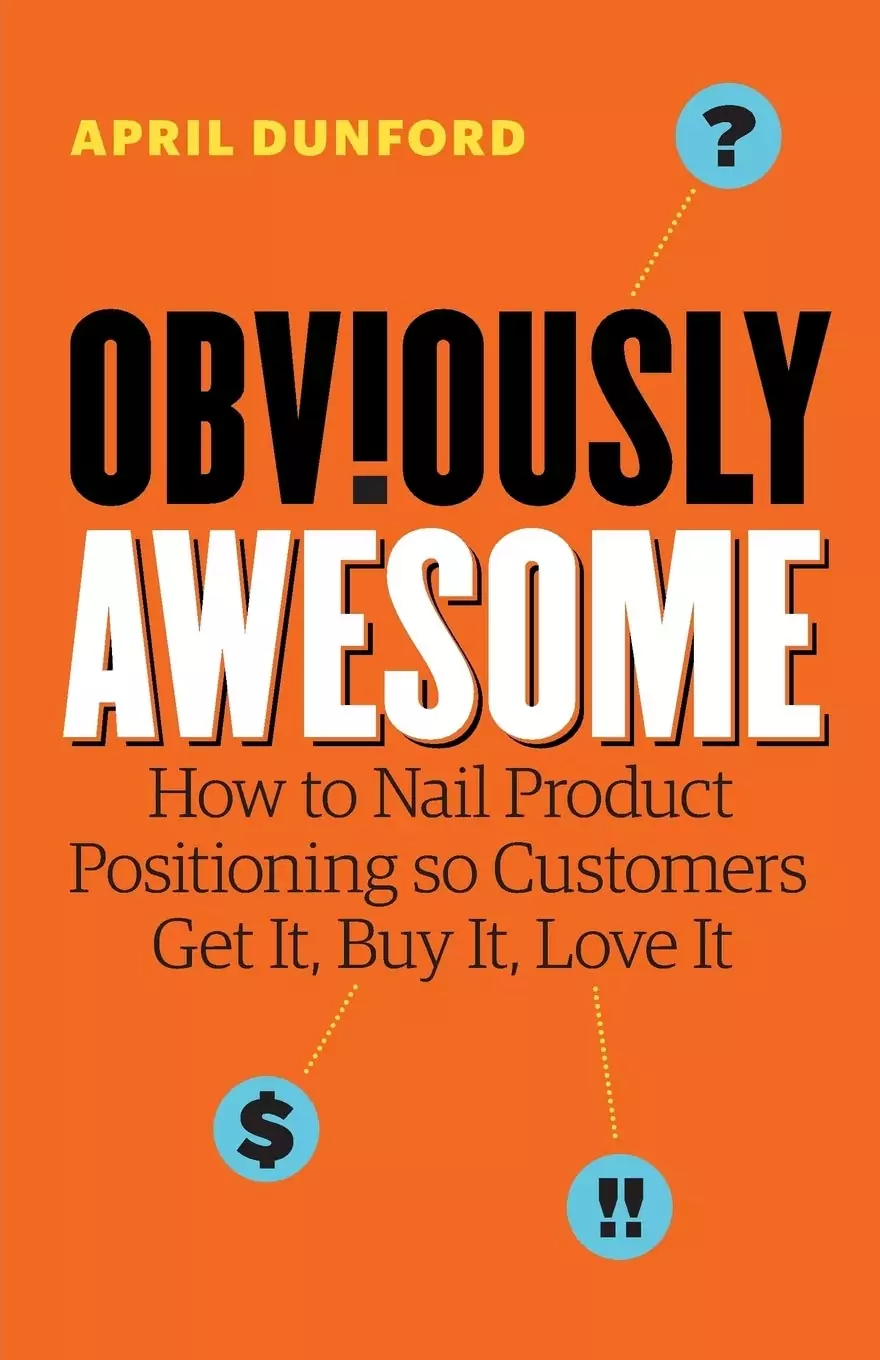
"Obviously Awesome", April Dunford
The definitive guide to product positioning — directly applicable to how you present your products on any platform. Better positioning converts better than better technology.

"Converted", Neil Hoyne
Google's Chief Measurement Strategist explains what actually drives e-commerce customer value — essential for understanding which platform metrics matter and which are vanity numbers.
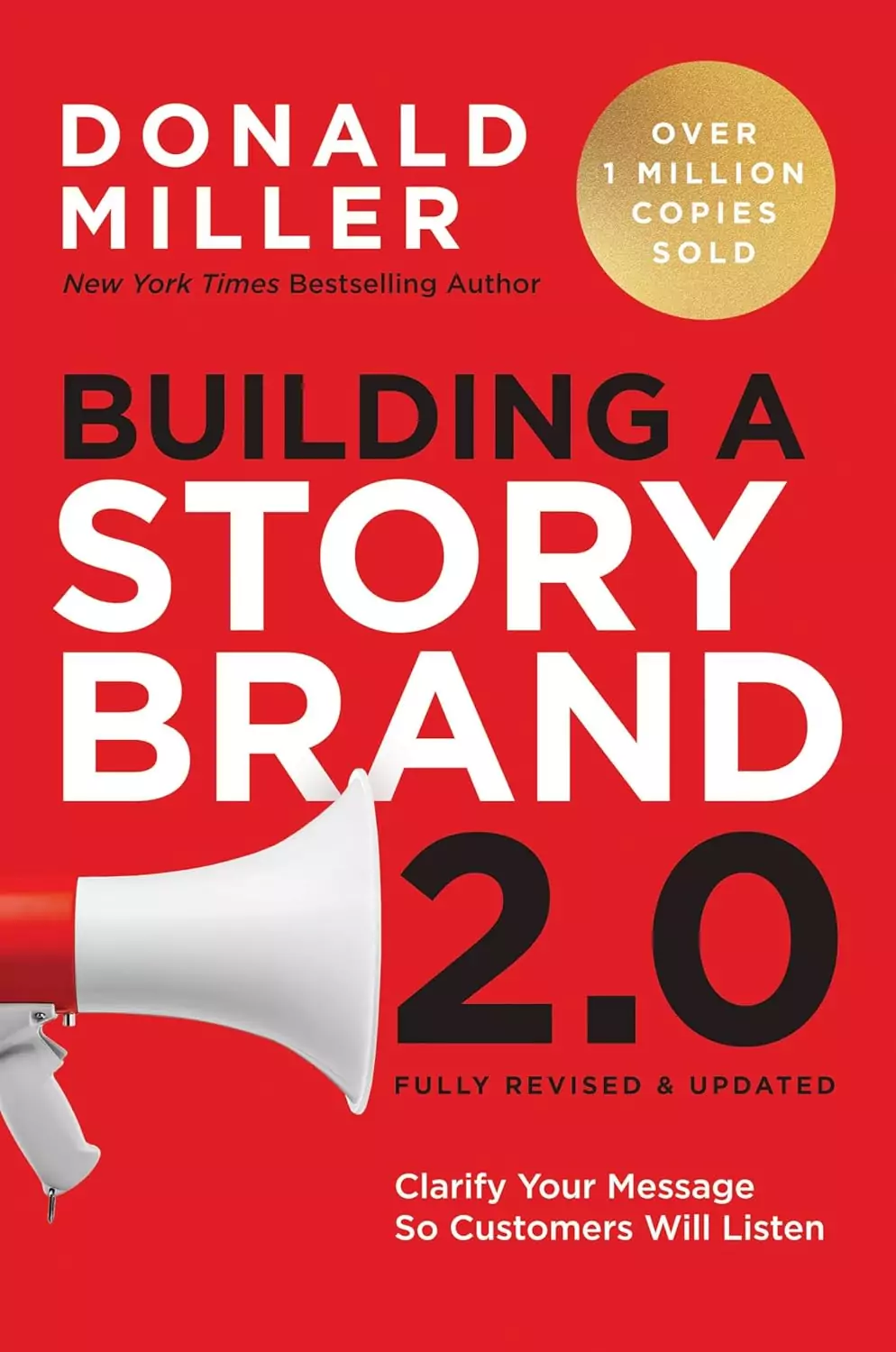
"Building a StoryBrand", Donald Miller
A framework for clarifying your brand message so customers engage — because no platform compensates for a product story that doesn't connect.
I've migrated more stores off wrong platforms than I've built on right ones. The pattern is always the same: the team chose based on a feature list instead of asking what the business would need in 18 months.