
Most companies pay for "branding" and receive a logo, a color palette, and a PDF they never open again. Here's what a real branding project actually delivers — and what you're missing if your agency skipped half the list.
Key takeaways 👌
Branding is not a logo project. A complete branding engagement delivers 15–25 distinct assets across four layers: research, strategy, verbal identity, and visual identity. Most agencies deliver only the visual layer — which is why most rebrands fail within 18 months.
The deliverables you don't see are the ones that matter most. Positioning statement, messaging framework, tone of voice guidelines, and competitive differentiation strategy are invisible to the end user — but they determine whether your visual identity communicates anything meaningful.
Budget determines depth, not scope. A $15K branding project and a $150K branding project should cover the same four layers. The difference is in research depth, number of concepts, design system granularity, and implementation support — not in which layers get skipped.
Introduction
Ask ten agencies what "branding" includes and you'll get ten different answers. One will pitch a logo redesign. Another will propose a six-month brand strategy engagement. A third will show you a mood board and call it "brand discovery."
The confusion isn't accidental. "Branding" is one of the most overloaded terms in business. It gets used to describe everything from a $500 Fiverr logo to a $500K corporate identity overhaul. And because most clients don't know what they should be getting, they can't tell when they're getting half the work at full price.
This article breaks down every deliverable in a professional branding engagement — organized by the four layers that separate a complete brand system from an expensive logo file. Whether you're commissioning your first branding project or evaluating whether your last one was actually complete, this is the checklist.
The Four Layers of Branding
Every branding project — from a $15K startup identity to a $150K enterprise rebrand — should deliver work across four layers. The layers build on each other. Skipping one creates gaps that show up as inconsistency, confusion, or irrelevance.
Layer 1: Research & Discovery — understanding who you're building for
Layer 2: Brand Strategy — deciding what the brand stands for
Layer 3: Verbal Identity — how the brand speaks
Layer 4: Visual Identity — how the brand looks
Most agencies jump straight to Layer 4. That's like decorating a house before drawing the floor plan. It might look good in the portfolio, but it won't function in the real world.

Want the full strategic framework behind every branding engagement? Our brand awareness guide covers proven strategies and growth tactics from launch to scale — Brand Awareness: Strategies and Growth Tips
Layer 1: Research & Discovery
This is the foundation. Everything that follows — positioning, messaging, visual design — is built on what you learn here. Skip research and every subsequent decision is a guess.
Deliverables:
Audience research report. Who are your customers? Not demographics — behaviors. What problem do they hire your product to solve? What language do they use to describe that problem? What alternatives did they consider? This comes from 8–15 customer interviews and survey data, not from assumptions.
Competitive audit. How do 5–10 competitors position themselves? What visual patterns dominate the category? Where is the white space — positioning territories nobody owns? This isn't a spreadsheet of logos. It's a strategic analysis of how the market communicates.
Internal alignment report. How do your CEO, sales team, and marketing team describe the company? If the answers diverge (and they almost always do), the brand will send mixed signals until alignment is forced. Stakeholder interviews surface these gaps before they become design problems.
Brand perception gap analysis. How insiders describe the brand vs. how customers describe it. The gap between these two is the brand's biggest vulnerability — and biggest opportunity.
Timeline: 2–4 weeks
Budget share: 15–20% of total project
A brand is the set of expectations, memories, stories and relationships that, taken together, account for a consumer's decision to choose one product or service over another.
— Seth Godin, Author, This Is Marketing

Layer 2: Brand Strategy
Strategy translates research into decisions. This is the layer most agencies skip — and the layer that determines whether the brand actually works.
Deliverables:
Positioning statement. One sentence that defines who you're for, what category you compete in, how you're different, and why anyone should believe you. This isn't a tagline — it's an internal alignment tool that every employee should be able to articulate.
Value proposition. The primary reason a customer should choose you over every alternative. Not "we provide innovative solutions" — something specific, defensible, and provable. "We ship MVPs in 8 weeks with a fixed price guarantee" is a value proposition. "We're a leading digital agency" is not.
Competitive differentiation strategy. What convention in your category can you break? What do competitors do the same way that you can do differently? Sustainable differentiation means competitors can't copy it within 12 months.
Brand architecture. If you have multiple products, services, or sub-brands — how do they relate to the master brand? Branded house (Google), house of brands (P&G), or endorsed (Marriott)? This determines naming conventions, visual hierarchy, and marketing efficiency.
Target audience personas. Not fictional "meet Sarah, 34, loves yoga" profiles. Behavioral archetypes based on research data: what triggers the buying process, what information they need at each stage, what objections they raise, what language resonates.
Timeline: 2–3 weeks
Budget share: 15–20% of total project
Layer 3: Verbal Identity
Verbal identity is how the brand speaks. It's the layer between strategy (what we stand for) and visual identity (how we look). Most agencies deliver verbal identity as a two-page section inside the brand book. It deserves its own dedicated work.
Deliverables:
Brand narrative. The 200-word story of why your company exists. Not the founding story ("two friends in a garage") — the problem story. What's wrong with the market, why existing solutions fall short, and what you're doing differently. This narrative drives homepage copy, pitch decks, and every "about us" page.
Messaging framework. Key messages organized by audience segment. The CEO hears ROI. The CTO hears integration and security. The end user hears simplicity. Same brand, different emphasis. The framework ensures consistency without forcing identical language on every touchpoint.
Tone of voice guidelines. Not a list of adjectives ("bold, friendly, innovative"). Instead: concrete rules with examples. "We explain complex things simply" with a do/don't comparison. "We use specific numbers, not vague claims" with before/after examples. Guidelines that a copywriter can actually apply.
Tagline. Optional. Only if it genuinely adds something. Most taglines are meaningless ("Innovative solutions for tomorrow's challenges") and actively harm the brand by sounding identical to competitors. A great tagline is rare. No tagline is better than a bad one.
Elevator pitch. The 30-second version for sales conversations, networking, and events. Structured: problem → approach → proof → call to action.
Timeline: 2–3 weeks
Budget share: 15–20% of total project

Here's a test: ask five people in your company to describe what you do in one sentence. If you get five different answers, you don't have a verbal identity — you have five personal interpretations. That's the gap Layer 3 closes.
Layer 4: Visual Identity
This is the layer everyone thinks of when they hear "branding." But by the time you reach Layer 4, every visual decision should be informed by the research, strategy, and verbal identity defined in Layers 1–3.
Deliverables:
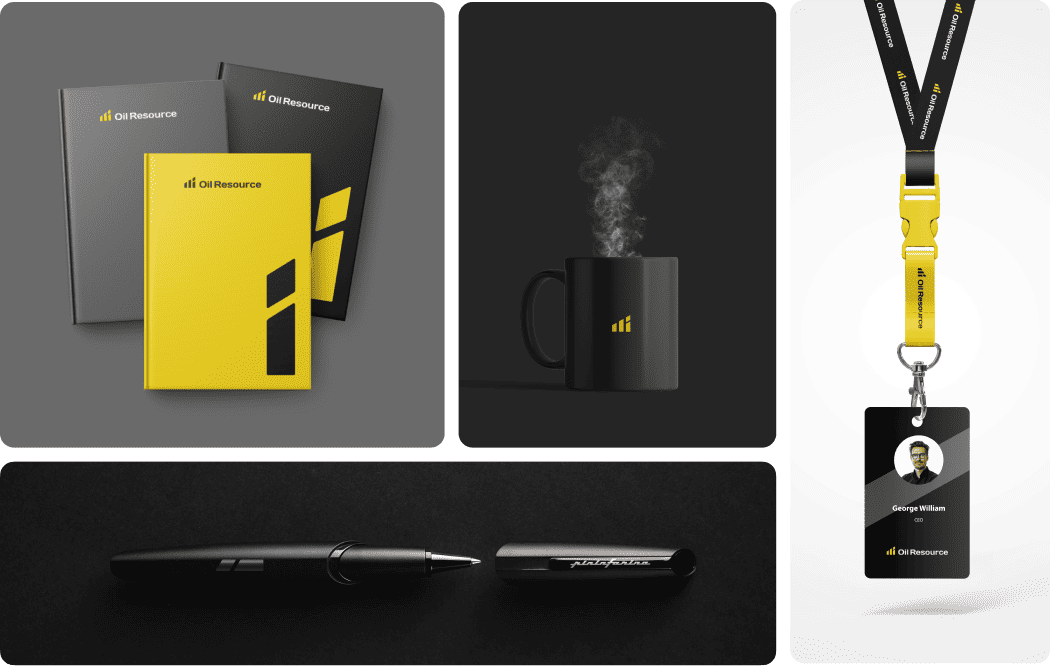
Logo system. Not just one logo — a system. Primary mark (full logo), secondary mark (simplified version), icon (for favicons, app icons, social media avatars), and responsive versions that work at every size from billboard to 16×16 pixels.
Color system. Primary palette (2–3 colors that define the brand), secondary palette (2–3 supporting colors), and functional colors (success green, error red, warning yellow). Each color with specific use cases documented — not just hex codes.
Typography system. Heading typeface, body typeface, and (for digital products) code typeface. Hierarchy rules: what size, weight, and spacing for H1, H2, H3, body, captions, labels. Web font licensing included.
Photography and illustration direction. What imagery represents the brand? Real photography vs. illustration vs. 3D? People vs. abstract? Specific mood, lighting, composition guidelines with reference examples and "never do this" examples.
Iconography. Custom icon set or adapted library with consistent style rules: line weight, corner radius, fill vs. outline, size grid.
Brand book. The implementation manual. Not a 60-page PDF that nobody reads — a practical reference document with clear rules, real examples, and do/don't comparisons. The best brand books are under 30 pages and answer every question a designer or marketer would ask.
Design system (for digital brands). Component library in Figma: buttons, forms, cards, modals, navigation patterns, data display components — all built on the brand's visual foundations. This ensures consistency across every digital touchpoint without requiring a designer to approve every screen.
Timeline: 4–6 weeks
Budget share: 30–40% of total project
Interesting fact 👀
Companies that maintain consistent brand presentation across channels have been shown to experience significantly higher revenue growth, according to research by Marq (formerly Lucidpress). Brand inconsistency isn't just a visual issue — it can directly impact business performance.
The Complete Deliverables Checklist
Here's the full list organized by layer. Use this to evaluate proposals from agencies or audit your existing brand assets:
Layer 1: Research & Discovery
- Audience research report (customer interviews + survey data)
- Competitive audit (5–10 competitors, positioning analysis)
- Stakeholder alignment interviews
- Brand perception gap analysis
Layer 2: Brand Strategy
- Positioning statement
- Value proposition
- Competitive differentiation strategy
- Brand architecture map
- Target audience personas (behavioral, research-based)
Layer 3: Verbal Identity
- Brand narrative (200 words)
- Messaging framework (by audience segment)
- Tone of voice guidelines (with do/don't examples)
- Tagline (optional)
- Elevator pitch
Layer 4: Visual Identity
- Logo system (primary, secondary, icon, responsive)
- Color system (primary + secondary + functional)
- Typography system (heading, body, hierarchy rules)
- Photography/illustration direction
- Iconography (icon set + style rules)
- Brand book (practical implementation guide)
- Design system in Figma (for digital brands)
- Social media templates
- Business collateral templates (cards, letterhead, presentation)
Total: 20–25 deliverables across four layers.
What You're Actually Paying For: Budget Breakdown
The same four layers apply at every budget. What changes is depth, not scope.
Budget |
Research |
Strategy |
Verbal |
Visual |
What You Get |
$5K–$15K |
Light (3–5 interviews) |
Positioning only |
Elevator pitch + tagline |
Logo + colors + basic guide |
Minimum viable brand — works for early-stage startups |
$15K–$40K |
Standard (8–12 interviews) |
Full positioning + architecture |
Messaging framework + TOV |
Full identity system + brand book |
Professional brand — works for growing companies |
$40K–$100K |
Deep (15+ interviews + survey) |
Full strategy + personas |
Complete verbal system |
Identity + design system + templates |
Complete brand system — works for mid-market |
$100K–$300K+ |
Enterprise (research + workshops) |
Strategy + change management |
Multi-market verbal system |
Global identity + multi-brand system |
Enterprise rebrand — works for 500+ employee companies |
The most common mistake: paying for the $40K tier but receiving only Layer 4 deliverables. If your agency didn't conduct research, didn't write a positioning statement, and didn't deliver messaging guidelines — you paid for a brand system but received a logo package.
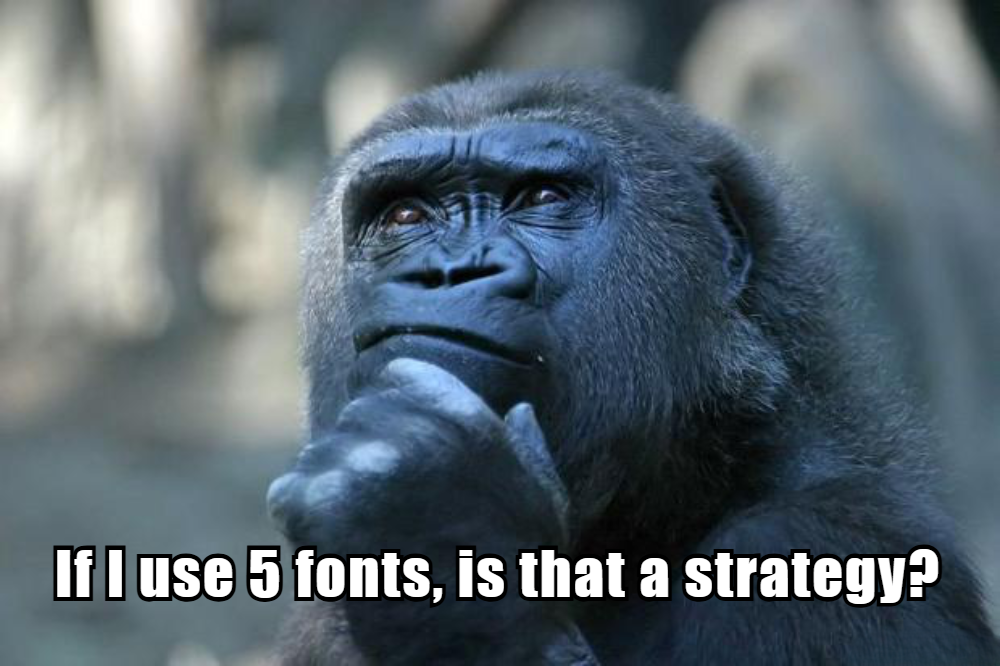
When the agency delivers a "comprehensive brand strategy" and it's 47 pages of mood boards, a logo in 6 colors, and a tagline that says "Innovating Tomorrow." Meanwhile, nobody can explain what the company actually does differently. The brand book is beautiful. The brand is invisible.
How to Audit Your Existing Brand
If you already have brand assets, use this quick audit to identify gaps:
Layer 1 check: Do you have documented research on your audience? Can you name your top 3 competitors' positioning? If no — your brand was built on assumptions.
Layer 2 check: Can your CEO, CMO, and head of sales articulate the same positioning statement? If they give different answers — you don't have a strategy.
Layer 3 check: Does your website copy sound consistent across all pages? Do sales emails match the website tone? If the "About" page reads like a corporate annual report but the blog reads like a casual newsletter — your verbal identity is undefined.
Layer 4 check: Open your website, last pitch deck, and latest social media post side by side. Do they look like they come from the same company? If your LinkedIn banner uses different colors than your website header — your visual identity has gaps.
Gaps in Layers 1–2 require strategic work. Gaps in Layers 3–4 require implementation work. The fix is different, the cost is different, and the timeline is different. Know which layers are broken before asking for a proposal.
Want to discuss your project?
Share your vision with us, and we'll reach out soon to explore the details and bring your idea to life.
Conclusion
Branding is not a logo. It's not a color palette. It's not a brand book.
Branding is a system of 20–25 deliverables across four layers — research, strategy, verbal identity, and visual identity — that work together to make a company recognizable, credible, and differentiated. Remove any layer and the system breaks.
The next time an agency sends you a branding proposal, check it against the four layers. If Layer 1 (research) is missing, every decision that follows is a guess. If Layer 2 (strategy) is missing, the visual identity will look good but communicate nothing. If Layer 3 (verbal) is missing, your website and sales team will say different things.
And if the proposal only covers Layer 4 — you're buying a logo, not a brand.
Know what you're paying for. Demand the full stack.
Recommended reading 🤓
"The Brand Gap", Marty Neumeier
The foundational book on bridging strategy and design in branding. Short, visual, and practical — explains why brand strategy and creative execution must work together.
"Building a StoryBrand", Donald Miller
A framework for clarifying your brand message using storytelling principles. Directly applicable to Layer 3 (verbal identity) — helps structure messaging that customers actually understand.
"Designing Brand Identity", Alina Wheeler
The definitive reference for the complete branding process — from research through implementation. Covers all four layers with real case studies and checklists.
I've seen companies spend $80K on branding and walk away with a logo and a brand book nobody reads. I've also seen companies spend $30K and get a complete system that drives every decision for five years. The difference isn't budget — it's knowing what to ask for.