
531 Austin web agencies say the same things on their websites. Here are the five criteria that actually separate good from expensive mistakes — with the exact questions to ask before signing anything.
Key takeaways 👌
Portfolio reviews done wrong are nearly useless — the right questions are whether the agency built for your industry, can connect their work to measurable outcomes, and whether their live sites score above 80 on mobile PageSpeed right now.
Process quality predicts delivery more reliably than talent does — an agency that can walk you through six defined phases with milestone dates will outperform a more talented agency that improvises every time.
Post-launch support reveals whether an agency is building a relationship or closing a transaction — if they can't confirm you own your own code and hosting, you're renting a business asset, not buying one.
Introduction
You've spent weeks researching web development agencies in Austin. You've browsed portfolios, read Clutch reviews, and compared pricing. Now you have three to five agencies on your shortlist and no clear way to pick the winner.
Our web development guide covers 10 questions to ask and red flags to watch — applicable to any Austin agency.
This is the decision paralysis stage. Clutch lists 531 web design companies serving Austin. DesignRush ranks 236. Every agency says the right things on its website. The difference between a $20,000 project that drives revenue and a $20,000 project that requires a rebuild in 18 months comes down to five evaluation criteria most businesses skip entirely.
Here's how to actually choose — based on what separates good Austin agencies from expensive mistakes.
Any good development agency will follow a UX/UI design process before writing code.
Why the Wrong Agency Choice Is So Costly in Austin
The Real Cost of a Failed Project
A failed web project doesn't just waste the original budget. It wastes it twice: once for the build that didn't work, and again for the rebuild with a new agency — typically at higher cost because you're starting from a damaged foundation instead of a clean slate. A $20,000 project that fails becomes a $40,000+ problem before you've launched a single page that works.
The hidden costs compound quickly. Internal team time consumed by status calls and feedback cycles. Delayed go-to-market while competitors move. Missed sales cycles because your digital presence isn't functional. For Austin's startup ecosystem in particular — where six-month funding runways are common and investor timelines are unforgiving — a web project that runs 8 weeks late can derail an entire growth plan.
What Makes Austin's Market Different
Austin's web development market has grown significantly with the city's tech expansion, but size hasn't guaranteed quality across the board. The 531 agencies on Clutch range from one-person freelance operations to 50-person studios, and their pitches are nearly indistinguishable. Tech companies, SaaS startups, e-commerce brands, and professional services firms all compete for the same agencies — which means generalists thrive and specialists are harder to find.
The local advantage matters: Austin agencies understand the city's business culture, move at startup speed, and can offer in-person collaboration during critical project phases. But local doesn't mean competent. The five criteria below apply regardless of whether you're evaluating an Austin-based studio or a remote agency serving Austin clients.

Criterion 1 — Technical Match: Do They Build What You Need?
Why Stack Mismatch Creates Problems from Day One
This sounds obvious. It isn't. An agency that builds beautiful WordPress marketing sites is not the same agency that builds React-based SaaS platforms. An agency that customizes Shopify themes is not the same agency that engineers headless e-commerce architectures. Austin has specialists in every category — your job is matching your project to their actual expertise, not their claimed expertise.
A generalist agency claiming fluency in every platform is usually expert in none. When you're evaluating technical capability, ignore what the agency says about itself and focus entirely on what you can verify independently.
Questions to Ask
"What percentage of your projects in the last 12 months used [your required technology]?"
The answer should be above 50%. Below that, you're paying them to learn on your project.
"Can you show me three live sites built on [your required platform]?"
Not screenshots — live URLs. Test them with Google PageSpeed Insights. If their portfolio sites score below 70 on mobile, their "expertise" is questionable regardless of what they tell you.
"Who specifically will be writing the code on my project?"
Agency pitches feature their best people. Your project may be staffed with juniors. Ask for the actual developers' names and backgrounds before you sign.
Red Flags
- They say "we work with all technologies" — that's a generalist pitch, not a specialist claim
- They can't show live sites on your required platform, only screenshots
- The team on the pitch isn't the team on the project
Criterion 2 — Process Quality: How Do They Actually Work?
Why Process Beats Talent
Austin's agency market is split between two types: agencies with defined processes and agencies that improvise. Both can produce good work. Only one does it consistently. The number one reason web projects fail isn't bad design — it's bad process.
An agency that can walk you through six defined phases with milestone dates and a documented change request procedure will outperform a more talented agency that wings it every time. Ask any business that has been through a failed web project what went wrong, and the answer is almost never "the design was bad." It's "we didn't know where the project was" or "scope kept changing with no clear pricing."
What a Mature Process Looks Like
A professional web development process follows six defined phases:
- Discovery (1–2 weeks): Business goals, technical requirements, user research, competitive analysis
- Architecture/wireframes (1–2 weeks): Site structure, user flows, content hierarchy
- Design (2–4 weeks): Visual design based on architecture, client review, revisions
- Development (3–6 weeks): Front-end and back-end build, CMS integration
- Testing (1–2 weeks): Cross-browser, mobile, performance, accessibility, security
- Launch (1 week): DNS, hosting, monitoring, post-launch testing
Total: 8–16 weeks depending on scope. Agencies that quote six weeks for a full custom build are cutting phases. Agencies that quote six months without defined milestones are padding.
Questions to Ask
"Walk me through your typical project timeline."
If they can't describe clear phases with deliverables, their process is improvised.
"How do you handle scope changes mid-project?"
Every project has scope changes. Good agencies have change request processes with clear cost implications. Bad agencies say yes to everything and deliver late.
"What does your testing phase include?"
If they don't mention cross-browser testing, mobile testing, accessibility, and performance optimization, they're shipping untested work.
Red Flags
- No documented process — "every project is different" shouldn't mean "we have no system"
- No mention of a testing phase before launch
- Vague timeline commitments with no milestone dates
You can't control what you can't measure.
— Tom DeMarco, Software engineer, author of Peopleware
Criterion 3 — Communication and Project Management
Why Communication Predicts Delivery
The number one complaint about agencies isn't design quality or technical skill — it's communication. The Austin agency that responds in hours outperforms the brilliant one that takes days, because web projects require constant small decisions and delays compound. A three-day response time on a design question can push a milestone by a week. Three of those and you're a month behind.
Communication quality is also the easiest thing to test before you sign. How an agency communicates during the proposal phase — when they're trying to win your business — is the best you'll ever see. If they're slow, vague, or disorganized now, it won't improve after the contract is signed.
Questions to Ask
"Who is my primary point of contact?"
You should have one person — a project manager or account lead — who owns your project. Not the CEO making time between other priorities. Not a rotating cast depending on who's available.
"How often will we meet, and in what format?"
Weekly calls with a shared agenda are the minimum. Agencies offering real-time communication via Slack or Teams demonstrate higher commitment to responsiveness.
"What project management tools do you use?"
Look for Asana, Monday, Basecamp, Jira, or Linear. If they say "email," brace for miscommunication.
The Austin Advantage
Local Austin agencies can offer in-person meetings, which matter for complex projects where screen-sharing doesn't capture nuance. If face-to-face collaboration is important during discovery or concept review, weigh local agencies higher on this criterion.
Red Flags
- No dedicated project manager assigned to your account
- "The founder manages all projects" — this doesn't scale, and your project will be deprioritized when new business arrives
- No project management tooling beyond email

If you scored every agency on your shortlist purely on how they've communicated with you so far — response time, clarity, who initiated follow-up — which one wins? Is that the same one you were planning to choose?
Criterion 4 — Portfolio Relevance: Not Just Pretty, But Relevant
Why Industry Relevance Matters More Than Visual Style
Evaluating portfolios is the most common step in agency selection and the most commonly done wrong. Business owners look at screenshots and ask "do I like how this looks?" That's the wrong question entirely.
A healthcare website has different UX patterns, compliance requirements, and trust signals than an e-commerce site. A SaaS platform has different user flow requirements than a professional services firm. An agency that excels in one category is not automatically capable in another — even if the visual quality is comparable.
Industry-specific experience matters for concrete reasons: the agency already understands the implicit constraints of your space, has made the category-specific mistakes and built corrective instincts, and can lead discovery with informed hypotheses rather than basic orientation questions.
Questions to Ask
"Was this site built for a company in my industry?"
Directional relevance — similar business model, similar user intent, similar compliance environment — predicts success better than aesthetic quality.
"What business results did this site produce?"
Ask for conversion rates, traffic growth, and revenue impact. If the agency can't connect their work to client outcomes, they're designing art, not business tools.
"Is this site from the last 12–18 months?"
Portfolio pieces from 2020 tell you nothing about their current capabilities or their current team.
How to Test Portfolio Sites
Don't evaluate screenshots. Visit the live URL, then:
- Run Google PageSpeed Insights — target: 80+ mobile, 90+ desktop
- Resize your browser to mobile width — does it work smoothly?
- Check for an SSL certificate (the padlock icon)
- Browse three to four pages — does the site feel fast, or are there loading delays?
Red Flags
- Portfolio only shows screenshots with no live URLs
- All sites look identical (same template, different colors)
- No case studies with measurable business outcomes
Interesting fact 👀
Research by Google and Deloitte shows that small changes in page speed directly impact user behavior and revenue. Slower load times significantly increase bounce rates, while even slight speed improvements drive higher conversions. For Austin-based e-commerce and lead generation sites, page speed is not a technical metric — it is a revenue driver.
Criterion 5 — Post-Launch Support: What Happens After Go-Live?
Why Support Terms Reveal Agency Character
Launching a website is the beginning of the work, not the end. Your site needs security updates, content changes, performance monitoring, bug fixes, and ongoing optimization. How an agency approaches post-launch support reveals whether they're building a long-term relationship or closing a transaction and moving on.
An agency with no maintenance offering is telling you something: once they invoice, your project stops being their priority. An agency that can't confirm you own your own code and hosting is telling you something even more important: you're not buying a business asset, you're renting one.
Questions to Ask
"Do you offer maintenance retainers, and what do they include?"
Typical Austin retainers run $100–$2,000/month depending on scope. They should include security updates, plugin updates, backups, uptime monitoring, and a set number of content update hours.
"What's your response time for critical issues?"
24 hours for non-critical issues, four hours for site-down emergencies is a reasonable SLA for mid-tier retainers.
"Do I own the code and content?"
This should be a non-negotiable yes. Some agencies hold sites on proprietary platforms. Confirm you own everything and can migrate to any host or developer you choose.
"Will you train our team to make basic content updates?"
Good agencies include CMS training in their handoff. You shouldn't need to call your agency every time you want to update a blog post.
Maintenance Tiers for Austin Businesses
- Basic ($100–$300/month): Security updates, backups, uptime monitoring, 2–3 content updates. Suitable for brochure sites.
- Standard ($300–$800/month): Everything in Basic plus performance monitoring, SEO adjustments, form maintenance, priority support.
- Advanced ($800–$2,000/month): Everything in Standard plus database optimization, security scanning, A/B testing, custom feature development. For e-commerce and complex platforms with high traffic and transaction volume.
Red Flags
- No maintenance offering — "call us if something breaks" is not a plan
- You don't own your code, domain, or hosting
- No CMS training or documentation provided at handoff
Making the Final Decision
The Austin Web Agency Evaluation Scorecard
Use this framework to compare your shortlisted agencies objectively. Score each agency 1–5 on every criterion, multiply by the weight, and sum the results. Maximum score: 5.0.
Criterion |
Weight |
What to Evaluate |
Technical Match |
30% |
Platform expertise, live site performance, team credentials |
Process Quality |
25% |
Documented phases, milestone clarity, change management |
Communication |
20% |
PM assignment, meeting cadence, tools, responsiveness |
Portfolio Relevance |
15% |
Industry match, business results, PageSpeed scores |
Post-Launch Support |
10% |
Maintenance retainers, SLA, code ownership, training |
Agencies scoring 4.0+ are strong candidates for complex Austin projects. Scores below 3.0 indicate significant risk factors that proposals and pitches won't resolve.
How to Use the Scorecard in Practice
Request proposals from your top three after initial screening calls. More than five creates evaluation fatigue and slows your decision without adding clarity. When proposals arrive, apply the scorecard before discussing pricing — price negotiation is easier when you've already identified which agency is the right fit on merit.
One criterion that doesn't appear in the scorecard but matters: who specifically will be doing the work. Confirm the names and seniority of the people assigned to your project before you sign. Agency pitches feature principals. Projects are often staffed by juniors. That gap between who you met and who does the work is where many Austin businesses get surprised.
Red Flags That Disqualify Agencies Regardless of Score
- No local or verifiable references — can't provide contact info for past clients
- Vague answers about code ownership and file transfer
- Significantly cheaper than comparable agencies without a clear explanation of why
- Takes 48+ hours to respond during the proposal phase
- Can't explain their specific role in the projects they're showing you
FAQ — Choosing a Web Development Agency in Austin
How many agencies should I get proposals from?
Three is the sweet spot. Fewer doesn't give you enough comparison data. More than five creates evaluation fatigue and slows your decision-making without adding useful signal. Request proposals from your top three after initial screening calls, not before — a screening call costs 30 minutes and eliminates agencies that sound good on paper but can't answer basic questions clearly.
Should I choose the cheapest proposal?
Almost never. The cheapest proposal usually means a smaller team, less testing, lower-seniority developers, or hidden costs that appear mid-project as change orders. Compare proposals on scope and methodology first. Price negotiation makes sense only after you've identified which agency is the right fit on merit — then you're negotiating within a known-good option, not choosing based on price alone.
How do I verify an agency's Clutch reviews are real?
Clutch verifies reviews through phone calls and email confirmation with the client. Look for detailed reviews with specific project descriptions — not just star ratings. Agencies with 20+ reviews are more reliable than those with three to five. When in doubt, ask the agency to connect you directly with two or three past clients for a conversation — real agencies with real client relationships will do this without hesitation.
Is it better to hire a specialized or full-service Austin agency?
For web development specifically, specialized agencies tend to deliver better technical quality. Full-service agencies — covering web, marketing, and branding — offer convenience and a single point of contact, but their web development capability is sometimes secondary to their other services. If web development is your primary need and the technical complexity is high, choose a specialist. If you need an integrated marketing and web build and technical complexity is moderate, a full-service agency makes sense.
What contract terms should I look for?
The non-negotiables: milestone-based payments (not 100% upfront), named deliverables per milestone, a defined scope change process with pricing implications, an IP ownership clause confirming you own all work product on final payment, a termination clause, and post-launch support terms in writing. Any proposal missing IP language or a change management procedure is an incomplete contract — those gaps become disputes during the project.
How do I know if my project needs a $10K or $100K agency?
Match your budget to your actual project requirements, not your aspirations. Template-based WordPress sites and simple Shopify builds sit in the $8,000–$20,000 range from capable Austin agencies. Custom development with integrations, user dashboards, or significant backend complexity starts at $40,000–$60,000 and scales from there. Enterprise platforms with compliance requirements, high-traffic architecture, or complex API work run $100,000+. If an agency is quoting $10,000 for a project you believe is $50,000 in complexity, ask what's not included in the lower number — it's always something.
What's the difference between a web design agency and a web development company?
A web design agency's primary strength is visual design, UX, and front-end execution. A web development company's primary strength is engineering: backend systems, API integrations, database architecture, performance optimization, and security. Many Austin agencies describe themselves as both. For projects with real technical complexity, the distinction matters — ask specifically how many full-stack or backend engineers are on staff, and whether you can speak with the lead developer who would work on your project before signing.
Want to discuss your project?
Share your vision with us, and we'll reach out soon to explore the details and bring your idea to life.

Conclusion
Most Austin businesses will spend more time choosing a restaurant for the client dinner than they spend evaluating the agency that will build their primary revenue-generating asset. The proposals look similar, the pitches sound similar, and the portfolios all have impressive screenshots. The framework in this guide exists to cut through that.
Technical match, process quality, communication discipline, portfolio relevance, and post-launch support — applied systematically through a scorecard before the proposal stage — will make the differences between your shortlisted agencies visible in a way that portfolios and pitch calls cannot.
The agency with the highest score on those five criteria is the right choice. Not the one with the smoothest pitch and not the one with the prettiest portfolio.
Recommended reading 🤓

"Don't Make Me Think", Steve Krug
The clearest guide to web usability available — gives you the vocabulary to evaluate whether an agency's UX decisions are grounded in user behavior or aesthetic preference.
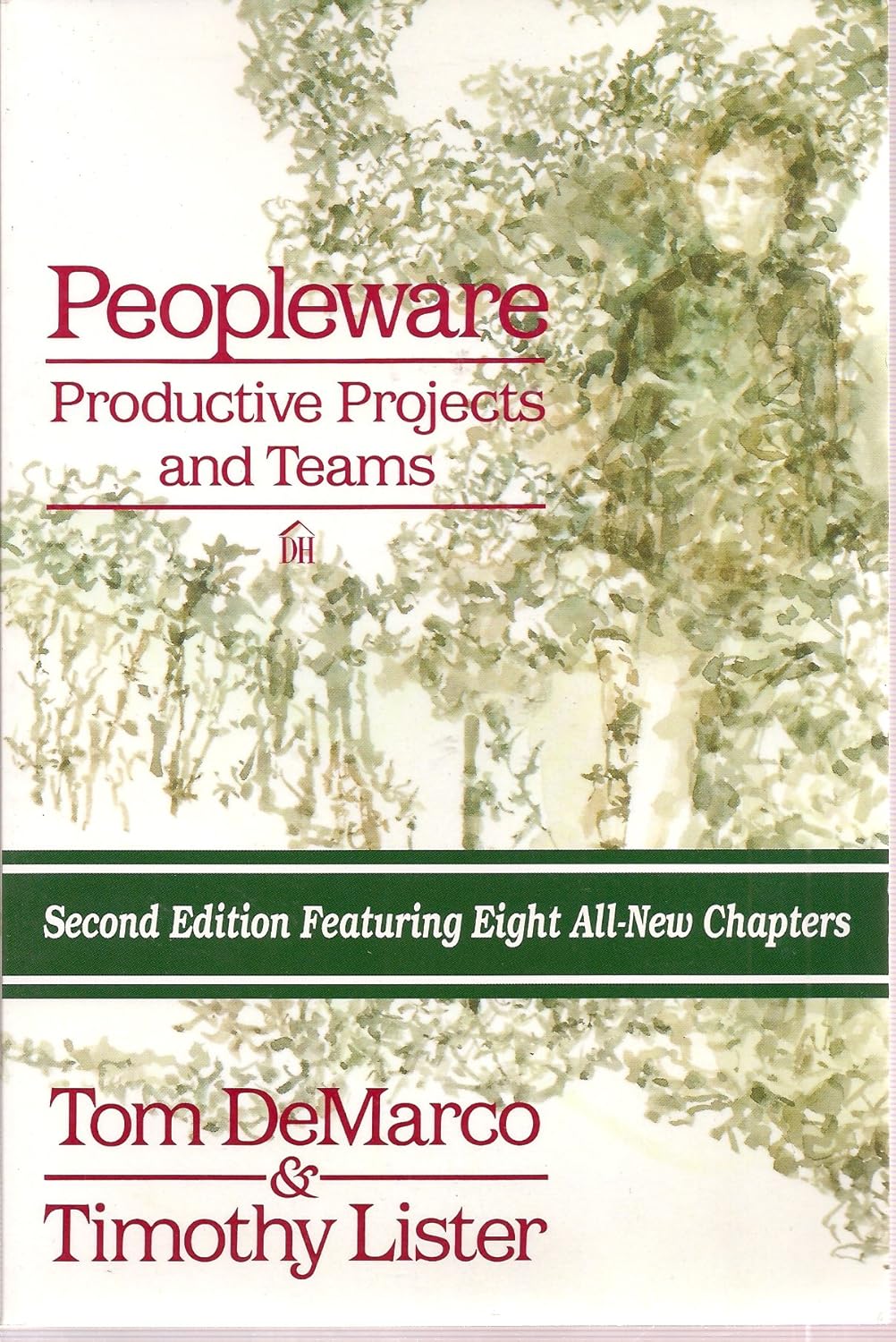
"Peopleware: Productive Projects and Teams", Tom DeMarco & Timothy Lister
The definitive study of why software and web projects succeed or fail — the answer is almost always organizational and human, not technical.

"Sprint", Jake Knapp, John Zeratsky & Braden Kowitz
A five-day framework for solving design and product problems; helps you understand what a rigorous discovery process looks like so you can recognize when an agency is cutting corners on yours.
Most Austin businesses pick an agency based on the pitch and the portfolio. The ones that get burned always say the same thing afterward: the communication fell apart. Find the agency with the best process, not the best presentation.