
400+ LA web agencies claim to be the best. After three weeks of portfolios and pitch decks, the proposals all look the same. Here are five criteria that predict actual results — not just pretty designs.
Key takeaways 👌
Portfolio relevance beats portfolio beauty — industry-specific experience predicts project success far better than design awards or celebrity clients.
Communication quality is the easiest criterion to test before signing — how an agency communicates during the proposal phase is the best you will ever see from them.
Post-launch support separates agencies building long-term partnerships from those closing a transaction and moving on to the next client.
Introduction
When you need to choose a web agency in LA, you face 400+ options all claiming to be the best. After three weeks reviewing portfolios and sitting through pitch decks, you have proposals ranging from $15K to $85K — all promising to transform your digital presence.
Here's the problem: every proposal looks credible at the pitch stage. The portfolios are polished, the case studies are impressive, and the timelines sound reasonable. The differences only surface months later, when the project is either delivering results or requiring a complete rebuild.
This guide gives you five criteria that predict actual outcomes — not just which agency puts on the best presentation.
Ask every agency candidate about their UX/UI design process — the answer reveals whether they solve problems or just make things pretty.
Why Choosing the Right Web Agency in LA Actually Matters
The Real Cost of Getting It Wrong
A failed web project in Los Angeles costs more than the original budget. The average mid-market company spends $35K–$75K on web development, but project failures mean restarting from scratch and losing six to twelve months of momentum.
In LA's competitive market, that delay is expensive. The Beverly Hills consulting firm that spent $60K on an "award-winning" agency is a common story: six months later, the site looked gorgeous but generated zero leads. They spent another $45K with a different agency to fix conversion issues the first team never understood. The total cost of a wrong decision wasn't $60K — it was $105K plus a year of lost growth.
LA's Unique Web Development Challenges
Los Angeles businesses operate in the most visually demanding market in the US. Entertainment industry standards meet startup speed expectations — everything must look polished and perform flawlessly. This combination creates specific agency selection problems:
Visual expectations are high: competitors in Culver City and Santa Monica have sites that look like product films. But technical complexity is equally high: multi-location businesses, complex service offerings, mobile-first audiences with no patience for slow-loading pages.
Most agencies excel at either aesthetics or technical execution — rarely both at LA's required quality level. Finding one that delivers both is the actual challenge.
Partnership Reality
You're not buying a website. You're entering a working relationship that runs 18+ months through discovery, development, launch, optimization, and ongoing support. The agency becomes your extended technical team — attending strategy meetings, making recommendations that affect business decisions, and handling technical emergencies when something breaks at the wrong moment.
In LA's high-stakes environment, that partnership either accelerates growth or becomes the bottleneck that requires a costly rebuild.
Criterion 1 — Portfolio Relevance: Industry Experience Over Design Beauty
Why Vertical Depth Matters in LA's Fragmented Market
Portfolio relevance predicts project success better than portfolio aesthetics. Different industries require fundamentally different technical approaches — a SaaS company needs conversion-optimized landing pages with complex pricing calculators; a law firm needs lead-capture systems with compliance requirements; a restaurant chain needs location-based functionality with online ordering integration.
Agencies claiming they can "adapt to any industry" usually deliver generic solutions that look professional but miss industry-specific conversion opportunities. An agency that shows 20 beautiful portfolio pieces across 20 different industries has never gone deep enough in any vertical to understand what actually drives results in that space.
An agency that shows five SaaS companies where they increased trial signups by specific, named percentages — with detailed explanations of the conversion strategies used — has pattern recognition you can't fake.
How to Evaluate Portfolio Relevance
Ask for industry-specific case studies. Request three examples from companies in your exact industry, with results metrics beyond "increased traffic." Conversion rates, lead volume, revenue impact — these are the numbers that matter.
Demand technical depth. Can they explain why they chose specific platforms, integrations, or user experience flows for similar businesses? An agency that understands the why behind its decisions in your space has expertise. One that can only describe what they built does not.
Verify actual involvement. Many agencies showcase work where they only designed mockups while other teams handled development and optimization. Ask specifically: "Who on your current team worked on this project, and what was their role?"
Red Flags
- Portfolio spans 20 industries with no vertical depth in any of them
- Case studies show only design screenshots with no measurable business outcomes
- They can't explain specific technical decisions made on past projects
- Work in the portfolio is more than 18–24 months old with no recent comparable examples

Criterion 2 — Process Maturity: What Happens When Problems Arrive
Process Transparency as a Predictor
How agencies handle your initial questions during the proposal phase reveals their project management capabilities more clearly than any portfolio. The difference between a mature and immature agency isn't talent — it's structure.
A mature agency response to "walk me through your process" sounds like: "Here's our four-phase structure. Phase one takes two to three weeks and produces stakeholder interview outputs, a competitive analysis, and documented technical requirements. Here are the exact deliverables you'll receive and the dates you'll receive them."
An immature agency response sounds like: "We'll start with discovery and move into design and development. Timeline depends on feedback cycles and scope." That sounds reasonable. It provides zero accountability structure. These agencies consistently miss deadlines because they haven't thought through their own capacity.
Critical Process Questions
- "What happens when we request changes during development?" A good answer describes a specific change request process with impact assessment and timeline documentation. A bad answer: "We're flexible and collaborative" — meaning no process exists.
- "How do you handle scope creep?" A good answer cites specific past examples of how scope changes were managed and priced. A bad answer: "We work with clients to find solutions" — meaning budgets unpredictably expand.
- "What's your communication cadence during development?" A good answer: weekly status calls, shared project dashboard, defined stakeholder responsibilities. A bad answer: "We'll keep you updated throughout" — meaning radio silence between milestones.
What a Mature Timeline Looks Like
A professional technical specification and project structure underpins every phase of a well-run engagement. The general shape:
- Week 1: Stakeholder interviews and technical audit
- Weeks 2–3: Wireframes and user experience flow
- Weeks 4–5: Visual design with defined revision rounds
- Weeks 6–9: Development with weekly progress check-ins
- Weeks 9–10: Testing, content migration, launch preparation
Any agency quoting six weeks for a full custom build is cutting phases. Any agency quoting six months without defined milestones is padding.
Red Flags
- No documented process — "every project is different" is not a system
- No mention of a testing phase before launch
- Vague timeline commitments with no milestone dates or deliverable descriptions
- Scope change procedure described as "we're flexible"
Good design is good business.
— Thomas J. Watson Jr., CEO, IBM (1956–1971)
Criterion 3 — Communication: Style Compatibility Before Signing
Why Communication Kills More Projects Than Technical Failures
Communication mismatches cause more project failures in LA's fast-moving business environment than technical skill gaps do. Response time, communication format, and who is doing the communicating — these are the variables that determine whether a project stays on track or silently drifts for weeks before anyone notices.
Communication quality is also the easiest criterion to test before you commit. How an agency communicates during the proposal phase — when they're actively trying to win your business — is the best you'll ever see from them. If they're slow, vague, or unclear now, it won't improve after the contract is signed.
LA Business Communication Expectations
Los Angeles businesses expect direct, results-focused communication with fast response times. Specific failure patterns to watch for:
- Agency takes three days to respond to a straightforward question during proposal phase
- Status updates are text-heavy reports with technical jargon instead of showing progress visually
- Agency waits for client direction instead of proactively flagging issues or making recommendations
Practical Compatibility Tests
Response time test. Send a question that requires some research. A mature agency acknowledges receipt within hours and provides a timeline for the full answer — even if the research takes a day. An immature agency either doesn't respond or sends a complete answer three days later with no acknowledgment in between.
Clarity test. Ask them to explain their design process verbally. Do they use examples, show quick mockups, or reference concrete past work? Or do they describe concepts in abstract terms without grounding them in anything visible?
Business context test. Ask about an industry trend affecting your project. Can they connect technical decisions to business outcomes, or do they only discuss features and functionality?
Red Flags
- No dedicated project manager — you'll be communicating with whoever is available
- "The founder manages all projects" — unsustainable, and your project gets deprioritized when new business arrives
- No project management tooling beyond email
- Over-promising responsiveness: "We're available 24/7" usually signals poor boundary-setting that leads to burnout and eventual unresponsiveness

The agency slowest to respond and most reliant on "we're flexible" — are you still considering them because of the portfolio, or because of something they've actually demonstrated?
Criterion 4 — Technical Depth: Beyond Visual Design
Why Technical Capability Determines Long-Term Results
Beautiful designs mean nothing if the underlying technology can't support your business goals. Technical depth determines whether your site performs at launch and scales as your business grows — or whether you're rebuilding in 18 months because the architecture couldn't handle what you needed.
LA businesses face specific technical demands: mobile-first audiences with inconsistent connectivity, seasonal traffic spikes tied to industry cycles, and integration requirements with existing CRM, marketing, and payment systems. An agency with strong visual skills but shallow engineering will produce something that looks right and breaks under real conditions.
Technical Capabilities That Actually Matter
Performance optimization. Can they build sites that load fast on mobile with poor connections? Ask for PageSpeed Insights reports from recent projects. Scores above 90 for mobile indicate technical competence. If they can't produce these, they don't track performance as a deliverable.
Conversion optimization. Do they understand user psychology and the conversion funnel, or do they make things look polished and assume the results follow? Ask for before-and-after conversion data from past projects.
Integration expertise. Can they connect your site with the CRM, marketing automation, payment processors, and analytics tools your business actually uses? Ask for specific examples of integrations they've built — not categories, but named tools and how they were connected.
Scalability planning. Will their architecture support 10x traffic growth, or will you need to rebuild when business scales? This question surfaces whether they think past the launch date.
Questions That Reveal Technical Depth
- "What's your approach to mobile performance optimization?" Good: specific techniques — lazy loading, image optimization formats, mobile-first development. Bad: "We make sure everything looks good on mobile."
- "How do you handle site security and backups?" Good: detailed explanation of security layers, backup frequency, and disaster recovery. Bad: "The hosting company handles that."
- "What analytics and tracking do you implement?" Good: custom event tracking, conversion goal setup, business intelligence integration. Bad: "We install Google Analytics."
Red Flags
- Over-reliance on page builders (Elementor, Divi) without custom development capability for complex requirements
- No staging environment — mature agencies develop on staging servers with client access before pushing live
- Can't explain their security approach in concrete terms
- No examples of performance data from past projects
Interesting fact 👀
Only 47% of websites currently pass Google's Core Web Vitals assessment across all three metrics — meaning more than half of sites carry a confirmed technical SEO disadvantage. For LA businesses in competitive local search, passing Core Web Vitals is table stakes: every 100-millisecond improvement in page load time correlates with a 7% increase in conversions. Source: Google/Deloitte, "Milliseconds Make Millions," 2020; Google Search Central, Core Web Vitals documentation, 2024.
Criterion 5 — Post-Launch Support: Partnership or Transaction
Why Support Terms Reveal Agency Character
Launching a website is the beginning of the work, not the end. Your site needs security updates, content changes, performance monitoring and optimization, bug fixes, and strategic improvements as your business grows.
How an agency structures post-launch support tells you whether they're building a long-term relationship or closing a transaction. An agency with no maintenance offering has effectively told you that your project stops being their priority the moment they invoice. An agency that can't confirm you own your own code and hosting has told you something more serious: you're renting a business asset, not owning one.
Common Post-Launch Needs
LA businesses face additional post-launch complexity: seasonal traffic spikes tied to entertainment industry cycles, competitive pressure to add features rapidly, and ongoing integration needs as new marketing tools are adopted. The realistic list of what your site will need in its first 18 months:
- Monthly security patches and platform updates
- Ongoing support and maintenance for e-commerce platforms as traffic grows and device standards evolve
- Integration with new marketing tools and CRM systems
- A/B testing for conversion improvements
- CMS training for internal team members managing content
Questions to Ask About Support
- "Do you offer maintenance retainers, and what do they include?" The answer should cover security updates, plugin/platform updates, backups, uptime monitoring, and a defined number of content update hours per month.
- "What's your response time for critical issues?" 24 hours for non-critical issues, four hours for site-down emergencies is a reasonable SLA for mid-tier retainers.
- "Do I own the code and content?" This should be a non-negotiable yes. Some agencies hold sites on proprietary platforms. Confirm you own everything and can migrate to any host or developer you choose.
- "Who handles support — the team that built it, or a separate maintenance team?" The team with context about how the site was built resolves issues significantly faster than a separate support tier encountering unfamiliar code.
Red Flags
- No maintenance offering — "call us if something breaks" is not a support plan
- Hourly-only support without retainer options, which creates cost uncertainty that discourages clients from requesting necessary updates
- Support handled by a separate junior team with no context on the original build
- You don't own your code, domain, or hosting outright
Making the Final Decision
The LA Web Agency Evaluation Scorecard
Score each shortlisted agency 1–5 on every criterion, multiply by the weight, and sum. Maximum score: 5.0.
Criterion |
Weight |
What to Evaluate |
Portfolio Relevance |
30% |
Industry match, measurable outcomes, technical depth in case studies |
Process Maturity |
25% |
Documented phases, milestone clarity, scope change procedure |
Communication |
20% |
Response time, PM assignment, tools, proposal-phase behavior |
Technical Depth |
15% |
Performance scores, integration examples, scalability approach |
Post-Launch Support |
10% |
Retainer structure, SLA, code ownership, team continuity |
Agencies scoring 4.0+ are strong candidates. Scores below 3.0 indicate structural problems that a good portfolio won't fix.
Practical Decision Timeline
- Week 1: Portfolio review and initial screening calls — eliminate agencies that can't answer basic process questions
- Week 2: Detailed conversations with three shortlisted agencies using the criteria above
- Week 3: Reference checks with past clients and final proposal evaluation
- Week 4: Decision and contract negotiation
Three agencies is the right number to evaluate in depth. Fewer doesn't give you enough comparison. More than five creates evaluation fatigue without adding useful signal.
Last-Minute Mistakes to Avoid
- Choosing on price alone — the cheapest proposal usually means less testing, lower-seniority developers, or hidden costs that surface mid-project as change orders
- Falling for impressive presentations — sales polish predicts nothing about delivery capability; focus on process questions and reference checks
- Ignoring team continuity — confirm in writing who will actually work on your project, not just who presented
LA-Specific Considerations
Agencies with deep LA experience understand local business culture, seasonal patterns tied to the entertainment industry, and the visual baseline your competitors have already established. In-person collaboration during discovery and concept review has real value for complex projects — proximity to your team matters when screen-sharing doesn't capture nuance.
That said, local doesn't mean best. An agency based in Austin or New York with proven LA client experience and strong process discipline will outperform a local agency with weak project management. The evaluation criteria above apply regardless of geography.
FAQ — Choosing a Web Agency in Los Angeles
How many agencies should I evaluate before deciding?
Three is the right number for most LA engagements. Fewer than three doesn't give you enough comparative signal. More than five creates evaluation fatigue — proposals blur together and decision quality drops. Start with a broader list, run 30-minute screening calls, and narrow to three before requesting full proposals.
Should I hire a local LA agency or can I work with a remote team?
Local agencies understand LA's business culture, visual baseline, and competitive landscape in ways that take time to learn. In-person collaboration during discovery and concept review has real value for complex projects. That said, a remote agency with strong process discipline and demonstrated LA client experience will outperform a local agency with weak project management. Don't filter by location before filtering by capability.
How long does a web development project take with an LA agency?
A custom business website typically runs 8–12 weeks from signed contract to launch. E-commerce platforms run 10–16 weeks. Complex web applications with custom integrations and backend requirements run 16–28 weeks. These timelines assume a proper discovery phase and client feedback turnaround of 24–48 hours per review cycle. Projects that skip discovery or experience stakeholder alignment problems routinely run 50–100% over initial estimates.
What's the difference between a web design agency and a web development company?
A web design agency's primary competency is visual design, UX, and front-end execution. A web development company's primary competency is engineering: backend systems, API integrations, database architecture, performance, and security. Many LA agencies describe themselves as both. For simple marketing sites and brochure builds, the distinction often doesn't matter. For projects with real technical complexity — custom integrations, user authentication, significant backend logic, performance at scale — the distinction is critical. Ask specifically how many full-stack engineers are on staff.
What should I look for in a web development contract?
Non-negotiables: milestone-based payments rather than a large upfront sum, named deliverables per milestone, a documented scope change process with pricing implications, an IP ownership clause confirming you own all work product on final payment, a termination clause, and post-launch support terms in writing. Any contract missing IP language or a change management procedure is incomplete — those gaps become disputes.
How do I evaluate technical capability if I'm not technical?
Ask for PageSpeed Insights reports from two or three recent projects — scores above 90 for mobile are what genuine technical competence looks like in practice. Then ask a specific technical question about the most complex part of your project and listen for whether the answer is specific (tools named, trade-offs explained, examples given) or generic. Genuine technical capability produces specific answers. Vagueness is the answer.
How do I verify an agency's references and Clutch reviews are real?
Clutch verifies reviews through direct phone and email confirmation with the client. Look for reviews with specific project descriptions — named deliverables, concrete results, candid observations — rather than just star ratings and generic praise. Agencies with 15+ reviews show a more reliable pattern than those with three to five. Beyond Clutch, ask the agency to connect you directly with two or three past clients for a 15-minute call. Legitimate agencies with real client relationships will do this without hesitation. If they deflect or offer only written testimonials, treat that as a signal.
What are realistic web development budgets in LA for 2026?
Template-based business sites run $8,000–$20,000. Custom design and development for a business site with CMS runs $20,000–$50,000. E-commerce platforms run $25,000–$80,000 depending on complexity. Custom web applications with significant backend requirements start at $60,000 and scale considerably from there. LA agencies typically run 15–25% higher than national averages due to overhead and talent costs. Quotes significantly below market rates warrant scrutiny — the gap is almost always explained by offshore execution, simplified scope, or a loss-leader proposal recovered on change orders.
Want to discuss your project?
Share your vision with us, and we'll reach out soon to explore the details and bring your idea to life.

Conclusion
Most LA businesses spend more time researching their next camera purchase than they spend evaluating the agency that will build their primary digital revenue channel. The portfolios all look credible. The pitches all hit the same notes. The difference only becomes visible when you apply a structured framework before the proposal stage.
Portfolio relevance, process maturity, communication discipline, technical depth, and post-launch support — scored against a consistent framework — will surface the real differences between your shortlisted agencies in a way that presentations and case study decks cannot.
The agency with the highest score on those five criteria is the right choice. Not the most impressive pitch deck, and not the most beautiful portfolio.
Recommended reading 🤓

"Don't Make Me Think", Steve Krug
The definitive guide to web usability — gives you the language to evaluate whether an agency's UX decisions are grounded in user behavior or aesthetic preference.
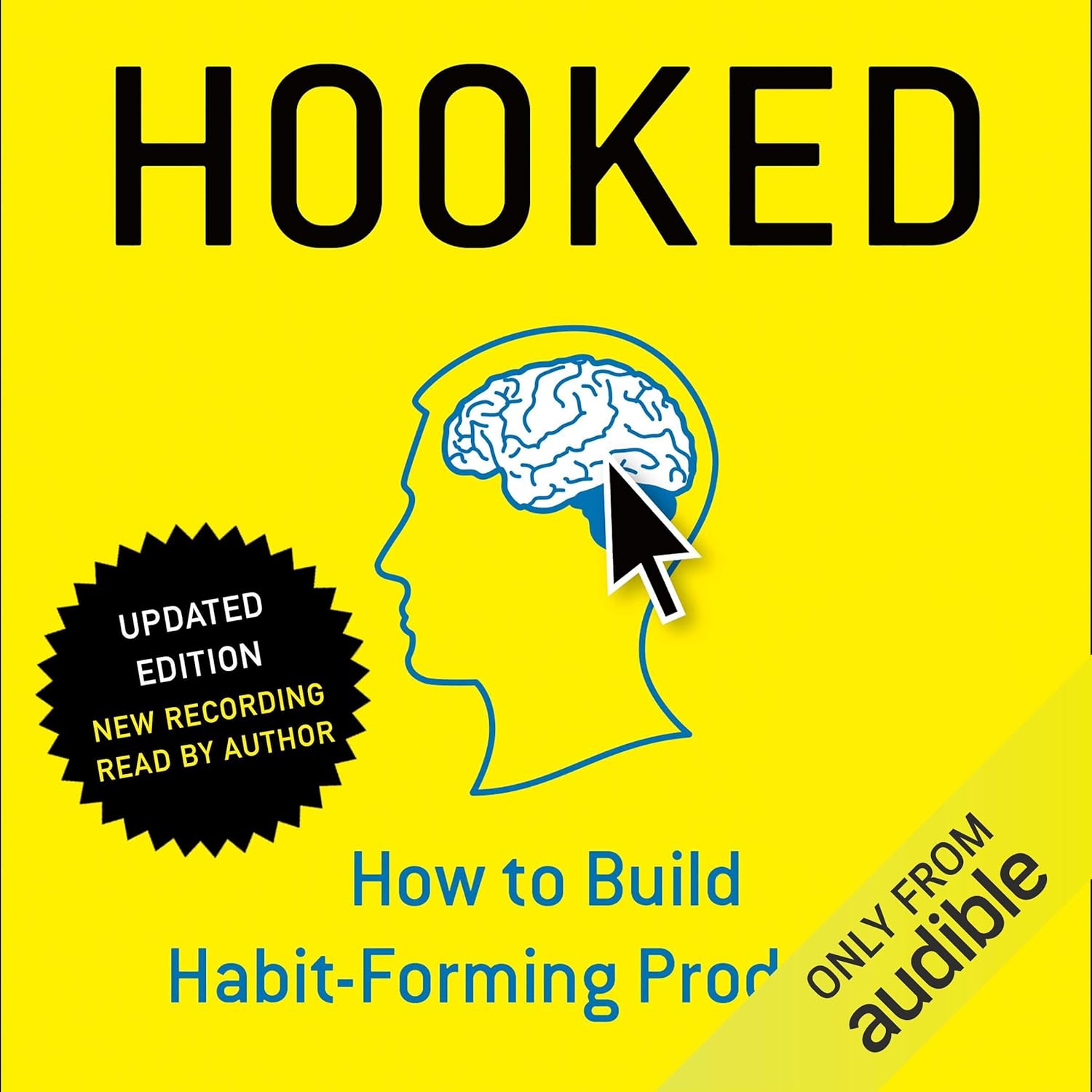
"Hooked: How to Build Habit-Forming Products", Nir Eyal
Essential for evaluating whether an agency understands engagement and retention design — particularly relevant for LA's entertainment, media, and consumer product companies.

"Sprint", Jake Knapp, John Zeratsky & Braden Kowitz
A five-day framework for solving design and product problems; helps you understand what a rigorous discovery process looks like so you can recognize when an agency is skipping it.
I see LA companies make the same mistake every week: they fall in love with an agency's designs, then realize six months later that pretty doesn't pay the bills. Your website needs to make money, not win design awards.