
Houston energy companies face a branding problem no other sector shares: stakeholders with completely incompatible expectations, and a market that punishes both greenwashing and denial equally. Here's how credible energy brands navigate it.
Key takeaways 👌
Energy sector branding requires balancing traditional energy credibility with transition positioning — brands must reassure institutional investors and regulators about operational excellence while signaling genuine evolution toward lower-carbon futures.
Stakeholder diversity in the energy sector demands sophisticated messaging architecture — institutional investors evaluate through cash flow metrics, regulators through safety and compliance, environmental stakeholders through emissions commitments, and engineering talent through innovation and career development.
Visual identity for energy companies must project industrial strength and technical competence while avoiding dated aesthetics that signal resistance to industry evolution. Contemporary energy branding uses sophisticated visual systems signaling technical expertise and operational scale.
Introduction
Houston's position as global energy capital creates a unique corporate branding environment shaped by industry concentration, talent competition, and stakeholder expectations evolving rapidly as the sector navigates transition toward a lower-carbon future.
The city hosts headquarters for major energy companies — ExxonMobil, ConocoPhillips, Occidental Petroleum, Halliburton, Schlumberger — alongside hundreds of mid-market E&P companies, oilfield services providers, energy technology startups, and increasingly, renewable energy companies establishing presence in the energy capital. This concentration creates sophisticated stakeholder audiences: institutional investors evaluating energy portfolios, technical talent comparing career opportunities, regulatory authorities monitoring industry practices, and activist organizations scrutinizing corporate commitments.
The practical implication for corporate branding: Houston energy companies operate under intense scrutiny from stakeholders with conflicting priorities. Traditional energy investors prioritize returns from core oil and gas operations while questioning expensive transition investments. Environmental stakeholders demand rapid movement toward renewables while dismissing incremental emissions reductions as insufficient. Engineering talent seeks companies demonstrating climate awareness and technical challenge. Regulators require safety and compliance while facing political pressure from both fossil fuel advocates and climate activists simultaneously.
This stakeholder complexity means energy company brands can't adopt simple positioning — neither by doubling down on traditional energy identity nor by attempting a radical transformation toward pure renewable positioning. Most Houston energy companies operate hybrid models: maintaining profitable traditional operations while developing lower-carbon businesses and technologies. Brand strategy must communicate this complexity honestly rather than oversimplifying in ways that alienate critical stakeholder groups.
Energy companies need brand strategy that balances heritage with modernization.
Strategic Positioning in Energy Transition
Energy sector positioning in 2026 requires navigating the tension between operational reality — most Houston energy companies derive the majority of revenue from oil and gas — and stakeholder pressure for transition toward lower-carbon business models. Brand strategy must communicate this complexity authentically.
The Positioning Spectrum
Energy company positioning spans a spectrum from traditional energy to energy transition to renewable energy. Understanding where your company sits on this spectrum determines appropriate brand strategy.
Traditional energy positioning emphasizes operational excellence, energy security, affordable energy, and technical expertise in oil and gas. Companies adopting this positioning — often smaller E&P companies without resources for major transition investments — accept that sustainability-prioritizing talent won't consider them, while maintaining credibility with traditional energy investors and customers prioritizing reliable supply. This positioning works when the business strategy genuinely focuses on traditional operations without pretending otherwise.
Energy transition positioning acknowledges traditional operations while emphasizing investments in lower-carbon technologies, emissions reduction, and gradual portfolio evolution. Most major Houston energy companies adopt versions of this — ExxonMobil emphasizing carbon capture alongside continued oil and gas operations, Shell positioning as an "energy transition company" while maintaining a significant fossil fuel business. This middle-ground positioning attempts to serve diverse stakeholders but risks appearing inconsistent without authentic operational backing.
Renewable energy positioning emphasizes clean energy, sustainability, and climate solutions — appropriate for companies whose business models genuinely center on renewable energy. This positioning appears disingenuous when adopted by companies deriving 80%+ of revenue from fossil fuels.
The strategic challenge is aligning brand positioning with business reality. Positioning that emphasizes transition requires demonstrating actual transition investments and progress — not just marketing claims while capital allocation continues to prioritize traditional operations. Stakeholders increasingly evaluate energy company commitments through capital allocation and operational metrics rather than accepting brand messaging at face value.
Communicating Dual Identity

Many Houston energy companies operate dual identities: traditional energy producers investing in transition technologies. Brand strategy must communicate both dimensions without appearing schizophrenic or opportunistic.
One approach segments messaging by stakeholder audience. Investor relations emphasizes cash flow from traditional operations and returns on capital.
Sustainability reports emphasize progress on emissions reductions and renewable investments. Recruiting materials emphasize technical challenges and career development across the portfolio. This segmentation works when different stakeholders access different materials and don't compare messaging across channels.
Another approach integrates messaging — acknowledging traditional operations while emphasizing evolution and transition trajectory. This requires authentic commitment to transition backed by operational evidence, not just marketing positioning contradicted by business fundamentals.
The mistake many energy companies make is adopting sustainability positioning through rebrands — emphasizing green imagery and renewable language — while business models and capital allocation remain focused on traditional energy. This greenwashing undermines credibility when stakeholders examine actual operations versus brand claims. Authentic brand strategy aligns positioning with business strategy and operational reality.

Visual Identity Challenges in the Energy Sector
Energy company visual identity must balance industrial credibility with contemporary relevance — avoiding dated aesthetics signaling resistance to industry evolution while maintaining professional authority appropriate for capital-intensive industrial operations.
Moving Beyond Oil Derrick Clichés
Traditional energy company visual identity relied heavily on literal imagery: oil derricks, pipelines, offshore platforms, refineries. This literal approach created visual sameness across the energy sector and increasingly appears dated as the industry evolves.
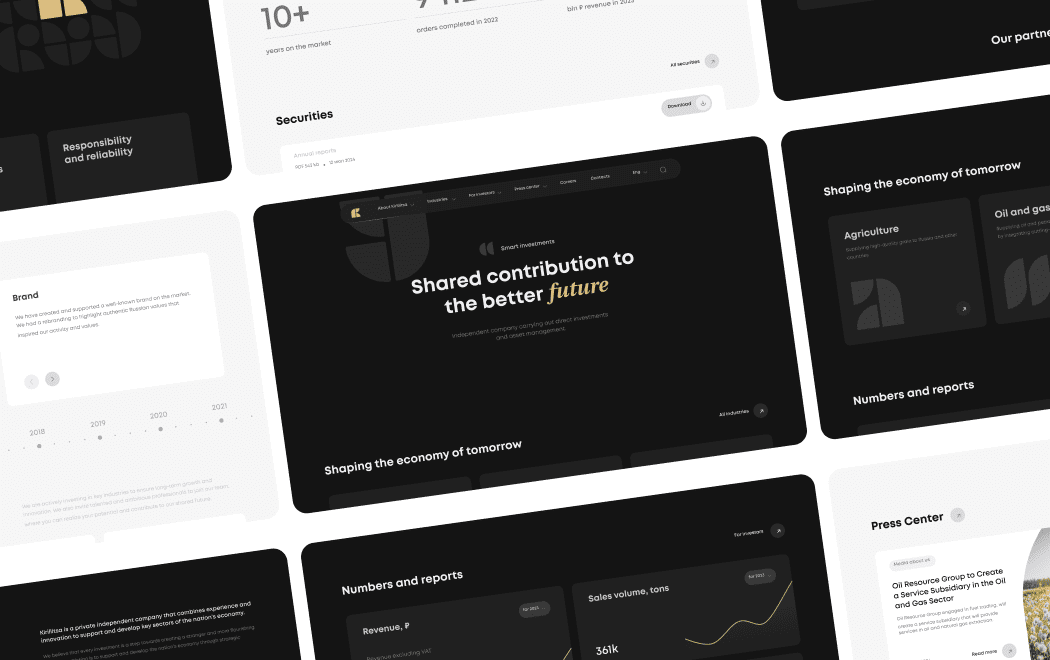
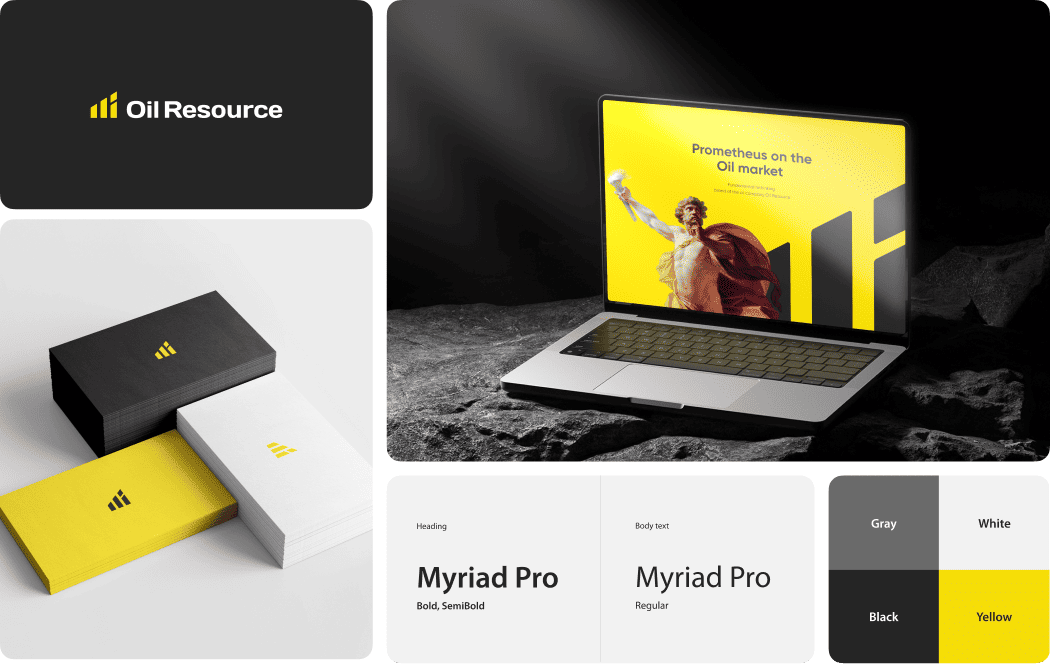
Contemporary energy branding uses more sophisticated visual approaches. Abstract representations of energy, flow, or transformation communicate industry without literal derrick imagery. Photography emphasizing technology, engineering expertise, and innovation rather than industrial infrastructure alone signals contemporary business thinking. Visual systems using geometric patterns, data-visualization aesthetics, or technical precision communicate industrial competence without oil-and-gas imagery that alienates sustainability-focused stakeholders.
Color strategy for energy companies traditionally emphasized blue (trust, stability) and green (environment, growth). These remain appropriate but require sophisticated application to avoid generic appearance. Navy blue paired with technical accent colors — teal, copper, gray — maintains professional credibility while differentiating from competitors' standard corporate blue. Green must be used carefully: too prominent and it signals greenwashing; too absent and it misses the opportunity to communicate environmental commitment.
Balancing Heritage and Evolution
Established energy companies often possess decades of brand heritage and equity. Rebranding decisions must consider whether maintaining visual connection to heritage provides value or whether evolution signals necessary business transformation.
Complete visual breaks from heritage work when companies undergo fundamental transformation: divesting traditional operations, merging with companies from different sectors, or pivoting business models dramatically. Gradual visual evolution works when business transformation occurs incrementally and maintaining equity in the established brand provides value to institutional stakeholders.
The strategic question is whether visual connection to heritage helps or hinders positioning objectives. If heritage signals unwanted fossil fuel association and you're genuinely transforming toward renewables, a visual break may be appropriate. If heritage signals operational excellence and industry leadership valuable to institutional investors, maintaining visual connection while modernizing execution may be the better approach.
A comprehensive brand identity system helps energy companies evaluate these trade-offs — establishing what visual equity is worth preserving versus what signals transformation requires breaking with.
In times of change, learners inherit the earth, while the learned find themselves beautifully equipped to deal with a world that no longer exists.
— Eric Hoffer, American philosopher and author
Stakeholder Communication Strategy
Energy company brands must communicate effectively with diverse stakeholder groups evaluating companies through different frameworks and priorities. This requires sophisticated messaging architecture organizing audience-specific communication without creating contradictions that undermine overall credibility.
Investor Relations and Financial Communication
Institutional investors evaluating energy companies prioritize financial performance, capital discipline, and returns on investment. Brand strategy for investor audiences emphasizes operational efficiency, cost management, production growth, and capital allocation discipline.
However, investor base composition is changing. ESG-focused funds, sustainability-oriented institutional investors, and activist shareholders increasingly evaluate energy companies through environmental and social metrics alongside financial performance. This investor diversity means companies can't adopt a single messaging approach — traditional energy investors and ESG investors evaluate companies through incompatible frameworks simultaneously.
Sophisticated investor relations communicates both dimensions. Financial materials emphasize cash flow, returns, and operational performance. Sustainability reports detail emissions reductions, renewable investments, and ESG metrics. Integrated reporting attempts to bridge these frameworks by connecting financial performance with sustainability progress rather than treating them as separate narratives.
Regulatory and Government Relations
Energy companies operate under extensive regulatory oversight from environmental agencies, safety regulators, and industry-specific authorities. Brand positioning affects regulatory relationships by shaping how regulators and policymakers perceive company intentions and credibility.
Companies positioning themselves as committed to emissions reduction and safety excellence may receive more constructive regulatory treatment than companies perceived as resisting necessary reforms. However, sustainability positioning must be backed by operational performance — regulators evaluate actual compliance records and operational practices rather than accepting brand messaging without verification.
Talent Recruitment and Employer Branding
Attracting engineering talent is a critical challenge for Houston energy companies competing with technology companies in Austin and California, renewable energy firms globally, and other industries offering careers without fossil fuel association. Employer brand must communicate a value proposition appealing to different talent priorities.
Companies genuinely investing in energy transition and lower-carbon technologies can emphasize these initiatives in recruiting messaging, attracting talent interested in working on climate solutions within the energy sector. Companies maintaining focus on traditional operations should emphasize technical challenges, operational scale, and career development rather than attempting sustainability positioning disconnected from actual work.
A comprehensive brandbook that addresses employer brand alongside corporate brand ensures consistent positioning across recruiting materials, careers website, and employee communications — without the inconsistencies that arise when HR and marketing develop messaging independently.

Before developing sustainability-focused brand positioning, examine your capital allocation. If 85% of capital expenditure funds traditional oil and gas operations while renewable investments receive 15%, positioning the company as "energy transition leader" lacks credibility with any sophisticated stakeholder. Brand positioning must align with actual business strategy and resource allocation — not an aspirational future state disconnected from current operations.
ESG Messaging and Sustainability Communication
Environmental, Social, and Governance considerations increasingly shape energy companies' brand strategies as institutional investors, regulators, and other stakeholders evaluate companies against sustainability frameworks. Sustainability messaging must be backed by operational substance to maintain credibility.
Effective ESG communication requires demonstrating progress through specific metrics: emissions reduction targets with progress tracking, renewable energy investments with capacity additions, safety performance improvements year over year, and community investment initiatives with measurable outcomes. Vague sustainability commitments without operational backing lack credibility with sophisticated stakeholders evaluating actual performance.
The challenge is communicating genuine progress without appearing to greenwash traditional operations. Stakeholders increasingly scrutinize energy company sustainability claims, comparing brand messaging against capital allocation, operational emissions, and business strategy. Sustainability messaging disconnected from business fundamentals undermines credibility more than acknowledging limitations while demonstrating genuine incremental progress — honesty about where the company currently is, combined with evidence of directional movement, outperforms aspirational positioning unsupported by operations.
Digital sustainability reporting enables interactive data visualization, detailed methodology documentation, and regular updates beyond annual report cycles. Companies leading in transparency provide dashboards showing frequently updated performance metrics rather than limiting disclosure to annual reports — and that transparency itself becomes a credibility signal.
Digital Presence and Corporate Website Strategy
Energy company brands primarily exist in digital contexts where stakeholders research companies, evaluate credibility, and access information. Corporate websites serve as primary brand touchpoint requiring strategic architecture serving diverse stakeholder needs simultaneously.
Information Architecture for Multiple Audiences
Energy company websites must organize extensive information serving distinct stakeholder groups: investors seeking financial data, job seekers researching career opportunities, community members seeking to understand local operations, media seeking press materials, and regulators evaluating compliance. This organizational complexity requires thoughtful information architecture.
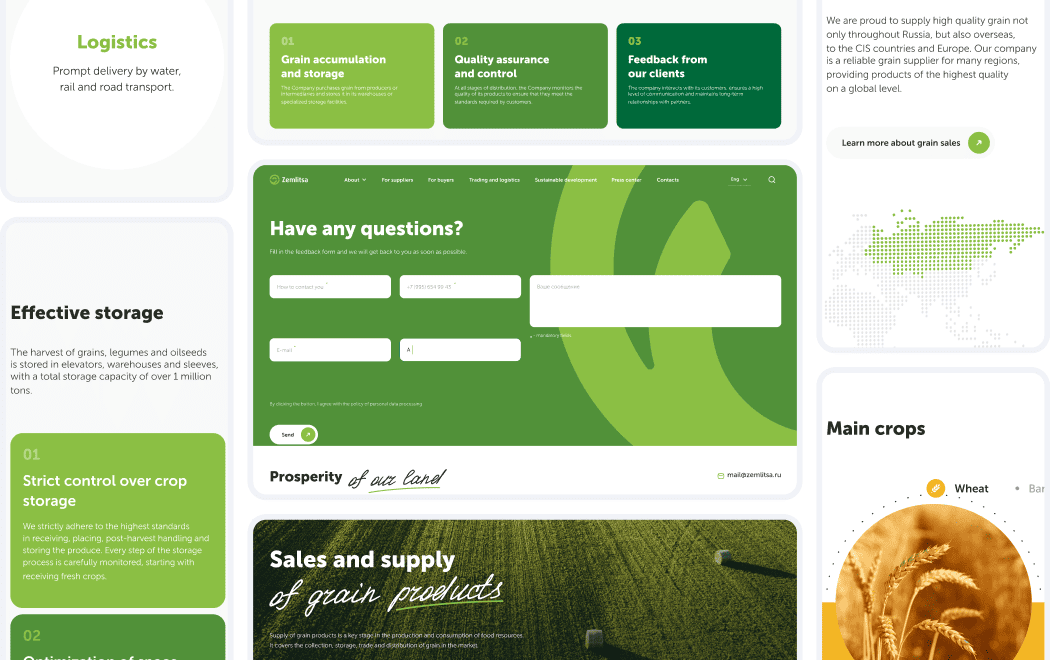
Stakeholder-focused navigation enables each audience type to find relevant information efficiently. Investor relations sections organize financial reports, SEC filings, and governance documents. Careers sections communicate employer value proposition and current opportunities. Sustainability sections detail environmental performance and transition initiatives. The homepage and primary navigation must serve all stakeholders without prioritizing any single group to the exclusion of others.
For energy companies developing corporate websites serving complex stakeholder needs while maintaining brand consistency, corporate web development ensures sites organize information effectively and express brand identity appropriately across diverse content types — rather than defaulting to a single narrative that satisfies only the most visible stakeholder audience.
Crisis Communication and Reputation Management
The energy sector faces operational risks — spills, accidents, regulatory violations — creating brand challenges requiring effective crisis response. Brand strength built through consistent stakeholder communication and demonstrated transparency provides credibility during crises. Companies with track records of transparent communication and operational excellence maintain stakeholder trust during incidents better than companies with histories of opacity or inconsistent messaging.
Crisis communication preparedness includes maintaining protocols for rapid website updates during developing situations, creating communication channels for affected communities and stakeholders, and demonstrating transparency about incidents, impacts, and remediation rather than appearing evasive. The credibility required to navigate a crisis is built long before the crisis occurs — through the consistency and honesty of ongoing brand communication.
Interesting fact 👀
Houston hosts over 4,600 energy-related firms, making it the energy capital of the United States and one of the world's leading energy hubs. According to the Greater Houston Partnership's 2024 economic data, the Houston metropolitan area accounts for approximately 23% of the nation's total oil and natural gas production jobs — and since 2020, over 200 solar and wind energy companies have established operations in the region, creating intense competition for engineering talent that forces energy companies to differentiate through employer branding beyond compensation alone.
Brand Architecture for Energy Portfolios
Energy companies with diverse operations — upstream exploration, midstream transportation, downstream refining, renewable energy, and energy technology — face brand architecture decisions determining relationships between corporate brand and business unit or product brands.
Unified corporate brand applies a single master brand across all operations, maximizing corporate brand investment and simplifying stakeholder understanding. However, it limits flexibility: controversies in one business segment affect the entire portfolio, and all operations must fit under a single positioning that may suit some divisions better than others.
Divisional branding creates distinct brands for major business segments while maintaining a relationship with the corporate brand. Oil and gas operations, renewable energy divisions, and technology businesses operate under separate brands with corporate endorsement — enabling targeted positioning for distinct segments while maintaining corporate oversight.
Venture branding creates separate brands for new businesses or acquired companies, maintaining independence. Energy companies acquiring renewable energy companies or launching energy technology ventures often maintain acquired brand identities rather than immediately integrating them into the corporate brand — preserving value in acquired brands while enabling portfolio diversification.
The strategic decision depends on whether unified positioning serves all business segments effectively or whether distinct segments benefit from independent positioning. Traditional oil and gas operations and renewable energy businesses serve different customers through different channels and offer distinct value propositions — potentially justifying separate brand positioning despite common corporate ownership.
Measuring Brand Performance in the Energy Sector
Energy company brand performance measurement requires tracking stakeholder perception across diverse audiences with different evaluation criteria. Establishing baseline measurements before major brand initiatives enables demonstrating impact through post-implementation perception changes.
Investor metrics include stock price performance relative to sector indices, analyst ratings, institutional ownership patterns, and cost of capital compared to industry peers. Strong brands should command premium valuations and lower cost of capital over time.
Talent metrics include quality of candidate pipeline, offer acceptance rates, employee retention, and ability to recruit from competitive industries. Strong employer brands reduce recruiting costs and improve talent quality — measurable against benchmarks established before brand initiatives.
License to operate metrics include community support for new projects, regulatory relationships, permitting timelines, and stakeholder opposition levels. Companies with strong community relationships and credibility face measurably less opposition to operations.
Commercial outcomes — customer retention, pricing realization, competitive win rates, and partner relationships — matter particularly for service businesses where brand strength affects commercial relationships even when products approach commodity status.

For energy companies specifically, the timing of a rebrand matters as much as the rebrand itself — act before operational evidence supports the new positioning and credibility suffers. This guide covers how to read those signals: Rebranding: What It Is, When It's Needed, and How to Do It
Implementation Across Energy Company Touchpoints
Brand strategy only creates value when implemented consistently across touchpoints where stakeholders encounter the company: corporate website, investor presentations, trade show presence, recruiting materials, safety communications, community engagement, and operational facilities.
Energy companies operate physical assets — office buildings, production facilities, refineries, service centers — where brand presence affects stakeholder perception. Facility branding balances industrial functionality with brand expression. Production facilities prioritize safety and operational requirements, but consistent signage, color application, and wayfinding systems reinforce professional image. Corporate offices and customer-facing facilities receive more comprehensive brand implementation expressing brand identity in reception areas, conference rooms, and public spaces.
Integrating safety culture into brand expression represents a consideration unique to the energy sector. Safety messaging, protective equipment standards, and operational procedures reflect organizational values — components of brand identity that other sectors don't emphasize. Companies positioning around operational excellence integrate safety into brand expression rather than treating safety communication as a separate concern disconnected from brand.
Template systems enabling distributed teams to create on-brand materials matter especially for large energy company organizations where investor relations, marketing, HR, and operations teams all produce materials independently. Comprehensive brand development including detailed implementation guidelines ensures teams apply the brand correctly across diverse material types without constant creative oversight or approval bottlenecks.
Want to discuss your project?
Share your vision with us, and we'll reach out soon to explore the details and bring your idea to life.




Conclusion
Houston energy companies that get corporate branding right share one characteristic: they begin with an honest assessment of their actual business — where revenue comes from, where capital is allocated, what the operational reality is — and they build positioning from that foundation rather than from an aspirational future state.
The energy companies succeeding with corporate branding avoid both extremes: neither doubling down on traditional energy identity while ignoring industry transformation, nor adopting renewable positioning disconnected from business fundamentals dominated by oil and gas. Instead, they communicate business complexity honestly — acknowledging traditional operations while demonstrating genuine transition investments and progress measured by capital allocation and operational metrics, not brand messaging alone.
The investment in strategic corporate branding pays returns through improved stakeholder relationships, enhanced talent recruitment, and stronger license to operate in an increasingly scrutinized industry. Poorly planned rebrands pursuing sustainability positioning without operational backing do something worse than waste money — they create stakeholder cynicism that makes authentic communication harder for years afterward.
Start with the capital allocation question. Where your company actually invests its resources is the most honest statement of business strategy available to any stakeholder. Brand positioning should reflect that reality — and where it doesn't yet, that gap is the work that needs doing before the brand conversation begins.
Recommended reading 🤓

"The New Rules of Green Marketing", Jacquelyn Ottman
Comprehensive guide to sustainability marketing and communication with specific focus on avoiding greenwashing while communicating genuine environmental commitments — directly applicable to energy companies navigating sustainability positioning under increasing stakeholder scrutiny.

"Good Strategy Bad Strategy", Richard Rumelt
Essential text on strategy development and execution. Rumelt's framework for distinguishing good strategy from bad strategy — fluff, failure to face challenges, mistaking goals for strategy — applies directly to energy company brand-positioning decisions where the temptation to paper over strategic ambiguity with aspirational messaging is highest.

"Brands and Branding", Rita Clifton and John Simmons (The Economist)
Collection of essays on corporate branding strategy and brand management with contributions from leading practitioners — provides strategic frameworks applicable to complex B2B and industrial branding contexts like the energy sector.
Energy company branding fails when it treats ESG and sustainability as a marketing overlay disconnected from business strategy. Credible energy brands align positioning with actual operational transformation — not greenwashing traditional operations with renewable imagery while the business model remains unchanged.