
Miami corporations serve investors, regulators, and partners across three continents simultaneously — and most of their websites are built for one. Here's what international corporate web design actually requires.
Key takeaways 👌
International corporate websites require cultural neutrality balanced with local credibility — professional typography, clean layouts, and systematic architecture form the global foundation, while regional landing pages and market-specific content deliver localized trust signals.
Regulatory compliance varies dramatically across jurisdictions: GDPR for European stakeholders, CCPA for California operations, and LGPD for Brazilian partners — websites must accommodate all applicable frameworks without creating user-experience nightmares.
International investor relations require a sophisticated content architecture that serves diverse audiences simultaneously: U.S. institutional investors evaluate through SEC filings, Latin American partners seek relationship indicators, and European authorities review governance structures.
Introduction
Miami's role as an international business hub creates corporate website requirements that domestic-focused companies never encounter. The city functions as operational headquarters for over 1,400 multinational corporations, serves as the primary entry point for $157 billion in annual U.S.–Latin America trade, and operates as a financial center connecting North American capital markets with Latin American investment opportunities.
A typical international company headquartered in Miami might report to U.S. institutional investors, coordinate operations with Latin American subsidiaries, maintain European regulatory compliance, and serve customers across multiple continents — simultaneously. Each stakeholder group evaluates corporate credibility differently, expects different information, and makes decisions based on culturally specific trust signals.
The practical implication: simple translation or "add a Spanish version" approaches fail. A corporate website optimized for U.S. domestic audiences, emphasizing innovation, disruption, and aggressive growth, may actively raise concerns among Latin American business partners who expect stability, relationships, and long-term commitment. European regulatory authorities don't care about marketing messaging at all; they need detailed governance documentation and data protection policies.
Companies that succeed in Miami's international context design websites with this complexity built in from the start. Getting the balance right determines whether a corporate website supports or undermines international business development.
Cultural Considerations in International Corporate Design
Cultural differences affect how audiences evaluate corporate credibility, interpret visual design, and navigate information — making cultural awareness essential infrastructure, not a nice-to-have.
Visual Language and Color Psychology Across Cultures
Colors carry different meanings across cultural contexts. Western business audiences associate blue with trust, stability, and professionalism. But color meanings shift: red signals prosperity in Chinese business contexts and danger in Western markets. White signals purity in the West and mourning in some Asian cultures.
International corporate design navigates this through culturally neutral color palettes combined with strategic regional customization. Core corporate identity uses colors with universal professional associations — navy blue, charcoal gray, and clean white — avoiding colors with strong negative connotations in major markets. Regional landing pages incorporate locally appropriate accents without compromising global brand consistency.
Typography choices carry cultural weight, too. Sans-serif fonts signal modernity across most markets and are safe choices for international corporate design. Script or decorative fonts rarely work internationally because legibility varies across languages, and aesthetic preferences differ dramatically.
Photography requires equally careful consideration. Stock photography showing exclusively Western business settings alienates Latin American, Asian, or European audiences. Thoughtful approaches use imagery focused on universal business contexts — technology, collaboration, innovation — rather than region-specific settings, reserving market-specific imagery for regional landing pages.
Information Architecture for Diverse Audiences
How people seek information and evaluate credibility varies across cultural business contexts. U.S. audiences prefer direct, action-oriented content — straight to value propositions and calls to action. Latin American business cultures value relationship context first: who the company is, its history, and its values. European audiences, particularly in regulated industries, prioritize governance, compliance, and systematic documentation.
International corporate websites accommodate these differences through flexible information architecture with multiple entry points: direct product and service information for action-oriented audiences, company history and leadership for relationship-oriented audiences, and governance and compliance sections for regulatory-focused stakeholders.
Smart international corporate web design uses progressive disclosure — presenting high-level information appropriate for all audiences, then allowing deeper exploration based on specific interests. A homepage presents the company's value proposition universally; clicking "About" leads relationship-oriented audiences to the history and leadership; clicking "Solutions" takes transaction-oriented audiences directly to product specifications; clicking "Governance" routes regulatory audiences to compliance documentation.
Search functionality becomes critical for international corporate sites because diverse audiences seek different information and may not navigate through your intended hierarchy. Robust search serving stakeholders directly — without forcing everyone through the same navigation structure — is not optional for sites serving multiple stakeholder types across multiple regions.

Regulatory Compliance Across Jurisdictions
International corporations face regulatory complexity that domestic companies never encounter. Websites serving global stakeholders must comply with data privacy regulations, securities laws, industry-specific compliance requirements, and accessibility standards that vary by jurisdiction — all while remaining usable.
Data Privacy and Protection Requirements
The EU's General Data Protection Regulation (GDPR) sets high standards affecting any company serving European customers, partners, or stakeholders. GDPR requires explicit consent for data collection, provides individuals the right to access and delete their data, mandates breach notification, and imposes significant penalties for violations.
California's CCPA and CPRA create similar requirements for companies serving California residents — which includes most international corporations, given California's economic significance. Brazil's LGPD imposes data protection requirements for companies operating in Brazilian markets. Other jurisdictions implement their own frameworks with varying requirements.
International corporate websites navigate this complexity through layered privacy compliance: core practices follow the strictest applicable standard (typically the GDPR), with jurisdiction-specific disclosures appearing for users in particular regions. Cookie consent mechanisms provide granular control for European users while using simpler approaches for less stringent jurisdictions.
The technical challenge is meeting these requirements without destroying the user experience. Thoughtful compliance design minimizes friction — using progressive disclosure for privacy information, implementing clear reject options alongside accept, and explaining data usage in plain language rather than hiding behind legal jargon.
Securities Regulations and Investor Relations
Public companies face securities regulations governing what can be said about financial performance, forward-looking statements, and material information. U.S. SEC regulations, Brazil's CVM, and European securities regulators all apply to international corporations operating across these markets simultaneously.
International complications arise when companies operate under multiple regulatory frameworks. A company listed on both the U.S. and Brazilian exchanges must comply with both SEC and CVM requirements. Investor relations sections must organize this complexity — providing jurisdiction-specific filings and disclosures without confusing investors about which regulations apply to them.
For corporations navigating complex regulatory environments across multiple jurisdictions, ongoing maintenance and technical support ensures websites remain compliant as regulations evolve rather than discovering violations after regulators identify problems.
The companies that will thrive are those that figure out how to combine the global scale with local relevance.
— Muhtar Kent, Former Chairman & CEO, The Coca-Cola Company
Technical Implementation for International Corporate Websites
Beyond cultural design and regulatory compliance, international corporate websites require technical infrastructure supporting global audiences, diverse devices, varying connection speeds, and complex content management across regions.
Performance Across Geographic Regions
A corporate website loading in 2 seconds for U.S. users with fiber internet might take 15 seconds for Latin American users on mobile connections. This performance disparity creates terrible user experiences for international stakeholders evaluating corporate credibility — and credibility is precisely what these sites exist to establish.
Content delivery networks (CDNs) address geographic performance challenges by caching website content on servers distributed globally. When a user in São Paulo accesses your corporate website, the CDN serves content from servers in Brazil rather than routing requests to Miami, dramatically reducing latency. Professional CDN implementation is essential infrastructure for international corporate websites, not an optional upgrade.
Performance testing must include all major geographic markets you serve. Don't test only from Miami: test from São Paulo, Mexico City, London, and other locations where stakeholders actually access your site. Tools like Google PageSpeed Insights and WebPageTest allow geographic testing, revealing performance issues that single-location testing misses entirely.
Scalability and Traffic Management
International corporations face traffic patterns that domestic companies don't encounter. Earnings announcements create massive simultaneous traffic spikes as global investors access financial information at once. Product launches in specific regions drive regional surges. Crisis communications require handling sudden spikes in inquiries from concerned stakeholders worldwide.
If your investor relations site crashes during an earnings announcement, investors can't access financial information, analyst calls are disrupted, and corporate credibility suffers at exactly the moment when stakeholder attention is at its highest. Cloud hosting with auto-scaling capabilities and load testing before predictable traffic events are not engineering details — they are business-critical infrastructure.
Content Management for International Operations
International corporations require content management systems that support complex organizational needs: multiple content editors across regions and departments, approval workflows that ensure brand consistency and regulatory compliance, version control that tracks changes over time, and publication scheduling that coordinates announcements across time zones.
Content governance becomes critical because uncoordinated updates create brand inconsistency, regulatory risk, or stakeholder confusion. A Latin American subsidiary updating product pricing without coordinating with global marketing creates inconsistencies. A European office publishing compliance documentation without legal review creates regulatory exposure. The CMS and content workflows must systematically prevent these problems rather than rely on manual coordination.

If a regulatory authority in Germany, an investor in São Paulo, and a procurement manager in New York all opened your corporate website right now — would each of them find what they need to trust you, or would they all see the same page optimized for none of them?
Investor Relations and Stakeholder Communication
International corporate websites must serve diverse stakeholder communication needs simultaneously: investor relations for public companies, media relations supporting global press engagement, partner portals facilitating business development across regions, and customer communication spanning multiple markets.
Public Company Investor Relations Requirements
SEC regulations require public companies to provide equal access to material information, maintain comprehensive financial disclosures, and enable investor communication. Investor relations sections must provide quarterly and annual reports, SEC filings, earnings announcements, corporate governance documents, and shareholder meeting information — all accessible, searchable, and archived for regulatory compliance.
International investor relations adds complexity. Different jurisdictions may require different financial reporting standards — U.S. GAAP versus IFRS. Investor presentations may need multiple language versions. Regulatory filings must be available for all jurisdictions where securities are offered. The website infrastructure must organize this complexity without overwhelming investors seeking specific information.
Partner Portals and B2B Communication
International corporations often coordinate with partners, distributors, resellers, or suppliers across multiple regions. Partner portals' password-protected sections providing resources for business partners facilitate this coordination by providing product training materials, marketing resources, sales enablement content, pricing information, and technical documentation.
For international operations, partner portals must support diverse partner types across different regions. A Latin American distributor needs different resources than a European reseller. The portal infrastructure must provide appropriate access controls, ensuring partners see only relevant content for their region and relationship type.
Partner portal security becomes critical because confidential business information — pricing, margins, product roadmaps — must be protected from competitors while remaining accessible to authorized partners. Role-based access controls, secure authentication, and audit logging track who accesses which information, ensuring security without creating friction for legitimate partners.
Interesting fact 👀
Miami-Dade County hosts the largest concentration of international corporate headquarters in the United States after New York City, with over 1,400 multinational corporations maintaining regional or hemispheric headquarters in the metro area. These companies generate over $157 billion in annual U.S.–Latin American trade, with Miami serving as the primary commercial gateway between North and South American markets.
Design Principles for International Corporate Credibility
International corporate websites must establish credibility with diverse audiences, evaluating trustworthiness through different cultural lenses and business expectations.
Visual Professionalism and Cultural Neutrality

What looks "professional" varies across cultures. U.S. corporate design emphasizes bold typography, generous whitespace, and minimalist aesthetics signaling modernity. European corporate design uses more formal layouts and classical typography, signaling establishment. Latin American business audiences value warmer palettes and relationship-oriented imagery over stark minimalism.
International corporate design navigates this through cultural neutrality — using design principles that signal professionalism across most business cultures without strongly favoring any single regional aesthetic.
Clean, systematic layouts with clear information hierarchy. Professional typography balancing modernity and readability. Sophisticated but not aggressive color palettes. High-quality photography emphasizing universal business contexts.
A visually striking but culturally neutral foundation can then be customized for specific markets through regional landing pages, market-specific imagery, or localized content — while maintaining global brand consistency.
Trust Signals and Social Proof
How businesses establish trust varies across cultural contexts. U.S. audiences value third-party validation: press coverage, industry awards, and analyst recognition. European audiences, particularly in regulated industries, value governance credentials and systematic process documentation. Latin American business cultures emphasize long-term relationships, personal connections, and demonstrated market commitment.
International corporate websites must provide trust signals appealing to all these evaluation frameworks. A homepage features universal trust signals — Fortune 500 clients, regulatory compliance badges, and industry leadership recognition. Regional landing pages emphasize trust signals most relevant to specific markets: regional office locations and long-term client relationships for Latin America; regulatory credentials and governance documentation for Europe; innovation awards and analyst recognition for U.S. audiences.
Corporate Identity Consistency Across Touchpoints
International corporations maintain presence across numerous touchpoints — corporate website, regional microsites, investor relations materials, press releases, trade show materials, office signage. Brand inconsistency across these suggests organizational dysfunction or a lack of attention to detail to any stakeholder who encounters the company across multiple channels.
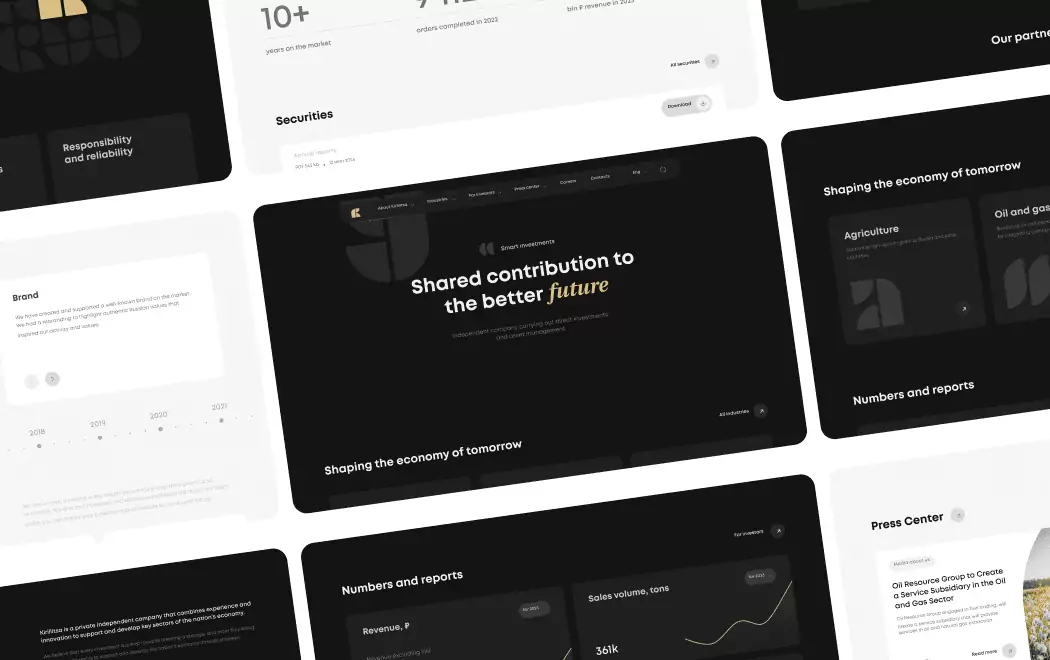
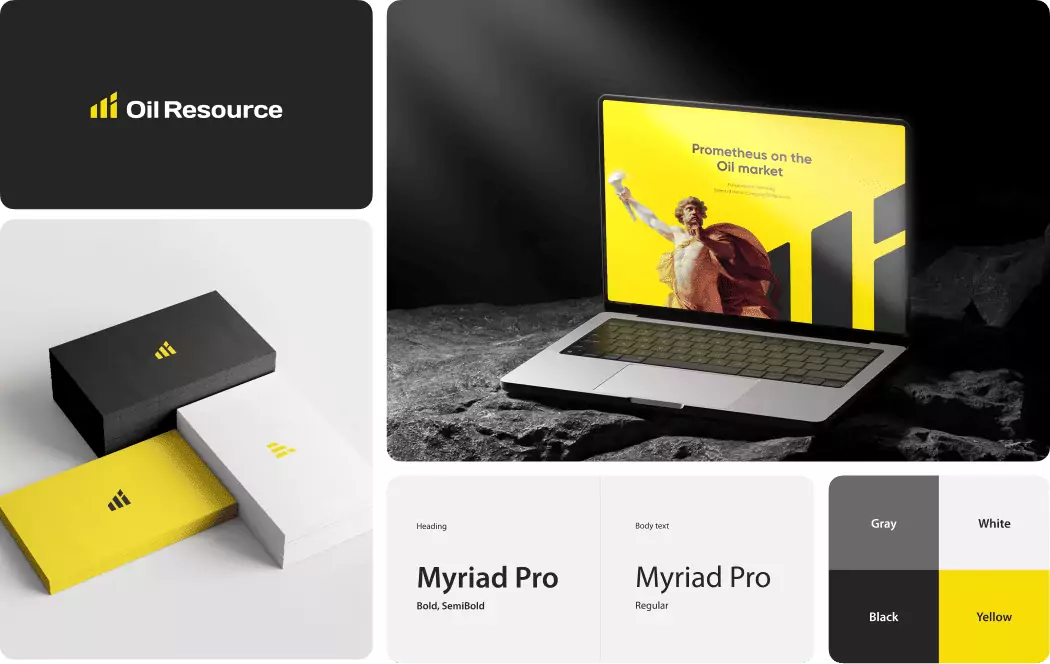
Comprehensive brand identity development establishes visual identity systems, messaging frameworks, and application guidelines, ensuring consistency across all corporate touchpoints. For international corporations, brand guidelines must address regional variations — when to maintain strict global consistency versus when to allow regional customization — while preventing brand fragmentation that confuses stakeholders about corporate identity.
Centralized asset libraries, template systems for regional teams, and review workflows preventing off-brand content publication: these systems enable global consistency without requiring central approval for every regional execution.

If you're evaluating web development partners for an international corporate project, start here: How to choose a website development agency: Key tips — a practical framework for assessing whether an agency can handle cross-border complexity.
What International Corporate Web Design Actually Costs — and Returns
The investment in strategic international corporate website design pays returns through reduced regulatory risk, better stakeholder relationships, and credibility that supports business development across markets.
Attempting to internationalize domestic-focused websites as an afterthought typically costs more in rebuilds than building correctly initially — while damaging credibility with international stakeholders encountering poorly adapted experiences in the interim.
For companies establishing international operations or expanding into Miami's cross-border markets, working with agencies experienced in corporate web development ensures sites address international complexity from the start rather than treating it as a problem to solve in the next redesign cycle.
The technical scope of a properly built international corporate site includes: CDN infrastructure for global performance, layered privacy compliance for multiple jurisdictions, a CMS supporting distributed content governance, investor relations architecture meeting securities regulations, and a partner portal system with role-based access controls. This is not a domestic corporate website with a language toggle added. It is a different category of project requiring a different category of agency.
The diagnostic starting point is simpler than the solution: map who actually accesses your corporate website — investors from which regions, customers in which markets, regulatory authorities in which jurisdictions, partners across which geographies — and what each group needs to verify before they trust you. Most companies doing this exercise for the first time discover their website is built for one of these audiences and accidentally ignore the rest. That is the gap international corporate web design exists to close.
Want to discuss your project?
Share your vision with us, and we'll reach out soon to explore the details and bring your idea to life.



Conclusion
Most Miami corporations operating internationally already know their website isn't built for their actual stakeholder base. The question isn't whether the problem exists — it's whether the fix happens before or after it costs a significant client, triggers a regulatory incident, or results in a failed investor relations moment.
The companies succeeding in Miami's international business environment design websites from the beginning for cultural neutrality, regulatory compliance, and stakeholder diversity. They avoid the common mistake of building domestic-focused sites, then attempting to internationalize through translation and regional flags — an approach that requires expensive rebuilds when limitations become apparent.
The gap between a domestic corporate website and a genuinely international one is not a matter of adding languages. It is a matter of architecture: information architecture, technical infrastructure, regulatory compliance, and cultural design principles built in from day one. Companies that get this right gain a credibility asset that supports business development across every market in which they operate. Companies that get it wrong spend years rebuilding from a foundation that was never designed for the task.
Recommended reading 🤓

"The Culture Map", Erin Meyer
Essential framework for understanding how business communication, trust-building, and decision-making vary across cultures — directly applicable to designing corporate websites serving international stakeholders with different cultural business expectations.

"Don't Make Me Think", Steve Krug
Usability classic explaining how users actually interact with websites versus how designers think they do — particularly valuable for international corporate sites where diverse audiences navigate information differently, and cultural assumptions about "obvious" navigation patterns vary.

"The Art of SEO", Eric Enge, Stephan Spencer, Jessie Stricchiola
Provides strong technical guidance on international website architecture, multilingual content strategy, and technical implementation supporting global audiences — critical knowledge for any international corporate web project.
Miami corporate websites fail when they treat international business as an "add Spanish translation" afterthought. Companies operating across the Americas, Europe, and global markets need websites architected from the beginning for cultural diversity, regulatory complexity, and stakeholder audiences — not domestic design with flags added.