
NYC buyers decide whether you're worth their time in under 90 seconds — before your proposal, before your case studies, before you've said a word. Here's what a weak brand is actually costing your business.
Key takeaways 👌
A weak brand identity in NYC functions as an invisible price ceiling — it forces you to compete on cost rather than value, regardless of your actual quality.
NYC enterprise buyers pattern-match on brand credibility before evaluating anything else; a poor brand disqualifies you before the conversation even begins.
The financial cost of delaying a rebrand compounds monthly: lost clients, discounted deals, and missed referrals add up to far more than the investment required to fix the problem.
Introduction
Every month you operate with a brand identity that doesn't match your actual quality, you are paying a tax — in lost contracts, discounted fees, and clients who never call back.
New York is uniquely unforgiving for businesses with a weak brand for one structural reason: density. There are more qualified competitors per industry per square mile in NYC than in virtually any other US market. A financial services firm in Omaha can survive with an outdated website and inconsistent visual identity because the buyer has fewer alternatives. In Manhattan, your prospect saw three competitors this week who look sharper than you. By the time they're on a call with you, they've already formed a hierarchy — and brand presentation is the primary sorting mechanism at the top of that funnel.
The credibility gap is the distance between how good your product actually is and how good your brand makes you appear. In NYC, buyers — particularly in finance, real estate, legal, and tech — evaluate trust signals before they evaluate content. They look at your website, your deck, your email signature, and your LinkedIn presence, and within 60 seconds they've formed a working hypothesis: "Are these people operating at my level?" A weak brand answers that question incorrectly before you've said a word.
The math is not abstract. The average annual contract value for a mid-market professional services engagement in New York runs from $75,000 to over $500,000. Lose two or three of those in a year to a competitor whose product you know is inferior — and you're looking at $200,000 to $1.5 million in revenue that walked out because of brand perception, not product quality.
The fix isn't just a new logo — it's a brand strategy that connects identity to business outcomes.

5 Signs Your NYC Business Brand Identity Is Costing You Clients
These are not design problems. They are revenue problems.
Sign 1: You're Winning on Price, Not Value
When prospects consistently ask for discounts before they've even seen a full proposal, your brand isn't doing its job. A strong brand identity creates the perception of premium value before the pricing conversation begins — it sets an expectation that your work is worth a certain number, and that number is non-negotiable.
If your sales cycle regularly involves price justification, margin compression, or "can you do it for less?" negotiations, the issue is rarely your pricing strategy. It's that the brand hasn't established the value premise clearly enough. In a market where buyers are evaluating five vendors simultaneously, the one who never gets asked for a discount is the one whose brand made the price feel like an obvious investment.
The downstream effect in NYC specifically: price-sensitive clients refer price-sensitive clients. If your brand is attracting buyers who lead with budget objections, you will continue to attract the same profile until the brand changes.
Sign 2: Your Website Doesn't Reflect Your Real Level
NYC clients search your company within 60 seconds of your first conversation. According to a 2022 Demand Gen Report study, 67% of B2B buyers say a vendor's website quality directly influences their purchase decision — and a significant portion eliminate vendors at this stage without ever communicating their reason.
The embarrassment gap is real: it's when your website, deck, or visual materials underrepresent the actual quality of your work. A new prospect evaluating you against three competitors in the same afternoon doesn't have the context your existing clients have. They have your website. If it looks like it was last updated in 2018, uses stock photography, and doesn't communicate a clear positioning statement, the hypothesis is already formed — and it's not favorable.
In NYC's professional services sector, buyers in finance, law, consulting, and real estate are trained to read signals of operational quality. Your brand materials are, to them, evidence of how you operate. A messy brand signals a messy process. A dated brand signals a team that doesn't invest in its own standards.
Sign 3: You Can't Explain What Makes You Different in One Sentence
Ask three people on your team what makes your company different. If you get three different answers, or any answer longer than two sentences, you have a brand positioning failure — and it is costing you clients.
Your positioning — the specific, defensible reason a buyer should choose you over alternatives — should be embedded in every piece of brand expression: your website headline, your deck opening, your LinkedIn bio, your email signature. If it's not, it means the positioning hasn't been defined clearly enough to operationalize.
In the NYC market, decision-makers are running procurement processes while managing their actual jobs. They do not have time to decode a vague value proposition. If your brand doesn't answer "why you, specifically" within the first interaction, you are not in the running. The competitor who communicates clear, credible differentiation — even if the underlying product is comparable — wins the first filter.
Sign 4: You Keep Losing to Competitors You Know Are Worse
This is the most frustrating pattern, and the most diagnostic. When you lose a pitch to a competitor whose work you've seen, whose team you know is smaller — and you lose consistently — the variable is not product quality. It is brand perception.
The perception gap is the difference between your actual capability and how that capability registers with a buyer who has no prior context. In a single pitch cycle, a buyer cannot fully evaluate the depth of your team or the precision of your execution. What they can evaluate, quickly and confidently, is whether your brand looks like the kind of company they want to work with.
Competitors who win on inferior products are not doing something dishonest. They have invested in brand strategy — in visual identity, messaging clarity, and consistency of market presence — and that investment pays off in buyer confidence before the work begins. The fix is not to undercut their pricing. The fix is to close the perception gap between what you deliver and what your brand communicates.
You can have the best product in the world, but if people don't know about it or trust it, you're nowhere.
— Howard Schultz, Former CEO, Starbucks
Sign 5: Your Brand Looks Different Everywhere
Visit your company's website, LinkedIn page, pitch deck, email footer, and any physical materials you distribute. If the colors, typography, tone, and visual style are inconsistent across these touchpoints, you are signaling operational immaturity to every prospect who encounters you across multiple channels.
Brand inconsistency is not a cosmetic issue for a NYC enterprise buyer. It reads as an organizational signal: this company doesn't have documented standards, or it doesn't enforce the standards it has. In industries where operational discipline is directly correlated with service quality — finance, legal, consulting, architecture, technology — this inference is both automatic and consequential.
Marq's State of Brand Consistency study found that consistent brand presentation can increase revenue by up to 23%. The inverse is equally true: inconsistent branding erodes the credibility that each individual touchpoint would otherwise build. Every mismatched visual is a small withdrawal from the trust account you're trying to build with prospective clients.
A professional brand identity system — with documented guidelines covering color, typography, tone, and usage rules — is the infrastructure that makes consistency automatic rather than effortful.

Your competitor with the worse product and the better brand is not getting lucky. They made a decision you haven't made yet.
Why NYC Makes Brand Identity More Urgent Than Anywhere Else
No other US market concentrates competitive pressure the way New York does.
New York City hosts over 220,000 small businesses. Across professional services alone — law, finance, consulting, design, tech, real estate — the competitive density is extreme. In a mid-sized Sunbelt city, a B2B buyer might evaluate three to five vendors. In NYC, that same buyer is fielding pitches from eight to fifteen vendors, many of whom are geographically accessible, well-networked, and capable. Brand identity is the first filter that cuts the list.
NYC buyers are trained pattern-matchers. Decision-makers at financial services firms, real estate companies, law offices, and technology companies in New York are exposed to hundreds of vendor brands per year. They have developed — consciously or not — a rapid-assessment capability that sorts vendors into tiers within seconds of visual exposure. A brand that looks like it belongs in a premium tier gets treated like it belongs in a premium tier, regardless of the facts. A brand that doesn't gets filtered out immediately.
The "Park Ave vs. the rest" dynamic is real and observable. NYC buyers — particularly those operating in Midtown, the Financial District, and the Upper East Side — mentally categorize vendors on a spectrum from "Park Ave quality" to "outer borough hustle." The category determines the pricing conversation you're allowed to have. A company that looks like it belongs in the premium tier can have a premium pricing conversation from the first call. A company that doesn't, can't — regardless of what it actually delivers.
Research from Nielsen confirms that brand familiarity and visual recognition can increase purchase likelihood by up to 59%, even when buyers have no prior experience with the company. In New York's crowded vendor landscape, looking credible is not a vanity metric. It is a conversion mechanism.
Interesting fact 👀
Consistent brand presentation across all channels can increase revenue by up to 23%, according to Marq's State of Brand Consistency report — making brand standards one of the highest-ROI operational investments available to a growth-stage company. Source: Marq (formerly Lucidpress), State of Brand Consistency.
The ROI of a Rebrand in the NYC Market
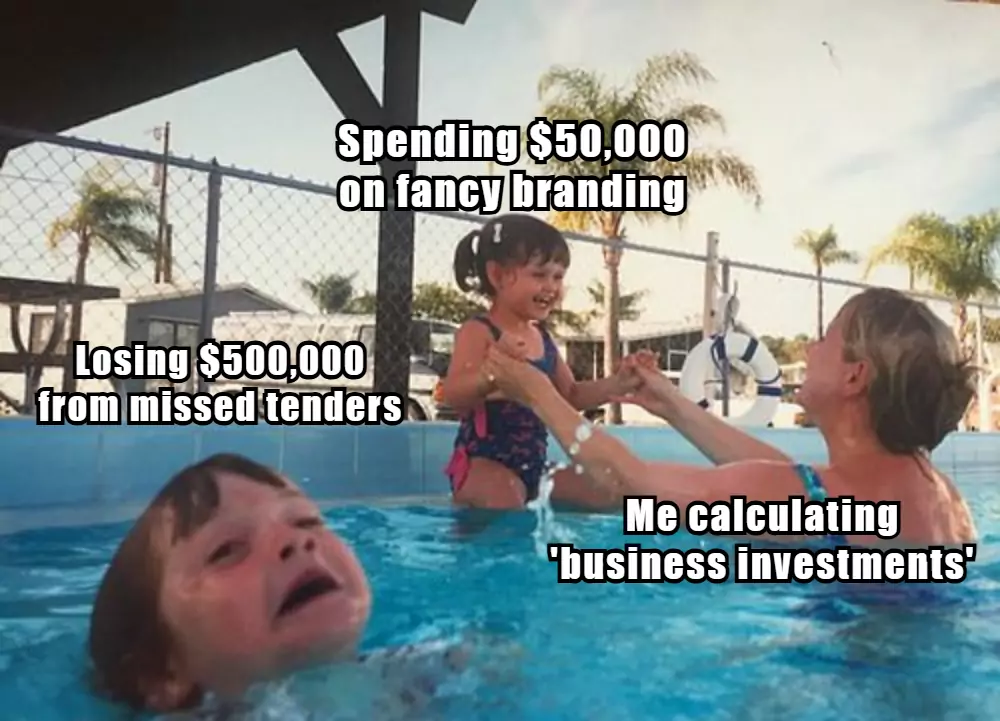
The ROI on a rebrand in the NYC professional services market is concrete and calculable. A $50,000 brand identity investment — covering positioning strategy, visual identity system, website redesign, and core collateral — typically generates measurable return within 12 to 18 months for a company with an average client value above $40,000.
If the rebrand results in closing just two additional enterprise clients per year that were previously lost to the perception gap, the math works at almost any fee level in the mid-market. The question is not whether the investment pays back. The question is how many more months of client loss you're willing to absorb before making it.
The industries where brand identity is genuinely table stakes in NYC: financial services, real estate, management consulting, legal, luxury retail, architecture, and B2B technology. In these categories, showing up with a weak brand is the equivalent of showing up to a meeting underdressed. The content of what you say becomes irrelevant because the first impression has already done the damage.
A full rebranding engagement — one that addresses positioning, visual identity, messaging architecture, and web presence together — is what changes the commercial relationship you're able to have with the market. Partial fixes (a new logo without revised positioning, or a new website without updated messaging) rarely move the needle in a market as signal-saturated as New York.

Thinking about a rebrand but not sure where to start? Read our practical guide on what rebranding is, when it's needed, and how to do it right before making any decisions.
The Real Cost of Waiting
The financial argument for delaying a rebrand is always the same: "We'll do it when we have more revenue." The problem with this logic is structural — it assumes the brand situation is static while the revenue situation changes. In reality, the brand situation is what is preventing the revenue situation from changing.
The compounding cost of a weak brand works like this: every month you operate below your brand's potential, you lose a percentage of the clients who evaluated you and chose a competitor. Those clients don't just take their initial contract value — they take the renewal value, the referral pipeline, and the permission to raise prices that comes with a strong portfolio of premium clients. A company that loses three mid-market clients per year to brand-related perception issues isn't losing $300,000. Over three years, accounting for renewals and referrals, it may be losing $1.5 million or more in total contract value.
Companies that rebranded after two to three years of underperformance typically rebuilt from a strong existing client base — one that could anchor testimonials, case studies, and referrals for the new positioning. Companies that waited five to seven years often had to rebuild from a weaker foundation: fewer case studies, thinner margins, and a sales team that had internalized the old positioning to the point of resistance.
The decision-delay trap is particularly common among founders who conflate the brand with personal identity: "Our brand is who we are — it feels premature to change it before we've really made it." But brand identity is not a reflection of what you've accomplished. It is a projection of what you're capable of and who you're trying to serve. A brand that communicates your current reality is already one cycle behind the market. A brand that communicates where you're going is the tool that gets you there.
What Strong Brand Identity Actually Does for a NYC Business
A well-executed brand identity project does not simply make your company look better. It restructures the commercial relationship you're able to have with the market.
It shifts the conversation from price to value. When a brand clearly communicates what a company stands for, who it serves, and why it operates differently, price objections decline. The prospect arrives pre-loaded with a value hypothesis — they expect to pay a certain amount, and that expectation is set by brand positioning before any proposal is submitted.
It creates permission to charge premium rates. Premium pricing is not a function of confidence — it is a function of market positioning. A brand that looks premium, communicates premium, and operates consistently at a premium standard creates the buyer expectation that a premium fee is appropriate. Without that brand infrastructure, asking for a premium price feels like an overreach. With it, the same price feels self-evident.
It makes your sales process more efficient. Leads generated after a rebrand arrive with higher baseline trust, clearer service expectations, and stronger intent. A company with a well-positioned brand in the NYC market typically sees inbound lead quality improve materially within six to twelve months: fewer time-wasters, shorter qualification cycles, and prospects who already know they want to work with you specifically.
Companies that have undertaken full brand identity projects with Toimi — covering brand strategy, visual identity, messaging architecture, and website — consistently report three shifts: pricing conversations that start at a higher baseline without objection; shorter sales cycles driven by stronger pre-meeting research from prospects; and access to client segments that were previously out of reach due to brand perception alone.
FAQ: Brand Identity for NYC Businesses
What exactly is brand identity and why does it matter for NYC businesses?
Brand identity is the complete system of visual and verbal signals through which a company communicates who it is and who it serves — encompassing logo, typography, color palette, tone of voice, messaging framework, and the way these elements work together across every customer touchpoint. For NYC businesses specifically, brand identity matters because the market is too crowded and the buyers are too sophisticated for an informal or inconsistent brand presence to survive.
How much does brand identity design cost for a NYC company?
Brand identity projects range significantly depending on scope. A focused engagement — covering positioning strategy, logo system, visual identity, and core collateral — typically starts at $8,000 to $15,000 for growth-stage companies. Full rebranding projects that include website redesign, messaging architecture, and brand guidelines documentation range from $20,000 to $75,000 or more for established mid-market firms. The relevant frame is not the cost in isolation — it is the cost relative to the annual value of the clients you're currently losing.
How long does a brand identity project take?
A focused brand identity project with Toimi typically runs eight to fourteen weeks from kickoff to final delivery, depending on the complexity of the positioning work and the number of revision cycles involved. Full rebranding projects that include website design and build run twelve to twenty weeks.
Can I just update my logo, or do I need a full rebrand?
A logo update alone solves an aesthetic problem but rarely solves a business problem. The diagnostic question: does your current brand fail at the visual level (dated design, poor execution) or at the strategic level (wrong positioning, unclear differentiation, inconsistent messaging)? If it's purely visual, a focused identity refresh may be sufficient. If clients can't articulate why they should choose you, the work needs to start at the strategy layer before it touches the design layer.
What's the ROI of investing in brand identity in the NYC market?
The return is realized through three primary mechanisms: higher close rates on inbound leads, reduced price negotiation frequency, and access to higher-value client segments previously inaccessible due to brand perception. For a professional services firm with an average project value of $50,000 and a current close rate of 20%, improving the close rate to 30% generates an additional $100,000 in revenue per 10 qualified leads — without changing the quality of the underlying service.
How do I know if Toimi is the right fit for my NYC business?
Toimi works specifically with growth-stage companies — businesses that have proven their model and are ready to scale, but whose brand identity has not kept pace with their ambition or their actual quality. If you're consistently losing pitches you feel you should win, pricing below your actual value, or struggling to articulate your differentiation in a sentence, Toimi's process is designed to solve that. Book a free 30-minute positioning call — we'll review your current brand and tell you directly where the gap is and what it would take to close it.
Want to discuss your project?
Share your vision with us, and we'll reach out soon to explore the details and bring your idea to life.


Conclusion
The companies that will define the next five years of their markets in New York are not the ones with the best products. They are the ones with the best brand infrastructure supporting those products — clear positioning, consistent visual identity, and a market presence that does the trust-building work before any salesperson or proposal gets involved.
If you're operating below that standard right now, the cost is not theoretical. It is in the contracts you didn't close last quarter and the pitches you lost to competitors you know are worse.
The decision to fix it is never the right decision "later." Later means more months of the invisible tax, more compounded client loss, and a harder rebuild when you finally act. The businesses that rebranded early — before the problem became urgent — rebuilt from a position of momentum. The businesses that waited rebuilt from a position of damage control.
The gap between what you deliver and what your brand communicates is not a design problem. It is a business problem — and it has a price tag attached to every month you leave it open.
Toimi works with growth-stage NYC businesses on brand identity projects starting at $8,000. Book a free positioning call and we'll tell you exactly where the gap is.
Recommended reading 🤓
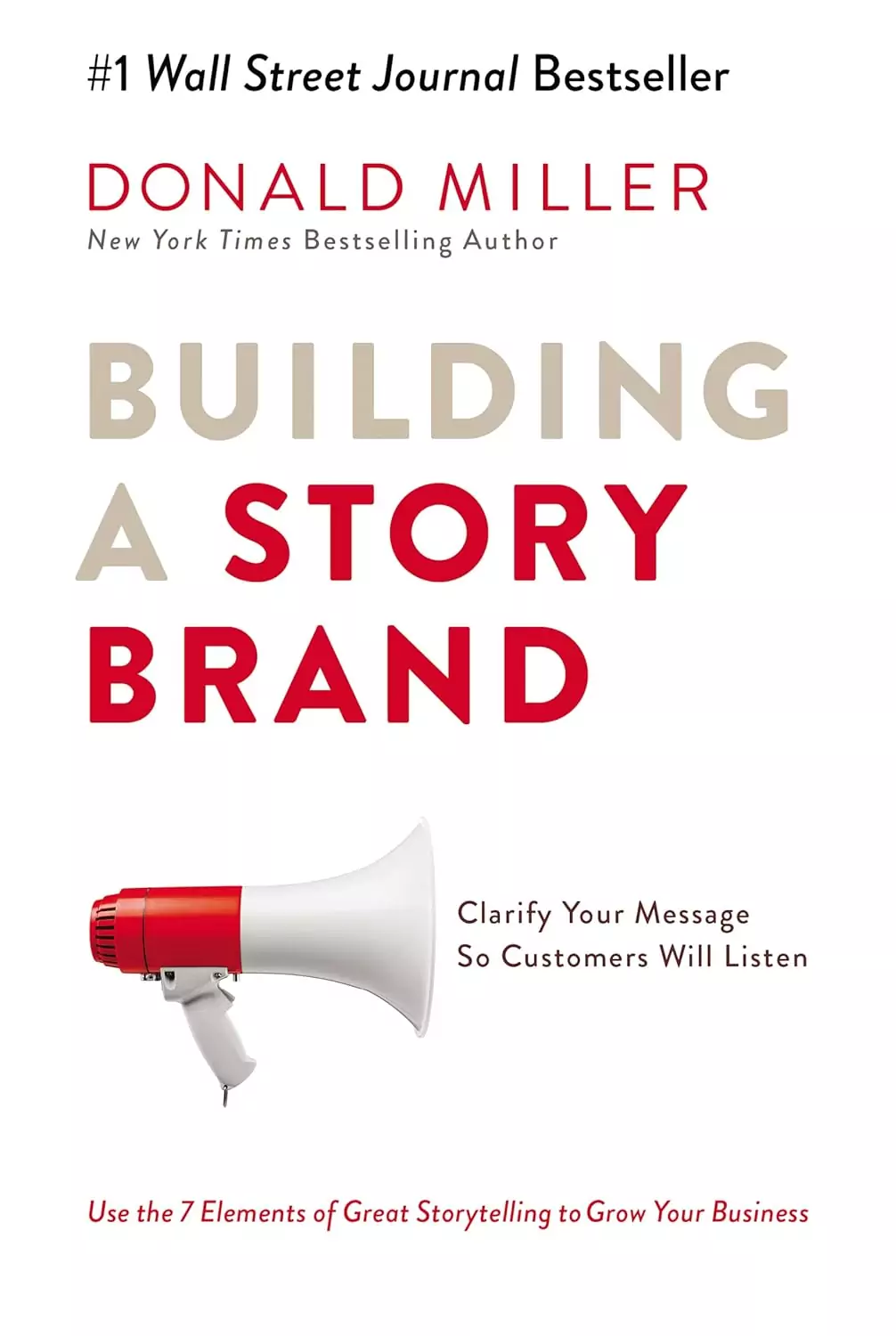
"Building a StoryBrand", Donald Miller
Explains why most brands fail to communicate clearly and gives a practical framework for making your positioning immediately legible to buyers.
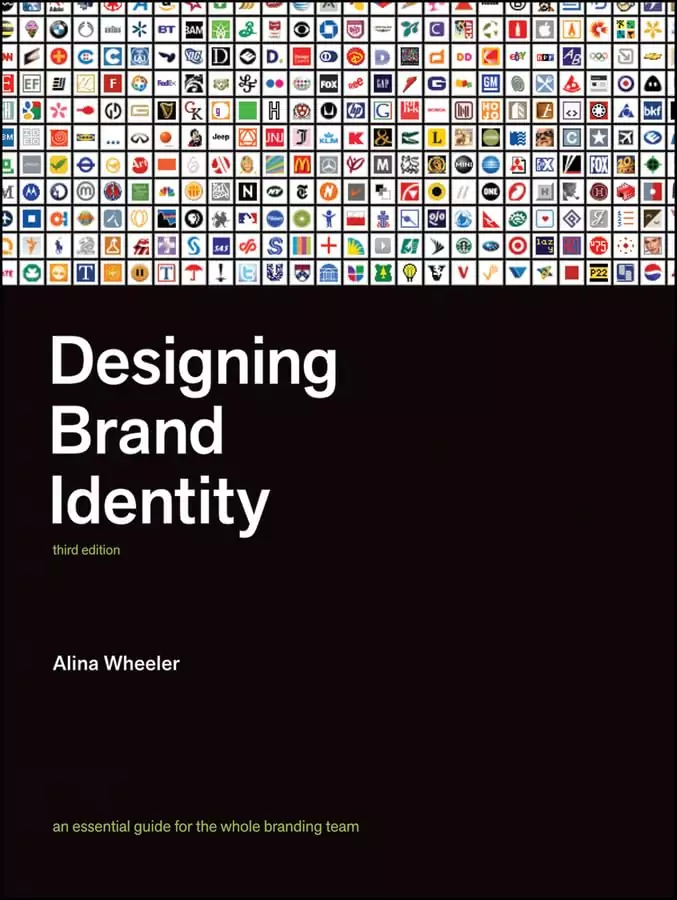
"Designing Brand Identity", Alina Wheeler
The definitive reference on building a cohesive brand identity system — from strategy and naming through visual identity and implementation across touchpoints.
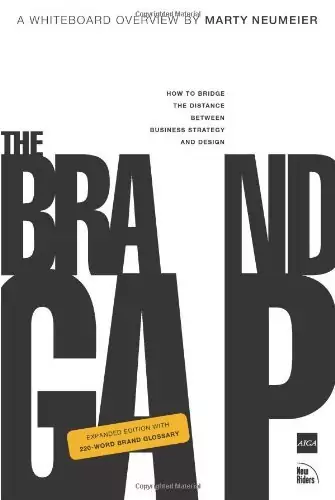
"The Brand Gap", Marty Neumeier
A concise, sharp argument for why the distance between business strategy and customer experience is the most expensive gap a company can have — and how to close it.
We've reviewed brand positioning for 80+ NYC companies. The pattern is consistent: firms losing to cheaper competitors almost never lose on product quality. They lose in the first 90 seconds — before anyone reads a single case study.