
This ranking evaluates the 10 best agencies in Baltimore based on multi-device optimization expertise, performance across screen sizes, and proven results delivering websites that work everywhere.
Key Takeaways 👌
Responsive design is table-stakes, not a differentiator — but execution quality varies dramatically. Every agency claims "mobile-friendly" websites, but responsive design done poorly creates worse user experiences than fixed-width desktop sites. Touch targets too small to tap, text requiring pinch-zoom to read, and images loading slowly on cellular networks explain why mobile conversion rates often lag desktop by 40%+.
True responsive design optimizes for mobile context, not just mobile screens. Shrinking desktop layouts to fit phone screens isn't responsive design — it's lazy implementation. Real mobile optimization means simplified navigation for thumb-reach zones, faster load times on cellular networks, content prioritization for smaller screens, and touch-friendly interface elements sized for actual human fingers.
Performance on real devices matters more than desktop browser testing. Sites testing perfectly in Chrome DevTools often fail on actual iPhones with slow LTE connections or Android devices with limited processing power. The best Baltimore agencies test on real devices across network conditions — not just responsive viewport simulators.
TL;DR: Top Responsive Web Design Agencies in Baltimore (2026)
For enterprise and complex applications: Planit, Happy Cog, Bluetext — agencies building responsive systems for large-scale sites and B2B technology companies requiring cross-device consistency.
For healthcare and regulated industries: Planit, Toimi — agencies understanding accessibility compliance (WCAG 2.1 AA) and responsive design for patient-facing applications.
For nonprofits and education: Zivtech, Forum One, Goldiata Creative — agencies building responsive sites within nonprofit and mission-driven budget constraints.
For ecommerce and retail: SmartBug Media, AltaVista Strategic Partners — agencies optimizing mobile shopping experiences where responsive design directly impacts revenue.
For full-service advertising and marketing: Beyond Spots & Dots — web, digital, and brand services under one roof.
Why Responsive Design Matters in Baltimore
Baltimore's business landscape — healthcare systems, government contractors, financial services, education — creates specific responsive design requirements beyond consumer websites.
Healthcare and accessibility: Johns Hopkins, University of Maryland Medical System, and regional hospitals require responsive designs meeting WCAG 2.1 AA standards for patient accessibility. Healthcare sites serve diverse populations including elderly patients unfamiliar with mobile interfaces, low-income patients accessing care information on older smartphones, and non-English speakers requiring multilingual responsive experiences.
Government proximity: Baltimore's proximity to Washington DC means agencies serve federal and state government clients requiring Section 508 compliance — accessibility standards more demanding than typical commercial sites. Government responsive design must work on a wider range of devices and assistive technologies than consumer-focused sites.
Enterprise security: Financial services and defense contractors headquartered in Baltimore require responsive designs within strict security frameworks — no third-party scripts, limited external resources, and hosting meeting compliance requirements that affect responsive implementation choices.
Education and nonprofits: Johns Hopkins University, University of Maryland Baltimore, and regional nonprofits need responsive sites on limited budgets, requiring agencies that deliver mobile optimization without premium pricing.
These requirements separate Baltimore responsive design agencies into those treating mobile as checkbox compliance and those building truly optimized multi-device experiences.
Content precedes design. Design in the absence of content is not design, it's decoration.
— Jeffrey Zeldman, founder of A List Apart
Full disclosure — this list is published by Toimi, and Toimi is included in it. Pricing is shown only for Toimi, whose rates we publish. We do not list other agencies' rates because we cannot verify them.
Inclusion criteria: a public, inspectable body of live work — sites and named case studies anyone can check — applied the same way to every agency here, including us.
Baltimore Responsive Web Design Agencies Ranked
1. Planit — Enterprise Responsive Systems
Website: planitagency.com
Office: Baltimore (Mount Vernon)
Planit leads Baltimore's enterprise digital space, building responsive systems for large organizations requiring cross-device consistency, accessibility compliance, and integration with enterprise platforms.
What sets them apart: Planit treats responsive design as system architecture, not just CSS media queries. For enterprise clients managing hundreds of pages across desktop, tablet, and mobile contexts, they build design systems ensuring consistency while optimizing each device experience appropriately.
Enterprise responsive expertise: Component-based design systems scaling across devices, accessibility compliance (WCAG 2.1 AA/AAA, Section 508), responsive email systems for enterprise communication, integration with CMSs and enterprise platforms, performance optimization across device capabilities.
Best for: Enterprise organizations, healthcare systems, government agencies, large nonprofits, companies requiring accessibility compliance
Why enterprises choose them: Enterprise responsive design requires more than shrinking layouts — it requires component libraries, accessibility audits, multi-browser testing, and integration with existing enterprise systems. Planit's scale allows comprehensive testing most boutique agencies can't provide.
Limitations: Enterprise focus and pricing make them impractical for small businesses or startups. Minimum project sizes exclude companies with simpler responsive needs.

2. Goldiata Creative — Nonprofit and Mission-Driven Digital Marketing
Website: goldiata.agency
Office: Baltimore
Goldiata Creative is a Black-owned digital marketing agency built around what it calls "purpose meets performance" — pairing paid media, SEO, and website work with the reporting nonprofits and public institutions need to prove impact.
Mission-sector focus: Online advertising, SEO, website development, media planning and buying, conversion rate optimization, and social media campaigns for nonprofits, educational institutions, and mission-driven organizations.
Best for: Nonprofits, universities and colleges, government and advocacy organizations needing responsive sites tied to measurable outreach results.
Honest limitations: Digital marketing and campaign work is the stated core; verify current responsive web development depth directly for a build-heavy project.
3. Happy Cog — Design-Forward Responsive Experiences
Website: happycog.com
Offices: Multiple locations including Baltimore presence
Happy Cog brings design excellence to responsive implementation, creating experiences that feel intentionally designed for each device rather than mechanically adapted from desktop layouts.
Design approach: Happy Cog designs mobile-first — starting with phone experiences, then expanding to tablets and desktop rather than shrinking desktop down. This creates responsive sites where mobile feels primary, not compromised.
What they build: Responsive brand experiences for design-conscious companies, editorial sites requiring beautiful typography across devices, product sites where visual design drives conversion, and responsive systems balancing aesthetics with performance.
Best for: Design-forward brands, publishers, product companies, organizations where visual quality differentiates brand
Why design-focused companies choose them: Many responsive sites look functional but generic. Happy Cog delivers responsive designs that feel intentional and brand-specific across all devices.
Trade-offs: Design emphasis sometimes conflicts with aggressive performance optimization. Companies prioritizing load speed over visual richness might find better fits elsewhere.
4. AltaVista Strategic Partners — Lead Generation and Local-Service Digital Marketing
Website: altavistasp.com
Office: Baltimore
AltaVista Strategic Partners is a full-service digital marketing company built around generating qualified leads for local-service and retail businesses — paid search, SEO, responsive website design, and a proprietary database for targeted outreach.
Retail and local-service focus: Responsive website design and development, paid search and SEO, branding, social media management, and review generation for retail, home services, real estate, automotive, and franchise clients.
Best for: Retail and local-service businesses that need responsive sites judged on lead volume and conversion, not just page speed.
Honest limitations: A Google Partner with an Inc. 500 track record in lead generation — ask for responsive-specific case studies if design and UX are your primary concern.
5. SmartBug Media — Marketing-Integrated Responsive Design
Website: smartbugmedia.com
Offices: Multiple US locations including Baltimore
SmartBug approaches responsive design as part of broader marketing systems — ensuring mobile experiences integrate with email campaigns, social media, and marketing automation.
Integrated approach: Responsive website design, mobile-optimized email templates, responsive landing pages for campaigns, integration with HubSpot and marketing automation, and consistent responsive experience across marketing touchpoints.
When integration matters: B2B companies running marketing campaigns, organizations using marketing automation, companies needing responsive landing pages for paid advertising, and brands requiring consistent mobile experience across website, email, and social.
Best for: B2B marketing-driven companies, organizations using marketing automation, campaign-heavy businesses
Clients: Mid-market B2B companies, marketing-focused organizations
Why marketing-driven companies choose them: Separating website responsive design from email and campaign mobile optimization creates inconsistent user experiences. SmartBug delivers integrated responsive systems.
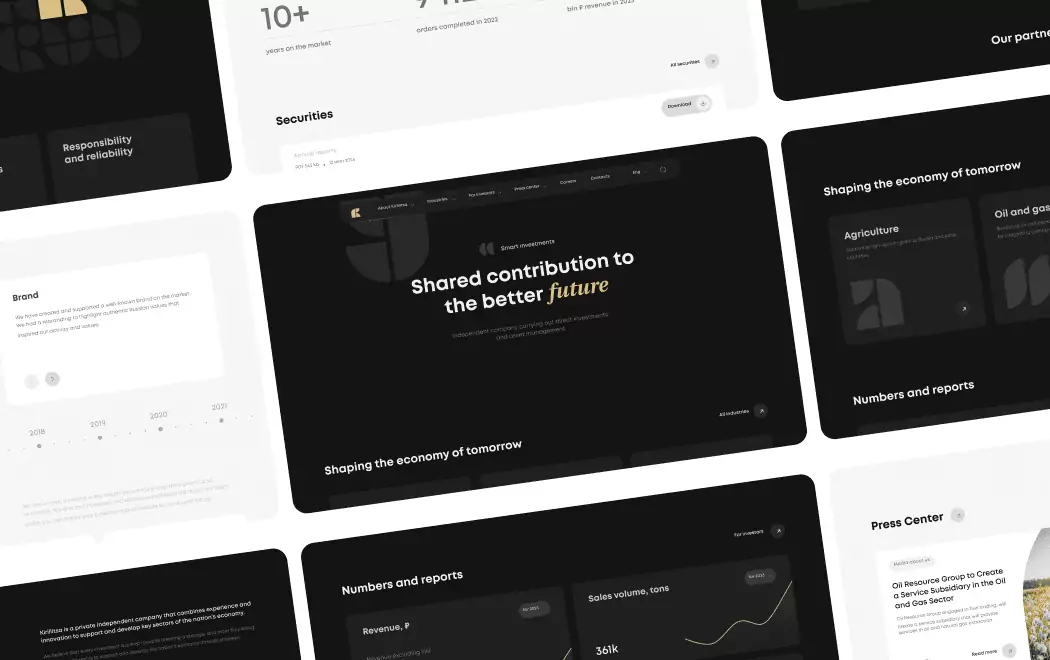
6. Toimi — Baseline Responsive with Strategic Clarity
Website: toimi.pro
Office: Remote-first with Baltimore clients
Toimi treats responsive design as baseline capability — not a premium feature — while focusing on strategic clarity ensuring responsive implementation serves actual business goals rather than checking technical boxes.
Responsive as foundation: Every site Toimi builds is responsive by default, optimized for mobile-first indexing, tested on real devices across network conditions, and built with performance budgets ensuring fast load times on cellular networks. This isn't a separate service — it's standard practice.
Strategic responsive design: Rather than leading with "we build responsive sites" (table-stakes), Toimi focuses on what responsive design should accomplish: improving mobile conversion for ecommerce platforms, ensuring accessibility for healthcare patient portals, supporting complex workflows in B2B web applications, and optimizing content-heavy sites for mobile reading.
What Toimi builds: Responsive systems for companies needing custom web development beyond templates, corporate websites requiring enterprise-grade responsive implementation, and digital products where responsive design integrates with custom UI/UX systems.
Best for: Companies treating responsive design as infrastructure rather than feature, mid-market businesses requiring strategic clarity alongside implementation, organizations building custom applications beyond simple websites
Pricing: $30,000-$100,000 for responsive web development
Why clarity-focused companies choose Toimi: Many agencies sell "responsive design" without explaining what it should accomplish for your business. Toimi starts with strategy — defining how responsive implementation serves business goals — before building anything.
Understanding what drives modern web development costs helps companies budget appropriately for responsive implementation that actually works.
Honest limitations: Focus on custom development means less emphasis on template-based quick builds. Companies needing simple responsive sites fast find better fits with template-focused agencies.
Project structure: Strategy and UX planning (2-3 weeks), responsive design system development (3-5 weeks), implementation and testing (4-6 weeks), device testing and optimization (1-2 weeks). Total timeline: 10-16 weeks.
Toimi also provides ongoing site optimization ensuring responsive performance doesn't degrade as sites evolve.
7. Zivtech — Drupal and Nonprofit Responsive Systems
Website: zivtech.com
Office: Philadelphia (HQ), Baltimore presence
Zivtech specializes in Drupal-based responsive systems for nonprofits, education, and government — sectors requiring accessible, responsive sites on limited budgets.
Nonprofit responsive expertise: Building responsive within tight budgets, accessibility compliance required for government/education clients, Drupal responsive themes and systems, mobile-optimized donation and volunteer signup, and responsive design for content-heavy nonprofit sites.
Best for: Nonprofits, educational institutions, government agencies, organizations requiring Drupal expertise
Clients: Regional nonprofits, educational institutions, advocacy organizations
Why nonprofits choose them: Zivtech delivers enterprise-quality responsive design at nonprofit pricing, understanding budget constraints while maintaining accessibility standards nonprofits legally require.
8. Forum One — Social Impact and Advocacy Responsive Design
Website: forumone.com
Offices: Multiple US locations including Baltimore
Forum One builds responsive sites for advocacy organizations and social impact initiatives requiring mobile-optimized action campaigns, petition systems, and constituent engagement.
Advocacy responsive needs: Mobile-optimized petition and action forms, responsive constituent engagement tools, mobile fundraising experiences, rapid response content systems, and multilingual responsive sites for international campaigns.
Best for: Advocacy organizations, social justice groups, international NGOs, policy organizations
Why advocacy organizations choose them: Advocacy campaigns often mobilize constituents via mobile — during protests, events, or news cycles. Forum One builds responsive systems supporting rapid mobile engagement.
9. Beyond Spots & Dots — Full-Service Advertising and Web
Website: beyondspotsanddots.com
Office: Pittsburgh (HQ), Baltimore presence — one of three offices
Beyond Spots & Dots is a full-service advertising and marketing agency running web design, Drupal/WordPress development, SEO, and hosting alongside traditional advertising, PR, and branding work.
What they build: Responsive web design and development, SEO and social media management, programmatic advertising, and branding and identity work, delivered as part of a broader advertising and PR practice rather than as a standalone web shop.
Best for: Organizations wanting responsive web work bundled with advertising, PR, and brand campaigns under one agency.
Honest limitations: Baltimore is one of three offices (alongside Pittsburgh and Columbus) — confirm which office handles delivery before signing.
10. Bluetext — B2B and Technology Responsive Design
Website: bluetext.com
Office: Washington DC (serves Baltimore)
Bluetext specializes in responsive design for B2B technology companies and government contractors — sectors where mobile optimization serves business buyers, not consumers.
B2B responsive considerations: Decision-makers often research on mobile but purchase on desktop, responsive design supporting long consideration cycles, mobile-optimized case studies and white papers, and responsive sites integrating with B2B marketing automation.
Best for: B2B technology companies, government contractors, cybersecurity firms, enterprise software providers
Why B2B companies choose them: Consumer responsive design principles don't apply directly to B2B where purchase journeys span months and multiple stakeholders. Bluetext understands B2B mobile context.
Interesting fact 👀
According to Statista's 2024 Mobile Internet Usage Report, mobile devices generated 60.67% of global website traffic in 2024 — up from 50.81% in 2019. Google's mobile-first indexing (fully implemented in 2021) means search rankings now depend primarily on mobile site performance, not desktop. Yet BrightEdge's 2024 research found that 27% of enterprise websites still fail Google's mobile-friendly test, costing them search visibility and mobile traffic.
Selection Guide
If You're an Enterprise or Healthcare Organization
Your needs: Accessibility compliance (WCAG 2.1 AA minimum), responsive systems at scale, integration with enterprise platforms, comprehensive device testing.
Critical question: "Show me accessibility audit results from recent responsive projects" and "How do you test on assistive technologies?" Generic answers reveal surface-level accessibility knowledge.
If Responsive Design Drives Revenue (Ecommerce/Lead Gen)
Your needs: Mobile conversion optimization, responsive checkout flows, performance directly impacting revenue, data-driven responsive improvements.
Best agencies: SmartBug Media, AltaVista Strategic Partners, Toimi
What matters: Ask about mobile vs. desktop conversion rates in their portfolio, A/B testing responsive elements, and performance budgets ensuring fast mobile load times.
If You're a Nonprofit or Educational Institution
Your needs: Accessible responsive design on limited budgets, Drupal or WordPress responsive systems, mobile-optimized fundraising, compliance with accessibility standards.
Best agencies: Zivtech, Forum One, Goldiata Creative
Budget reality: Nonprofit-focused agencies deliver responsive design within realistic nonprofit budgets while maintaining accessibility compliance required for government/education sectors.
If You Need a Full-Service Advertising and Marketing Partner
Your needs: Responsive web work bundled with advertising, PR, and brand campaigns rather than a standalone web build.
Best agencies: Beyond Spots & Dots
Warning: Confirm which of their three offices handles delivery — Baltimore is one of three, not the headquarters.
Questions to Ask Before Signing With a Baltimore Responsive Design Agency
"Show me this site on your actual phone, not your laptop"
Insist on seeing responsive examples on real devices — preferably yours, not theirs. Sites looking perfect on agency iPhones sometimes fail on Android or older devices.
"What's your device testing process?"
Agencies should test on real devices (iPhones, Android phones, tablets), across network conditions (not just office WiFi), and on browsers beyond Chrome. Browser simulators miss real-world problems.
"How do you optimize performance for mobile networks?"
Responsive sites loading slowly on cellular networks create poor user experiences regardless of how they look. Ask about image optimization, lazy loading, critical CSS, and performance budgets.
"What accessibility standards do you meet?"
WCAG 2.1 AA is baseline for most organizations; government/healthcare require stricter compliance. Ask how they test accessibility — automated tools miss 30-40% of issues.
"Can you show me before/after mobile analytics?"
Responsive design should improve mobile metrics — bounce rates, conversion rates, engagement. Ask for portfolio examples with actual data showing responsive impact.
Want to discuss your project?
Share your vision with us, and we'll reach out soon to explore the details and bring your idea to life.

Summary
Baltimore's responsive design landscape reflects a universal truth: claiming "mobile-friendly" is meaningless when execution quality varies by 10x. Every agency promises responsive design. Few deliver experiences that actually work across real devices, network conditions, and user contexts.
For enterprises and healthcare: Planit brings accessibility compliance and enterprise-scale responsive systems. These sectors can't afford responsive failures — patient confusion, accessibility lawsuits, or brand damage from broken mobile experiences.
For ecommerce and conversion-focused sites: AltaVista Strategic Partners and SmartBug Media optimize responsive design for revenue. Mobile conversion rates directly impact business outcomes — responsive design is infrastructure, not aesthetics.
For nonprofits and education: Zivtech, Forum One, and Goldiata Creative deliver responsive design within realistic nonprofit budgets while maintaining accessibility standards these sectors legally require.
For full-service advertising and marketing: Beyond Spots & Dots bundles responsive web work with advertising, PR, and brand campaigns under one agency.
The agencies in this ranking all build responsive sites. The difference lies in how they define "responsive" — checkbox mobile compatibility versus truly optimized multi-device experiences tested on real devices across real conditions.
Start by honestly assessing what responsive design should accomplish for your organization: Is mobile conversion critical to revenue? Do you serve users with accessibility needs? Are you legally required to meet specific standards? Do users access your site on old Android phones with slow networks, or primarily on new iPhones with fast WiFi?
Then choose agencies with portfolio evidence proving they've solved similar problems. An ecommerce company needing mobile conversion optimization shouldn't hire agencies showing only nonprofit portfolio work. A healthcare system requiring WCAG 2.1 AA compliance shouldn't choose agencies without accessibility audit experience.
Baltimore companies invest $30,000-$400,000 in responsive web development. That investment buys very different outcomes depending on whether agencies treat responsive design as checkbox compliance ("it works on phones") or genuine multi-device optimization ("it works well on phones users actually have, on networks they actually use, for tasks they actually need to accomplish").
Get the match right, and responsive design becomes invisible infrastructure supporting better user experiences and business outcomes. Get it wrong, and you'll rebuild within 18 months when mobile analytics reveal high bounce rates, low conversion, and user frustration your agency's testing process never caught.
Recommended reading 🤓
"Responsive Web Design", Ethan Marcotte
The book that defined responsive design in 2011. While technical details have evolved, Marcotte's core principles — fluid grids, flexible images, media queries — remain foundational. Essential for understanding what responsive design actually means technically.
"Mobile First", Luke Wroblewski
Short, practical guide arguing for designing mobile experiences first, then expanding to desktop — opposite of most agencies' desktop-first approach. Makes the case for why mobile-first creates better responsive experiences.
"Going Responsive", Karen McGrane
Based on research with 200+ organizations implementing responsive design. Addresses practical challenges — content strategy, workflow changes, stakeholder management — that technical guides skip but determine responsive project success or failure.
Responsive design stopped being a feature around 2015 — it became infrastructure. Yet we still see Baltimore companies launching sites that break on tablets, load slowly on mobile networks, or hide critical content behind desktop-only navigation. The agencies that understand responsive design isn't about shrinking desktop layouts — it's about designing for mobile context, optimizing for touch interactions, and ensuring performance on actual devices, not just Chrome DevTools simulators.